Can a Dirty Air Conditioner Filter Make You Sick?
You depend on your air conditioner to keep your home cool and the air fresh. But when the filter gets dirty, the system can quietly start working against you instead of for you. Many people start asking if a dirty air conditioner filter makes you sick when they notice constant sneezing, stuffy rooms, or unexplained fatigue. This matters because the air you breathe every day passes through that filter before reaching you. Here, you’ll understand how a dirty filter affects your health, the warning signs to look for, and how to prevent these problems before they get worse.
Can a Dirty Air Conditioner Filter Make You Sick?
A clogged or neglected filter does more than reduce efficiency. It changes the quality of air circulating in your home, which can affect your health over time. As airflow gets restricted, contaminants stay trapped indoors instead of being filtered out. This leads to exposure to dust, allergens, and even biological pollutants that irritate your respiratory system. Over time, buildup on the filter reduces its ability to capture fine particles effectively, allowing smaller pollutants to pass through and weakening overall air filtration performance.
Reduced indoor air quality from dust and allergens
Dust, pollen, and airborne particles accumulate on a dirty filter. However, once the filter is saturated, it stops trapping them effectively. These particles then circulate through your vents, which lowers indoor air quality and increases breathing discomfort.
Circulation of mold spores and moisture buildup
Moisture can collect on clogged filters, especially in humid conditions. This creates an environment where mold spores can grow. When the system runs, these spores spread through the air, which may trigger respiratory irritation or infections.
Increased exposure to pet dander and debris
If you have pets, hair and dander quickly clog the filter. Over time, the system pushes these particles back into your living space. This is how even people without allergies may start experiencing irritation or discomfort.
Irritants that worsen allergy or asthma symptoms
A blocked filter allows irritants to circulate continuously. For people with asthma or allergies, this can result in flare-ups. According to the U.S. Environmental Protection Agency, indoor air can be 2 to 5 times more polluted than outdoor air. Poor filtration makes this problem worse.
So yes, a dirty air conditioner filter makes you sick is not just a concern, but a real indoor air quality issue.
Health Symptoms Linked to Dirty Air Filters
When an AC filter is clogged, it affects the quality of air you breathe by allowing more airborne particles and irritants to circulate indoors. Over time, this constant exposure can place stress on your respiratory system and overall well-being, especially in closed environments where air recirculation is frequent. The longer the filter remains uncleaned, the more the indoor air balance is disrupted, making it harder for the body to function comfortably in that environment.
Below are key health symptoms linked to dirty air filters:
Sneezing, coughing, and nasal congestion
Airborne particles irritate your nasal passages. As a result, you may experience frequent sneezing or a runny nose. Over time, this can feel like a constant cold that never fully goes away.
Headaches or fatigue from poor air circulation
Restricted airflow reduces oxygen circulation indoors. This can make the air feel stale. You may notice headaches or feel tired even after resting, which is often linked to poor air quality.
Irritated eyes, throat, or skin
Dust as well as allergens in the air can irritate sensitive areas. Your eyes may feel itchy, your throat dry, and your skin uncomfortable. These symptoms often worsen when you stay indoors for long periods.
How to Prevent Filter-Related Health Issues
Preventing these problems is easier than dealing with ongoing symptoms. Regular maintenance improves both your air quality and system performance. By keeping filters clean and airflow consistent, you reduce the risk of airborne irritants affecting your health.
Here is how to maintain air conditioner filters:
Replace Filters Every 1–3 Months
Changing your filter regularly is the simplest step. However, the exact timing depends on usage, pets, and air quality. A fresh filter captures dust and allergens effectively, which keeps your indoor air cleaner.
Choose High-Quality MERV-Rated Filters
Not all filters perform the same. Higher MERV-rated filters trap smaller particles, including pollen and bacteria. But you should ensure your system supports the rating to avoid airflow restriction.
Keep Indoor Humidity Under Control
Humidity plays a major role in air quality. Excess moisture encourages mold growth inside filters and ducts. Using a dehumidifier or maintaining proper ventilation helps prevent this buildup.
Schedule Regular HVAC Cleaning and Inspections
Professional inspections catch issues early. Technicians check airflow, filter condition, and system cleanliness. This is how you prevent hidden problems that could affect both health and efficiency.
What Does a Dirty AC Filter Look Like?
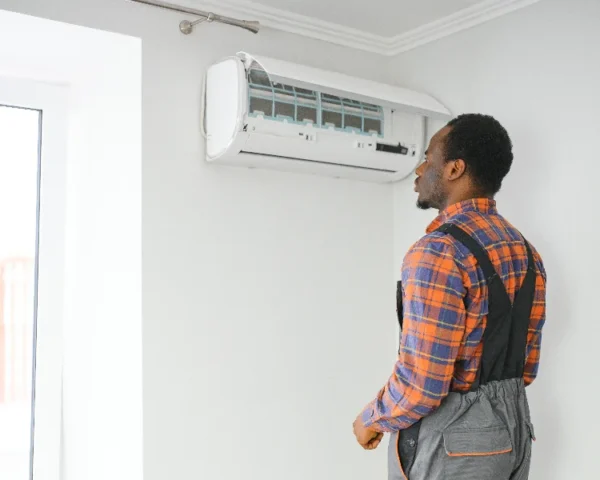
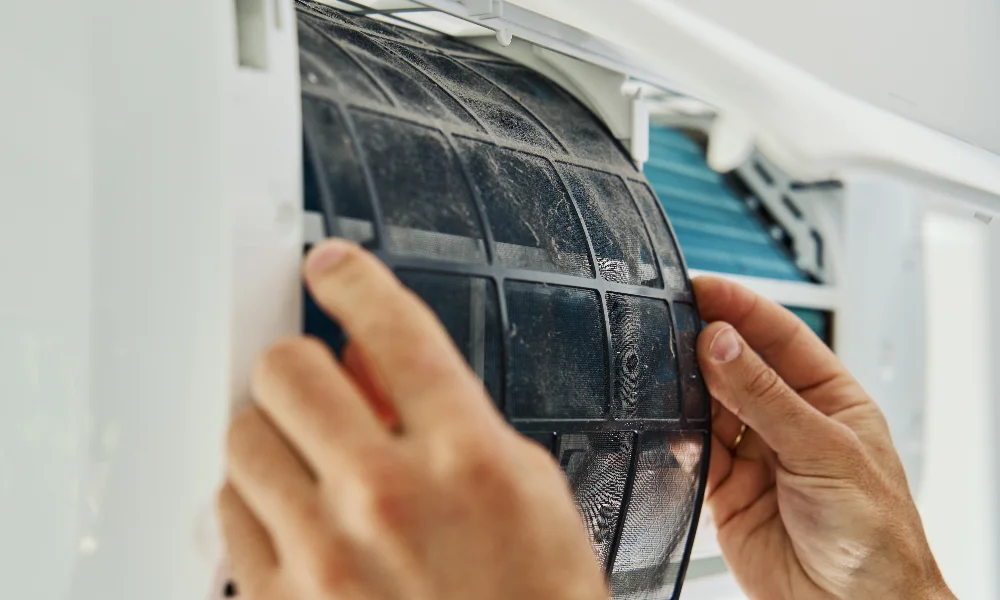
A dirty AC filter can be identified through simple physical and performance changes in the unit that indicate it is no longer functioning as intended. Over time, accumulated particles, reduced airflow passage, and surface blockage create visible and functional differences in the filter’s condition. These changes develop gradually, which is why regular checking is important to ensure the system continues operating under proper air circulation standards.
Visible dust layers and darkened filter material
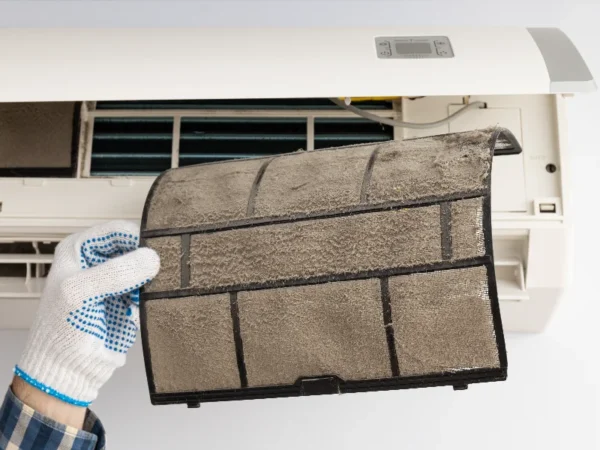
A clean filter looks light and uniform. However, a dirty one appears gray or dark due to dust buildup. This is often the first visible sign of poor filtration.
Reduced airflow when holding the filter to the light
Hold the filter up to a light source. If little to no light passes through, airflow is restricted. This means your system is working harder than it should.
Musty odors coming from the vents
A dirty filter can trap moisture and debris. Over time, this creates a musty smell when the AC runs. This odor often signals mold or bacterial growth inside the system.
FAQs
What Are the Symptoms of Air Conditioning Sickness?
Symptoms include coughing, sneezing, headaches, fatigue, and irritation of the eyes or throat. These issues often worsen indoors and improve when you leave the environment.
How Long Does Air Conditioning Sickness Last?
It depends on exposure. If the source, such as a dirty filter, is not fixed, symptoms can last for weeks. Once the air quality improves, most symptoms reduce quickly.
How Can I Get Rid of Air Conditioning Sickness?
Improving indoor air quality is key. Replace filters, clean the system, and ensure proper ventilation. Professional servicing also helps remove hidden contaminants.
Can a Dirty Air Conditioner Filter Cause the System Not to Work?
It is a valid concern. A clogged filter restricts airflow, which forces the system to work harder. This can lead to overheating, reduced cooling, or even system failure over time.
Call Anton Plumbing Heating & Cooling for Air Conditioning Repair and Tune Up in East Brunswick, NJ
If your AC is affecting your comfort or causing indoor air concerns, it’s best to address it early. A clogged filter can reduce airflow, spread irritants, and strain your system over time. Taking care of these issues not only improves air quality but also assists your system run more efficiently.
For reliable service, you can trust Anton Plumbing Heating & Cooling. Our team understands how filter issues connect to overall system performance and indoor health. We also handle related maintenance needs like commercial system upkeep and cleaning services, which reflects their broader expertise in keeping systems clean and functioning properly.
If you’ve noticed symptoms like poor airflow, dust buildup, or discomfort indoors, scheduling a professional inspection is a smart next step. Clean air starts with a well-maintained system.