Can a vintage steam boiler built in the early 20th century actually communicate with a high-tech smart thermostat without causing a total system meltdown? If you own a classic New Jersey property, you have likely stared at the ancient wiring behind your thermostat and felt that modern energy savings were simply out of reach. It is stressful to manage rising utility costs during a Garden State winter, especially when you fear that a DIY mistake could damage an expensive, specialized boiler. We understand that your home’s character is irreplaceable, but your heating bills do not have to be astronomical.
The truth is that installing a smart thermostat in an old house NJ is the most effective way to tame a vintage heating system. By making this upgrade, you can save approximately 8% on your annual energy costs while qualifying for NJ utility rebates as high as $100 or more in 2026. This guide will walk you through solving the common “no C-wire” problem, ensuring compatibility with older HVAC units, and setting up remote climate control. You will learn exactly how to bridge the gap between historic charm and modern efficiency without risking your household’s comfort or security.
Key Takeaways
- Identify whether your historic steam boiler or forced air system is compatible with modern tech before starting your upgrade.
- Solve the common “no C-wire” problem when installing a smart thermostat in an old house NJ by using power extender kits designed for vintage systems.
- Protect your vintage infrastructure by following professional labeling and power-down procedures to avoid costly wiring errors.
- Access 2026 NJ utility rebates and marketplace discounts from providers like PSEG and NJNG to offset your modernization costs.
Assessing Your NJ Home’s Vintage HVAC Compatibility
New Jersey winters are notoriously unpredictable. One week you are dealing with a damp 50-degree afternoon in Jersey City, and the next, a polar vortex brings sub-zero winds across Old Bridge. For owners of historic homes, these rapid temperature swings make climate management a constant struggle. Installing a smart thermostat in an old house NJ is no longer a luxury; it is a vital strategy for protecting your plumbing from freezing and keeping your utility bills under control. Before you purchase a device, you must perform a “Thermostat Audit” to ensure your vintage system can handle modern logic.
A Smart thermostat requires a constant stream of electricity to maintain its Wi-Fi connection and backlit display. Most modern systems use a “C-wire” or Common wire to provide this dedicated 24V power. However, many NJ homes built before 1970 only have two thin wires running to the wall. These wires simply tell the boiler to turn on or off. If your system lacks this third power source, the smart device may try to “steal” power from the heating circuit, which often leads to clicking noises, short-cycling, or even a damaged transformer.
Common Heating Systems in Old Bridge and Jersey City
Old NJ neighborhoods are famous for steam and hot water boilers. These systems have high thermal mass, meaning they stay warm long after the burner shuts off. A standard smart thermostat might not understand this lag time, leading to uncomfortable temperature overshoots. You should also look for “octopus” gravity furnaces in your basement. These units rely on natural convection rather than blowers. If your home uses high-voltage electric baseboards, you cannot use a standard smart thermostat. These systems carry 120V or 240V, which will instantly destroy a low-voltage smart device. Identifying your system type is the first step toward a safe installation.
The 2-Wire vs. 5-Wire Reality Check
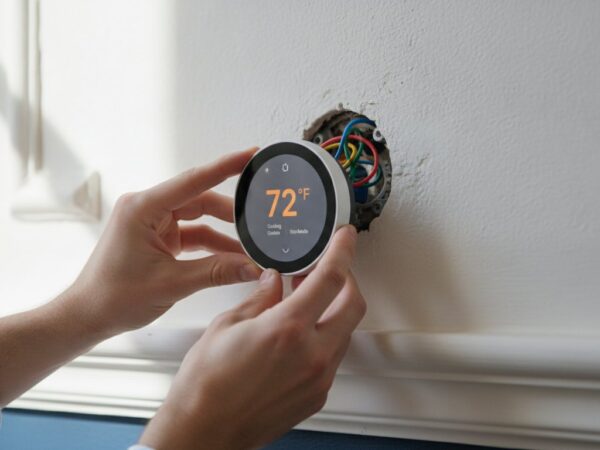
To inspect your current setup, gently pull the existing thermostat off its baseplate. Use a voltage tester to ensure the power is off before touching anything. In many NJ homes, you will find only two wires, often wrapped in decaying cloth insulation rather than modern plastic. Do not trust the colors you see. While “R” is typically red and “W” is typically white, a 50-year-old installation might use whatever wire was available at the time. If you see thick wires secured with wire nuts, you are likely looking at a high-voltage line. In this scenario, stop immediately. Installing a smart thermostat in an old house NJ with high-voltage wiring requires specialized equipment or professional intervention to prevent a fire hazard.
The C-Wire Challenge: Powering Smart Tech with Old Wires
The single biggest hurdle when installing a smart thermostat in an old house NJ is the missing “Common” or C-wire. Modern devices require a continuous loop of 24V power to keep their Wi-Fi radios and color screens active. Most vintage New Jersey homes, especially those with original steam boilers or gravity furnaces, were wired with only two wires. These circuits were designed for simple mechanical switches, not computers. If you attempt to install a high-tech device on these old lines, the thermostat may resort to “power stealing.” This is the process where a device draws small amounts of electricity through the heating circuit while the system is off to charge its internal battery. For older systems, this constant draw can cause mechanical relays to cycle rapidly, which significantly reduces the life of your equipment.
Choosing ENERGY STAR certified smart thermostats is a smart move for efficiency, but even these units need stable power. If your “Thermostat Audit” confirmed a lack of a C-wire, you have three reliable ways to solve the problem without tearing open your plaster walls. You can use a Power Extender Kit (PEK), perform a “G-Wire” hack, or use an external 24V transformer. Each method has specific trade-offs regarding system control and aesthetics.
Using a Power Add-A-Wire Kit
A Power Extender Kit is often the safest solution for homes with a modern control board but limited wall wiring. First, locate your boiler or furnace control board, which is usually found behind a removable panel. Match your existing thermostat wires to the corresponding terminals on the adapter. Finally, mount the adapter securely inside the HVAC cabinet. This creates a virtual power path that provides the necessary voltage without the need for a new cable run.
When to Avoid the ‘Power Sharing’ Feature
Some smart thermostats claim they do not require a C-wire, but this is often a gamble in older NJ infrastructure. Power stealing is the act of pulsing the heating relay to harvest energy, and it frequently leads to a phenomenon known as “chattering.” If you hear a rhythmic clicking from your basement or notice your thermostat screen flickering, your system is struggling. This strain can eventually burn out the transformer on a vintage boiler. If the wiring in your historic home looks unreliable, a professional boiler repair and installation expert can help you determine if your transformer needs an upgrade to support modern tech.
The “G-Wire” hack is another common workaround where you repurpose the fan wire to act as a C-wire. While this provides the power you need, you will lose the ability to run your HVAC fan independently. For those with no access to the furnace-side wiring, a 24V plug-in transformer is the last resort. This device plugs into a nearby wall outlet and connects directly to the thermostat, providing a dedicated power source that keeps your smart features running 24/7 without affecting your heating system’s delicate relays.

Choosing the Best Smart Thermostat for Older NJ Infrastructure
Selecting the right hardware is just as critical as the wiring audit we performed earlier. When you are installing a smart thermostat in an old house NJ, you need a device that respects the unique physics of vintage heating. Some models excel at bridging the gap between old relays and modern apps, while others might struggle with the specific electrical signatures of a 50-year-old boiler. Choosing the wrong unit can lead to frequent disconnects or even damage to your system’s transformer. You want a device that offers technical excellence without compromising the domestic well-being of your household.
- Ecobee: This is often the premier choice for Garden State homeowners because it includes a Power Extender Kit (PEK) in the box. It is specifically designed to handle the 2-wire or 4-wire setups common in historic neighborhoods.
- Google Nest Learning: This model is famous for its “plug and play” reputation. However, the learning algorithm can sometimes conflict with the slow response times of steam heat. It is best for homeowners who have already confirmed they have a stable C-wire.
- Honeywell Home: This brand has been the standard in NJ basements for decades. Their smart T-Series models offer rock-solid reliability and are often more compatible with the specific voltage requirements of older furnaces.
- Emerson Sensi: If you want to avoid a major drywall repair project, the Sensi is a top pick. Its horizontal footprint is large enough to cover the unpainted gaps and screw holes left behind by vintage mercury thermostats.
Best for Steam and Hot Water Radiators
Steam and hot water radiators operate with a significant amount of thermal lag. They take a long time to get hot and stay warm long after the burner shuts off. Many modern thermostats struggle with this, causing the boiler to “short-cycle” as the device tries to micro-manage the temperature. To protect your equipment, you must manually adjust the Cycles Per Hour (CPH) in the professional settings menu. Setting a lower CPH prevents the burner from firing too frequently, which saves fuel and reduces wear. For more tips on keeping your vintage system running efficiently, see our Boiler Repair and Installation guide for deep-dive optimization strategies.
Features That Actually Matter in NJ
New Jersey’s climate and lifestyle demand specific smart features. Geofencing is a game-changer for commuters heading into Manhattan or Jersey City; it automatically lowers the heat when you leave the driveway and warms the house before you return. Humidity sensing is also vital for managing the dampness typical of NJ summers and the bone-dry air of our winters. Finally, prioritize models that support remote sensors. These small battery-powered units solve the “cold spot” problems common in drafty, historic homes by averaging the temperature across multiple rooms rather than just the hallway. This ensures every corner of your home remains a sanctuary of comfort.
This level of remote control is also a major benefit for those who enjoy long-distance travel; for example, while you are exploring remote landscapes on a self-drive tour with MINT Adventures, you can still monitor your NJ property’s temperature to prevent frozen pipes.
Step-by-Step: Installing Your Smart Thermostat Safely
Safety is your absolute priority when working with the electrical components of your home. Before you begin installing a smart thermostat in an old house NJ, you must disconnect the power. Do not simply rely on the thermostat’s “off” setting. Locate your circuit breaker panel and flip the switch labeled for your HVAC system. In many vintage New Jersey basements, you will also find a secondary service switch; this often looks like a standard light switch with a red plate and is located directly on or near the boiler or furnace. Flip this as well. This double-layered approach protects both you and the sensitive electronics in your new device.
Handling the wiring in a 50-year-old house requires a delicate touch. The copper in these older lines can become extremely brittle over decades of heat exposure. When you strip the insulation, use a high-quality wire stripper and avoid nicking the metal. A small notch can cause the wire to snap under the pressure of a terminal block. If you find the wire is too short or damaged, you may need to carefully pull a bit more slack from the wall. Be cautious; in historic homes with plaster and lath construction, snagging a wire can lead to a difficult repair. Always label each wire based on the terminal it was connected to on the old baseplate, not by the color of the insulation.
Pre-Installation Prep
Before you disconnect a single wire, take a clear, well-lit photo of the existing configuration. This visual record is your safety net if the installation becomes confusing. You should also consider the physical footprint of your new tech. Smart thermostats are typically smaller than the heavy mercury dials they replace. Use a trim plate to hide unpainted wall sections or oversized holes. Additionally, ensure your Wi-Fi signal is strong at the mounting location. Thick plaster walls and metal lath common in NJ can act as a shield, potentially requiring a Wi-Fi extender to maintain a stable connection.
The Startup and Testing Phase
Once the wiring is secure and the faceplate is attached, restore power and follow the on-screen prompts. Setting the “Equipment Type” correctly in the app is vital. If you have a steam or hot water system, selecting “Boiler” ensures the device uses the correct timing for heating cycles. If the screen remains dark, use a multimeter to check for 24V between the R and C wires. A “No Power” error often points to a loose connection or a tripped fuse on the control board. If you encounter ancient wiring that crumbles or a system that refuses to boot, seek professional help. Our team provides expert boiler repair and installation to help you bridge the gap between old infrastructure and modern comfort safely.
Maximizing NJ Energy Rebates and Professional Support
Modernizing a historic home shouldn’t be a financial burden. While the technical hurdles of installing a smart thermostat in an old house NJ are real, the financial rewards in 2026 make the effort worthwhile. Beyond the 8% average annual savings on heating and cooling costs, New Jersey residents have access to some of the most aggressive utility incentives in the country. These programs are designed to stabilize the local grid while putting money back into your pocket, effectively paying for the device itself within the first year of operation.
NJ Utility Rebates and Programs
New Jersey utility providers are currently offering substantial incentives to help you upgrade. If you are a PSE&G customer, you can claim a $75 rebate for qualifying smart thermostats through December 31, 2026. For those in the Atlantic City Electric service area, a limited-time rebate of up to $150 is available during the same period. JCP&L customers can also access incentives of up to $100 for ENERGY STAR certified models. Many homeowners find it easiest to buy directly through the PSEG or NJNG Marketplaces, where instant discounts sometimes bring the cost of a new device down to $0. If you are planning a larger efficiency project, ask about the “Rebate program zero interest” financing options that can bundle your thermostat with a Water Heater Replacement to maximize your home’s performance.
Why Professional Installation Wins for Old Homes
There is a point where DIY enthusiasm meets the reality of vintage infrastructure. If you open your wall and find thick 120V “Line Voltage” wires or a cluster of four mystery wires with no clear labels, stop immediately. Attempting to force a connection in these scenarios can lead to a “blown” transformer or a fried control board on your boiler. These mistakes often result in the need for Emergency Repairs during the coldest months of the year. A professional installer does more than just match colors; they perform a “Peace of Mind” check to ensure your new tech isn’t putting undue strain on your vintage boiler’s relays.
Our team brings over 28 years of local experience to every job, specifically understanding the delicate wiring of NJ’s historic neighborhoods. We ensure your system is calibrated for the unique timing of steam and hydronic heat, preventing the short-cycling that wastes fuel and wears out your equipment. Don’t risk your home’s security or your family’s comfort on a guess. For a seamless transition to modern energy savings, Contact Anton Plumbing Heating & Cooling for expert NJ thermostat installation and system optimization today.
Modern Comfort Meets Historic New Jersey Living
Upgrading your vintage home’s climate control is a strategic move for both your wallet and your long-term comfort. By navigating the C-wire challenge and selecting a device that respects the slow thermal timing of a steam boiler, you can bridge the gap between 19th-century architecture and 21st-century efficiency. Remember that 2026 utility rebates from providers like PSEG and JCP&L are available to significantly lower your upfront costs. These incentives make it the perfect time to modernize without losing the unique character of your property.
Installing a smart thermostat in an old house NJ involves more than just matching wire colors; it requires a deep understanding of delicate, aged infrastructure. As licensed NJ HVACR and plumbing experts serving Old Bridge and Jersey City for over 28 years, we specialize in modernizing these complex systems safely. We even provide 24/7 emergency support if a DIY project takes an unexpected turn. Schedule your professional smart thermostat installation with Anton today! Your historic home deserves the precision of modern technology and the protection of seasoned local expertise.
Frequently Asked Questions
Can I install a smart thermostat if I only have two wires?
Yes, you can install a modern device with only two wires, but it requires a specific power solution. Since older systems lack a dedicated power line, you will likely need a 24V plug-in transformer or a power extender kit. These solutions provide the necessary electricity for the thermostat’s Wi-Fi and display without needing to pull new wires through your historic walls. It’s a reliable way to get modern features on a vintage budget.
Will a smart thermostat work with my NJ steam boiler?
Yes, smart thermostats are compatible with steam boilers if you adjust the professional settings during setup. Steam systems heat up and cool down slowly, so you must set a lower “Cycles Per Hour” rate in the installer menu. This adjustment prevents the boiler from turning on and off too frequently. Proper calibration protects your expensive equipment from unnecessary wear and tear while keeping your home comfortable.
How much can I save on my NJ utility bill with a smart thermostat?
You can save approximately 8% on your annual heating and cooling costs by using an ENERGY STAR certified device. In New Jersey, where winter heating bills can be substantial, this often leads to a full return on your investment within the first year. This is especially true when you combine these ongoing energy savings with the immediate rebates offered by local utility providers in 2026.
What is a C-wire and why does my old house lack one?
A C-wire, or Common wire, provides a continuous return path for 24V electricity to power your thermostat’s modern features. Most historic NJ homes lack this wire because vintage mercury-switch thermostats were simple mechanical triggers. They didn’t require a constant power source to maintain a digital connection or a backlit screen. Modern smart tech needs this dedicated loop to stay online 24/7 without draining batteries.
Do I need a professional to install a thermostat in an old house?
Professional help is strongly advised when installing a smart thermostat in an old house NJ due to the complexity of vintage wiring. A licensed HVAC technician can identify high-voltage lines that would destroy a smart device and ensure your boiler’s transformer isn’t overloaded. This protects your home’s domestic well-being and prevents costly system failures that often stem from improper DIY wiring attempts on aged equipment.
What should I do if my old thermostat wires are brittle and breaking?
If your wires are crumbling or snapping, you should stop the installation and contact a professional technician immediately. Brittle insulation is a common issue in older homes and can lead to electrical shorts or fire hazards. An expert can safely repair the connection or pull new, shielded wiring to ensure your system remains reliable. Don’t risk a system failure by forcing a connection with damaged copper.
Are there rebates for smart thermostats in New Jersey in 2026?
Yes, several major NJ utility companies offer significant rebates through December 31, 2026. PSE&G provides a $75 rebate, while Atlantic City Electric offers up to $150 for qualifying models. JCP&L also features incentives up to $100 for ENERGY STAR certified units. These programs make it very affordable to modernize your home’s climate control system while reducing the strain on the local energy grid during peak months.
Can a smart thermostat damage my older HVAC system?
An incorrect installation can lead to relay chattering or a blown transformer in older systems. If a thermostat tries to “steal” power from the heating circuit without a C-wire, it puts a constant strain on your boiler’s electrical components. Installing a smart thermostat in an old house NJ requires careful calibration to avoid these mechanical issues. Professional setup ensures your new technology works in harmony with your vintage heating system.


