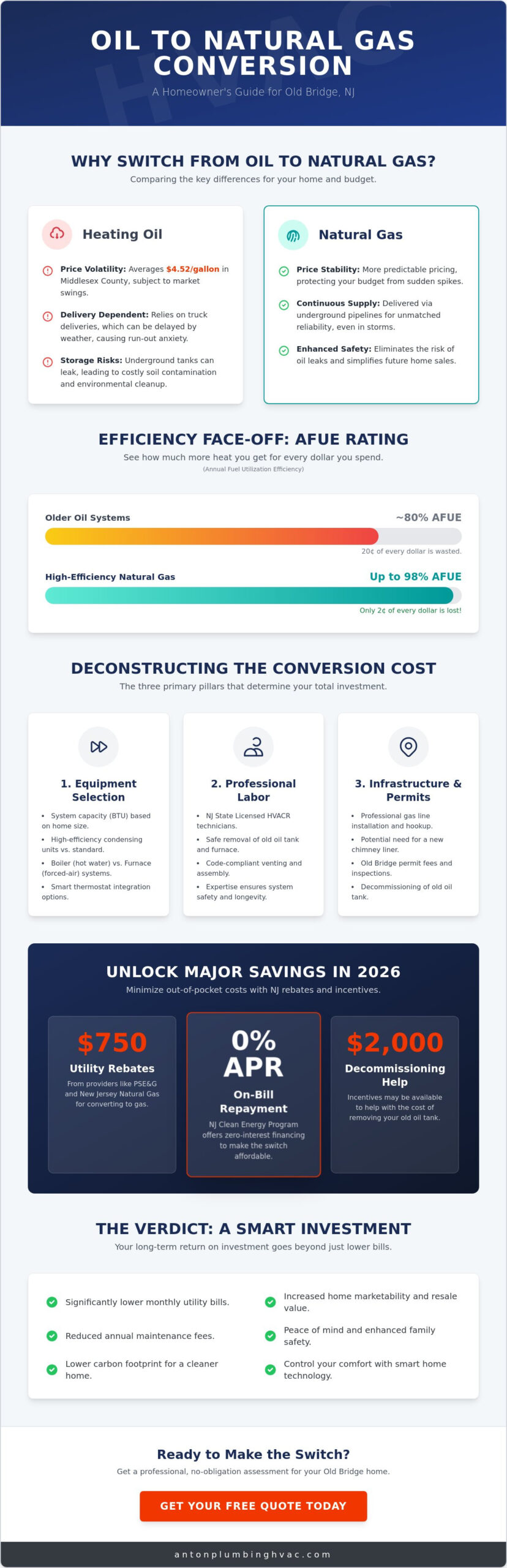
Every time that oil truck pulls into your Old Bridge driveway, you’re paying a volatility tax on a fuel that currently averages $4.52 per gallon in Middlesex County. It’s stressful to watch those delivery costs climb while worrying about the silent threat of a leaking underground tank. You deserve a heating system that protects your family budget and your property safety. Determining the total cost to convert from oil to gas heat Old Bridge NJ requires looking beyond the equipment price tag to the strategic incentives available in 2026.
You probably already know that natural gas offers more price stability, but the sheer volume of local rebate programs can feel overwhelming. This guide clarifies the real factors driving your investment, from Old Bridge permit fees to the $750 conversion rebates offered by local utilities like PSE&G and New Jersey Natural Gas. You’ll discover how to maximize your return on investment using 0% APR on-bill repayment options and decommissioning incentives that can reach $2,000. We’ll walk you through the technical requirements and financial rewards of making the switch to a cleaner, more efficient home.
Key Takeaways
- Understand why Middlesex County homeowners are moving toward high-efficiency gas systems to secure long-term domestic well-being and lower utility bills.
- Identify the three primary pillars that determine the total cost to convert from oil to gas heat Old Bridge NJ, including equipment capacity and labor requirements.
- Prepare for essential infrastructure needs like professional gas line installation and chimney liners to ensure a safe, code-compliant transition for your household.
- Navigate the 2026 NJ Clean Energy Program and utility-sponsored incentives to minimize out-of-pocket expenses through zero-interest repayment options.
- Calculate your total return on investment by factoring in reduced annual maintenance fees and the significant boost to your home’s marketability and resale value.
Why Old Bridge Homeowners are Switching from Oil to Gas in 2026
Old Bridge families are increasingly prioritizing home security and operational simplicity. Converting from oil to gas heat involves replacing aging, oil-fired burners with modern, natural gas equipment. In Middlesex County, this shift isn’t just a trend. It’s a strategic move toward cleaner energy and more predictable utility management. When you evaluate the cost to convert from oil to gas heat Old Bridge NJ, you’re investing in a system that removes the logistical headache of fuel deliveries. You stop being a customer at the mercy of a delivery schedule and start being a homeowner in control of your comfort.
To understand the shift, it’s helpful to know exactly what is heating oil? and why its reliance on truck deliveries makes it vulnerable. Natural gas arrives via underground infrastructure, providing a level of reliability that truck-delivered fuels can’t match. This means your home stays warm during severe NJ winter storms when ice or snow might delay a delivery vehicle. You stop monitoring a tank gauge and start enjoying a continuous, reliable fuel supply. By choosing a professional furnace repair and installation, you ensure your family remains comfortable regardless of the weather outside. This transition effectively ends the “run-out” anxiety that many oil users face every February.
The Environmental and Efficiency Edge of Natural Gas
Modern natural gas units offer a significantly lower carbon footprint than traditional oil. This environmental benefit comes paired with superior performance. AFUE (Annual Fuel Utilization Efficiency) ratings measure how effectively a system converts fuel into heat. While older oil boilers often struggle to reach 80%, a new high efficiency HVAC system can achieve ratings as high as 98%. This ensures your money goes toward warming your home rather than escaping through the chimney. These systems integrate seamlessly with smart home technology, giving you direct control over your domestic well-being from any mobile device.
Eliminating the Risks of Oil Storage
The biggest concern for many local homeowners is the threat of an underground oil tank leak. These leaks lead to soil contamination and massive cleanup costs that can devastate a family’s finances. Removing the tank and switching to gas provides immediate relief from this anxiety. It secures your property’s environmental health and simplifies future real estate transactions. In the New Jersey housing market, buyers and lenders favor homes with gas heat because they don’t carry the “hidden” liability of aging oil infrastructure. By upgrading to a modern boiler or furnace, you’re protecting your home’s resale value and your peace of mind. Our team approaches every conversion with the precision of a guardian, ensuring the job is done right the first time.
Primary Factors Influencing the Cost to Convert from Oil to Gas
Calculating the investment for a home heating transition requires a clear decision framework. The total cost to convert from oil to gas heat Old Bridge NJ rests on three main pillars: equipment selection, labor expertise, and infrastructure readiness. Your home’s square footage directly dictates the British Thermal Units (BTU) required to maintain warmth. A larger home in Old Bridge needs a higher-capacity system, which naturally increases the initial equipment investment. Additionally, the type of existing heat distribution in your home plays a major role. Converting a steam or hot water boiler system typically involves different technical hurdles than a forced-air furnace replacement.
Labor costs in New Jersey reflect the high level of specialized expertise required for a safe transition. Our state requires specific licensing for both plumbing and HVACR work to ensure every gas line connection and venting assembly meets strict safety codes. When you hire a professional with a New Jersey state HVACR license, you’re paying for the security of a system that won’t fail when the temperature drops. If you’re considering a high efficiency HVAC system tailored to your home’s unique layout, starting with a professional assessment is the most reliable first step.
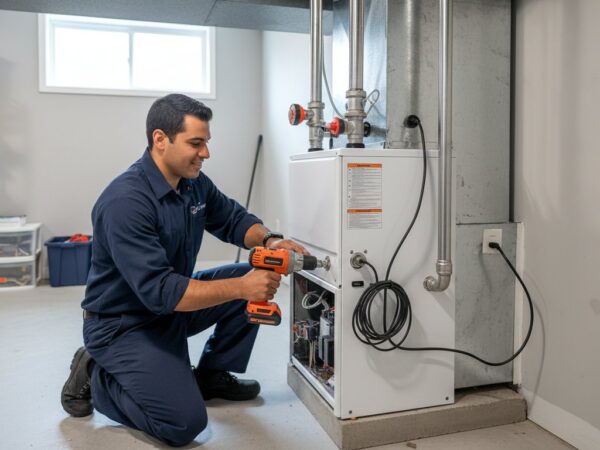
New Gas Furnace or Boiler Installation
Choosing between a standard and a high-efficiency condensing unit is your most significant decision. Condensing units capture heat that traditional systems lose through the chimney, significantly lowering your monthly bills. Forced-air systems often allow for a straightforward furnace swap. Conversely, hydronic systems (boilers) may require more intensive labor to integrate with existing radiators or baseboards. Understanding the nuances of HVAC repair East Brunswick can help you plan for the long-term maintenance of these sophisticated units, ensuring they run at peak performance for years.
Oil Tank Removal and Soil Testing
You can’t simply walk away from an old oil tank. New Jersey law mandates specific procedures for legal tank abandonment or removal. Removing the tank entirely is the gold standard for protecting your property value and ensuring domestic security. This process includes professional excavation, tank cleaning, and mandatory soil testing. While soil testing adds a variable cost factor, it’s a critical safeguard against environmental liability. Following PSE&G’s conversion process guidelines ensures that every step, from the gas service application to the final inspection, is handled according to utility standards. This methodical approach eliminates the risk of future soil contamination issues and protects your investment.
Hidden Expenses: Infrastructure and Gas Line Hookups
Many homeowners focus solely on the furnace price, but the true cost to convert from oil to gas heat Old Bridge NJ involves vital infrastructure upgrades behind the scenes. You can’t just hook a new gas unit into an old oil setup and expect it to function safely. Professional gas line installation and leak repair expertise is required to run new piping from your utility meter directly to the heating unit. This is also a strategic time to consider broader domestic improvements. Since you’re already installing gas lines, adding a gas range or clothes dryer becomes much more cost-effective. Modern HVAC blowers also require reliable power; this may necessitate minor electrical adjustments to your existing panel to ensure consistent performance during peak winter months.
Planning for these infrastructure needs early prevents mid-project surprises. While the utility company handles the line from the street to the meter, everything from the meter into your home is your responsibility. High-efficiency systems often use specialized venting that exits through a side wall, but many standard units still rely on your chimney. If your home has an older masonry chimney, it wasn’t designed for the cooler, moisture-rich exhaust produced by natural gas. Ignoring this detail can lead to expensive structural damage over time. By addressing these “hidden” elements now, you safeguard your home and ensure your new system operates at its highest potential.
Chimney Relining for Gas Appliances
Gas exhaust is chemically different from oil exhaust. It’s cooler and contains more moisture, which can condense into acidic liquid inside an unlined chimney. This liquid eats away at mortar joints and bricks, eventually compromising your home’s safety. You’ll typically choose between aluminum and stainless steel liners. Aluminum is often sufficient for standard furnaces, while stainless steel offers superior durability for high-efficiency systems. Securing your home with the right liner is a non-negotiable step for any responsible homeowner looking to maximize their system’s lifespan and prevent carbon monoxide risks.
Extending Gas Lines from the Curb to the Furnace
The physical distance from the street to your home influences the initial utility hookup fees. Once the gas reaches your meter, the internal piping must be sized correctly to handle the load of all connected appliances. If you plan on adding a tankless water heater or a gas fireplace later, tell your technician now. It’s much cheaper to install a larger header pipe today than to rip everything out in two years. Checking with New Jersey’s Clean Energy Program can provide insights into how these infrastructure upgrades fit into broader state-wide efficiency goals, helping you stay ahead of changing regulations.
Navigating NJ Clean Energy Rebates and Old Bridge Permits
Offsetting the initial cost to convert from oil to gas heat Old Bridge NJ is simpler when you leverage state-wide and utility-specific incentives. In 2026, New Jersey’s Clean Energy Program (NJCEP) continues to reward homeowners who prioritize high-efficiency upgrades. For those in Old Bridge served by New Jersey Natural Gas (NJNG), the SAVEGREEN project offers robust rebates and 0% APR on-bill repayment options through June 30, 2027. PSE&G customers can access a $750 conversion rebate specifically for switching from delivered fuels. These programs effectively lower your out-of-pocket burden while making modern comfort financially accessible. Our team acts as your guardian through this process, ensuring you meet every technical requirement to qualify for these funds.
Financial assistance isn’t limited to equipment alone. If your project includes decommissioning an old tank, you may qualify for additional rebates up to $2,000. For comprehensive upgrades that include electrification measures, the on-bill repayment allowance can reach as high as $75,000. These zero-interest programs allow you to pay for your new system through your monthly utility bill, often offsetting the payment with the energy savings you’ve gained. We recommend reviewing these options before you begin, as many programs require pre-approval or specific equipment combinations. To start your transition with a team that understands these local incentives, schedule your high efficiency HVAC system consultation today.
How to Maximize Your NJ Energy Rebates
Rebate eligibility often hinges on choosing AHRI-matched equipment. This means the components of your heating system are certified to work together to hit specific efficiency targets. Simply buying a high-rated furnace isn’t enough; the entire installation must meet state standards. While the homeowner typically signs the final agreement, a professional contractor handles the technical paperwork and load calculations required by the utility. Bundling your project with a water heater replacement can often unlock higher rebate tiers, further maximizing your return on investment.
Old Bridge Municipal Permits and Safety Inspections
Never skip the permit process in Old Bridge Township. Unpermitted work can void your homeowner’s insurance and create significant legal hurdles during a future home sale. The township requires a $75 fee for the gas appliance installation, along with mandatory subcode fees for plumbing and electrical work. These inspections are your final safety net. Inspectors verify that gas lines are pressure-tested and venting is installed correctly to prevent carbon monoxide risks. In Middlesex County, permit approval timelines vary, but having a licensed professional manage the application ensures your project stays on schedule and meets every local safety standard.
The Verdict: Is the Oil-to-Gas Investment Worth It?
The verdict on the cost to convert from oil to gas heat Old Bridge NJ is clear when you view it as a multi-year financial strategy rather than a one-time expense. While the initial infrastructure work requires an upfront investment, the immediate reduction in monthly utility bills begins the recovery process from day one. Natural gas prices remain more stable than the global fluctuations of heating oil, providing a predictable budget for your household. Beyond the fuel itself, you’ll see a sharp decline in maintenance costs. Gas systems burn cleaner, which means you can say goodbye to the heavy soot buildup and the messy annual burner cleanings required by oil-fired units. This shift protects your domestic well-being and your wallet simultaneously.
Real estate value is another critical factor in this calculation. Homes in Middlesex County that have already transitioned to gas heat often achieve a “ready-to-sell” status much faster than those with aging oil infrastructure. Prospective buyers and mortgage lenders view an underground oil tank as a potential liability; removing that risk entirely makes your property more attractive and easier to finance. You aren’t just buying a new furnace; you’re securing a “Ready-to-Sell” premium that pays dividends when it’s time to move. Choosing a professional for your boiler repair and installation ensures this transition is a permanent asset to your home’s equity.
Calculating Your Payback Period
Determining your break-even point is a straightforward process. Use this simple formula: (Total Installation Cost minus Rebates) divided by your Annual Fuel Savings. Because modern high efficiency HVAC system technology has advanced so rapidly, the payback period is significantly shorter in 2026 than it was even five years ago. These systems extract more heat from every therm of gas, accelerating your return on investment. When you factor in the elimination of service calls for clogged oil nozzles or failing fuel pumps, the financial argument for conversion becomes even more compelling. Most Old Bridge families find that the system pays for itself long before the equipment warranty expires.
Choosing a Licensed NJ HVAC Contractor for Conversion
A complex gas conversion is not a project for a generalist. It requires the technical precision of a guardian who understands the specific codes of our community. With over 28 years of industry tenure, our team brings the specialized expertise needed to manage gas line installation and equipment calibration safely. We provide the security of a New Jersey state HVACR license and the reliability of 24/7 emergency support during your first winter with the new system. You deserve a partner who values clarity and ethical standards throughout the entire process. Don’t leave your family’s comfort to chance. Schedule your oil-to-gas conversion estimate with Anton and take the first step toward a cleaner, more efficient home.
Secure Your Home’s Future with a Modern Gas Transition
Switching to natural gas is a definitive step toward domestic security and financial predictability. You’ve seen how the cost to convert from oil to gas heat Old Bridge NJ is an investment that pays for itself through lower fuel prices and the elimination of soot-heavy maintenance. By leveraging current NJ clean energy rebates and decommissioning your old oil tank, you protect your property value while creating a safer environment for your family. This transition replaces delivery anxiety with a steady, underground fuel supply that stays reliable even during the toughest Middlesex County winters.
Don’t let the complexity of utility applications or gas line hookups stall your progress. With over 28 years of NJ HVAC experience, our team serves as your local guardian through every stage of the installation. We are licensed and insured gas line specialists who provide 24/7 emergency availability in Old Bridge to ensure your peace of mind never wavers. Get a Professional Oil-to-Gas Conversion Quote from Anton Plumbing today and start enjoying a more reliable, cost-effective heating system. You’ve done the research; now take the action that secures your home for years to come.
Frequently Asked Questions
How much does it cost to convert from oil to gas in Old Bridge, NJ?
The total investment for a conversion in New Jersey typically ranges between $8,000 and $18,000 depending on your home’s specific infrastructure. If a natural gas line already exists at the street, your cost to convert from oil to gas heat Old Bridge NJ often falls into the $8,000 to $12,000 range. These figures include the high-efficiency heating unit, professional labor, and the necessary municipal permits required by the township.
Do I have to remove my underground oil tank when I switch to gas?
Removing the tank is the most secure option for protecting your property’s resale value and domestic well-being. While New Jersey law allows for legal abandonment in specific cases, most homeowners choose full removal to eliminate future environmental liabilities. This process ensures that no hidden soil contamination issues complicate a home sale or mortgage application later. It’s a proactive step that secures your property as a clean asset.
How long does the actual oil-to-gas conversion process take?
The physical equipment swap and gas line connection usually take between one and three days to complete. However, the total timeline depends on the speed of utility line installation from the street and the Old Bridge Township permit approval process. We coordinate these moving parts to minimize downtime, ensuring your family stays warm and comfortable throughout the transition period.
Are there still rebates available for gas conversions in NJ in 2026?
Substantial incentives remain active throughout 2026 for homeowners who choose high-efficiency equipment. PSE&G offers a $750 conversion rebate for delivered fuel customers, while the NJNG SAVEGREEN program provides 0% APR on-bill repayment options through June 30, 2027. These programs are designed to lower the financial barrier for families seeking cleaner, more reliable heating solutions for their households.
Can I keep my old radiators if I switch from an oil boiler to a gas boiler?
You can absolutely keep your existing cast-iron radiators or baseboards when switching to a gas-fired boiler. Our technicians specialize in hydronic systems and can integrate a modern, high-efficiency boiler with your home’s current distribution network. This approach preserves the character of older Old Bridge homes while significantly boosting energy efficiency and reducing your monthly utility expenses.
What happens if a leak is found during my oil tank removal in Old Bridge?
If a leak is discovered, professional remediation is required to protect the soil and groundwater. This involves removing the contaminated soil and conducting mandatory testing to meet NJ Department of Environmental Protection standards. Addressing a leak immediately is critical for your property’s safety and long-term financial security. We act as a steady partner through this process to ensure your home returns to a safe state.
Is natural gas really cheaper than heating oil for NJ homeowners?
Natural gas historically offers much greater price stability compared to the global volatility of heating oil. As of June 2026, heating oil in Middlesex County averaged $4.52 per gallon. Switching to natural gas allows you to avoid these high delivery costs and the unpredictability of a truck-delivered fuel supply. Most homeowners see a significant reduction in their annual heating expenses immediately after the conversion.
Will I need to reline my chimney when I switch to a gas furnace?
Most masonry chimneys require a professional liner when you transition to a gas furnace or boiler. Gas exhaust is cooler and contains more moisture than oil exhaust, which can cause acidic condensation to damage your chimney’s interior mortar over time. Installing a stainless steel or aluminum liner protects your home’s structural integrity and ensures all combustion gases are vented safely away from your living space.


