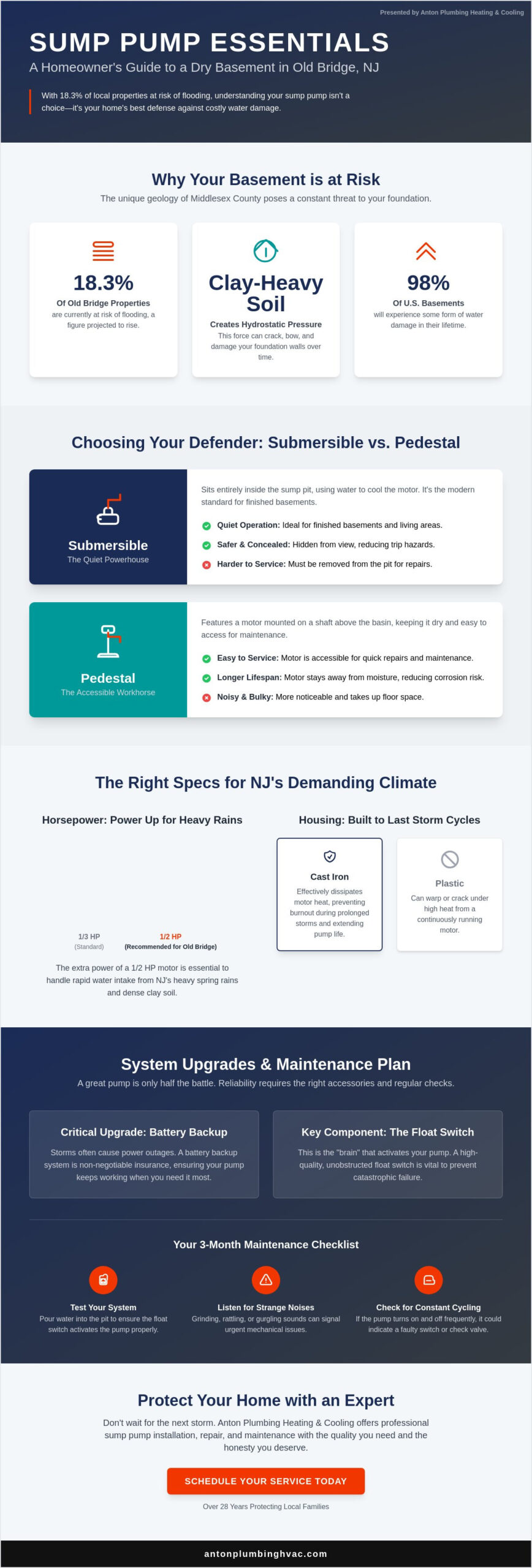
Did you know that 18.3% of properties in Old Bridge are currently at risk of flooding, a figure projected to reach 19.5% within the next thirty years? With 98% of U.S. basements likely to face water damage at some point, professional sump pump installation and repair is a vital shield for your home’s foundation. You shouldn’t view your pump as a “set and forget” appliance. It’s a dynamic safety system that requires specific calibration for New Jersey’s unique climate and clay-heavy soil.
You probably feel a knot of anxiety every time a heavy spring rain hits or the power flickers during a storm. We understand that stress because we’ve spent over 28 years protecting local families from the high costs of water restoration. This guide will help you choose between submersible and pedestal models, navigate the 2026 NJDEP REAL rule amendments, and maintain your system for maximum reliability. You’ll learn exactly how to protect your basement so you can sleep soundly, even when the clouds turn gray.
Key Takeaways
- Discover why 1/2 HP pumps are often the superior choice for Old Bridge’s clay-heavy soil compared to standard 1/3 HP models.
- Learn a simple 3-month testing routine to ensure your system activates properly before the next heavy NJ rainstorm hits.
- Master the essentials of professional sump pump installation and repair, including how to correctly size your sump pit and secure necessary local permits.
- Identify common warning signs like constant cycling or strange noises that signal when a repair is urgent versus when a full replacement is required.
- Understand why pairing your primary pump with a battery backup is a critical step for maintaining a dry basement during frequent local power outages.
Understanding Sump Pumps: Your Defense Against NJ Basement Flooding
A sump pump is a specialized water management system designed to pump ground water away from your foundation before it can cause structural damage. This mechanical guardian sits within a pre-constructed basin, or sump pit, located at the lowest point of your basement or crawl space. As the water table rises due to heavy rains or snowmelt, the pit collects the excess liquid. Once the water reaches a specific level, the pump activates, forcing the water through a discharge pipe and away from your home’s perimeter. If you are unfamiliar with the mechanics, you can learn more by exploring What is a Sump Pump? to understand the differences between common models.
In Old Bridge and throughout Middlesex County, the local geology presents unique challenges for homeowners. Our region is known for clay-heavy soil that retains moisture far longer than sandy alternatives. This saturated earth creates significant pressure against your basement walls. Professional sump pump installation and repair is not just a luxury here; it’s a necessity to prevent the high cost of water damage cleanup, which can often exceed several thousand dollars after a single storm. By choosing a reliable system, you preserve your home’s equity and ensure the structural integrity of your foundation remains intact for decades.
How Hydrostatic Pressure Affects Your Foundation
When the ground around your home becomes oversaturated, the weight of the water creates immense stress on your underground walls. Hydrostatic pressure is the force exerted by stagnant water against your foundation. You might notice the results of this pressure as small horizontal cracks in your foundation blocks or a white, powdery substance known as efflorescence. These are clear signals that ground water is trying to find a way inside. If left unchecked, this pressure can eventually cause walls to bow or even buckle. A properly installed pump relieves this stress by giving the water an easy path out of the soil and into the pit.
Why Gravity Drainage Is Not Enough in New Jersey
Many older homes in our area rely on passive systems like French drains that use gravity to move water. While these are helpful, they often fail during the intense flash flooding and coastal storms common to the Jersey Shore region. Gravity drainage simply cannot keep up when the local infrastructure becomes overwhelmed or when the water table rises faster than the pipes can drain.
Mechanical pumps serve as the last line of defense for your basement. They provide the active force needed to move hundreds of gallons of water per hour, even when the ground outside is completely waterlogged. At Anton Plumbing Heating & Cooling, we’ve spent over 28 years seeing how these systems save homes. We believe in providing the quality you need and the honesty you deserve to keep your family safe. Don’t wait for the next storm to test your system. Need a Plumber? Call Anton! our team is ready to ensure your sump pump installation and repair is handled with technical precision.
Comparing Pump Types: Submersible vs. Pedestal Systems
Choosing the right hardware is the most critical step in a successful sump pump installation and repair strategy. You essentially have two paths: submersible or pedestal designs. While both serve the same purpose, their mechanical execution differs significantly. A submersible pump sits entirely within the pit, using the surrounding water to cool the motor. In contrast, a pedestal pump features a motor mounted on a shaft above the basin, keeping it away from moisture. Beyond the design, you must consider horsepower. While 1/3 HP is the national standard, we typically recommend 1/2 HP for Old Bridge homes. This extra power is necessary to handle the rapid water intake caused by New Jersey’s heavy spring rains and clay soil. We also prioritize cast iron housings over plastic; cast iron dissipates heat more effectively, which prevents the motor from burning out during a 48-hour storm cycle.
The float switch is another vital component, acting as the “brain” of the system. This switch triggers the pump when water reaches a certain height. If the switch fails, your basement floods regardless of how powerful the motor is. Ensuring this component is high quality and unobstructed is a key part of our maintenance checklist. For those looking to keep their system in peak condition, following professional Sump pump maintenance tips can help you identify early signs of wear before a disaster strikes.
Submersible Pumps: The Quiet Powerhouse
Submersible models are the gold standard for finished basements in Middlesex County. Because the motor is underwater, these units operate with a muffled hum that won’t disrupt your daily life. They also offer higher volume capacities, often moving 3,000 to 4,000 gallons per hour. The main trade-off is accessibility. Since the unit is submerged, repairs can be more labor-intensive. However, their ability to handle small solids and their discreet profile make them the favorite choice for homeowners looking to maintain a comfortable living space.
Pedestal Pumps: Reliability on a Budget
If you have an unfinished crawl space or a very narrow sump pit, a pedestal pump might be your best bet. These units often boast a longer lifespan, sometimes lasting up to 15 years, because the motor never gets wet. They are also much easier to service; a technician can often fix a switch or a motor component without pulling the entire assembly out of a muddy pit. The downside is the noise. They are significantly louder than submersibles and can be an eyesore in a room you actually use. For homeowners on a budget, pedestal installations typically range from $800 to $1,500, making them an affordable entry point for flood protection.
The Critical Role of Battery Backup Systems
A primary pump is only as good as the power grid. During a severe NJ storm, power outages are common, and that’s exactly when your basement is most vulnerable. We strongly advise pairing your primary unit with a battery backup system, which typically adds between $1,000 and $2,000 to the total cost but provides priceless peace of mind. You can choose between DC battery backups or water-powered secondary pumps that use your home’s municipal water pressure to create suction. Integrating these systems is part of a holistic safety plan that often includes checking other vital utilities. For instance, ensuring your gas line installation and leak repair is up to code prevents fire hazards during the same storms that cause flooding. If you’re ready to upgrade your home’s defenses, contact our expert team today for a professional consultation. Need a Plumber? Call Anton!
Step-by-Step Sump Pump Installation Guide
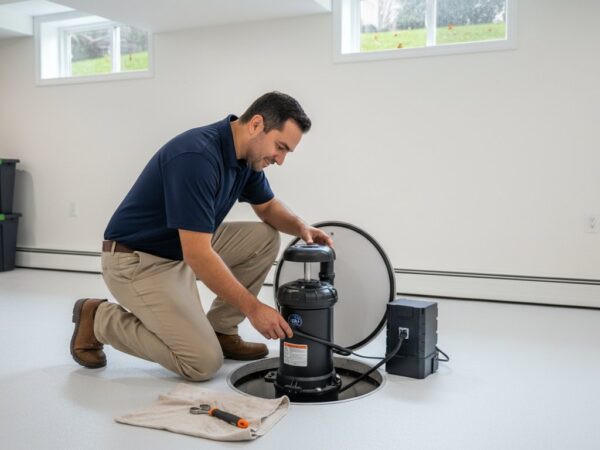
Executing a successful sump pump installation and repair requires more than just a shovel and a pump. Before you begin, you must verify local regulations. In the Township of Old Bridge, for example, homeowners are required to pay a $50 fee for a sump pump installation permit. You’ll also need a specific set of tools: a hammer drill, PVC pipe cutters, a torpedo level, and high-strength PVC solvent. Safety is the highest priority, so ensure your work area is dry before touching any electrical components. A Ground Fault Circuit Interrupter (GFCI) outlet is non-negotiable for these systems. Because water and electricity are a dangerous mix, this specialized outlet shuts off power instantly if a ground fault is detected, protecting your family from electric shock.
Preparing the pit correctly determines the lifespan of your equipment. Dig the hole deep enough to accommodate a layer of coarse gravel at the bottom. This gravel acts as a filter, preventing silt from entering the pump intake. Once the gravel is level, place the basin inside. It should sit flush with or slightly below the basement floor. Routing the discharge line is equally vital; the water must be directed at least 10 to 20 feet away from your foundation to prevent it from simply seeping back into your basement. At Anton Plumbing Heating & Cooling, we’ve refined this process over 28 years to ensure every installation meets the highest safety standards. Need a Plumber? Call Anton!
Setting the Basin and Pump
Position the basin carefully and use a level to ensure it’s perfectly flat. If the basin is tilted, the pump can “walk” or vibrate against the walls, leading to premature motor failure. One common DIY mistake is forgetting to drill a 1/8-inch weep hole in the discharge pipe just above the pump. This hole prevents airlock, a condition where air gets trapped in the pump and stops it from moving water. Finally, place the pump in the center of the basin. Verify that the float switch has at least two inches of clearance on all sides so it can move freely without snagging on the basin wall.
Installing the Check Valve and Discharge Pipe
The check valve is a small but mighty component that prevents pumped water from falling back into the pit once the motor stops. Without it, your pump will cycle constantly, burning out the motor in a matter of months. A check valve must be installed with the arrow pointing in the direction of water flow. When joining your PVC discharge pipes, use a primer and solvent welding technique to create a permanent, leak-proof seal. This ensures the high pressure of the pump won’t blow the joints apart during a heavy surge.
Testing and Final Adjustments
Never consider the job finished until you perform the “Bucket Test.” Slowly pour five gallons of water into the pit to simulate a flood. Watch the float switch rise and confirm the pump activates and shuts off at the correct levels. You may need to adjust the float height to ensure the pump doesn’t cycle too frequently. To finish, bolt down a gas-tight lid. This is essential for radon safety and moisture control, keeping your basement air healthy and dry. If the process feels overwhelming, remember that professional sump pump installation and repair offers the technical precision your home deserves.
Troubleshooting and Repair: When to Fix vs. Replace
Maintaining your flood defense system requires a sharp eye for detail. If you hear grinding noises or feel excessive vibration, these are often signs that the impeller is damaged or the motor is failing. Constant cycling is another red flag. If your pump turns on and off every few seconds, the check valve might be broken or the pit is simply too small for the inflow. Before calling for professional sump pump installation and repair, check your power supply. Sometimes a simple tripped GFCI outlet is the only thing standing between you and a dry basement. You should also inspect the intake screen for debris. A clogged screen starves the pump of water and can lead to a “dry run” that destroys the motor seals. Sometimes, what looks like a pump failure is actually a blockage in your discharge line. If water cannot exit the house, the pump will struggle. In these cases, our drain cleaning services can clear the line and restore your system’s efficiency.
Age is the ultimate factor in pump reliability. Most units have a typical lifespan of 7 to 10 years. If your pump was installed before 2017, it has likely reached the end of its reliable service life. At Anton Plumbing Heating & Cooling, we’ve seen many homeowners wait until a storm hits to realize their old pump is dead. This delay often leads to water damage restoration calls, which account for 57% of all emergency service requests in parts of New Jersey. We believe in being proactive rather than reactive to protect your home comfort and safety. If your sump pump fails without warning during a storm, you’ll want an emergency plumber Old Bridge NJ homeowners can rely on for immediate 24/7 response to prevent costly water damage.
Identifying Mechanical vs. Electrical Failures
Determining why a pump won’t start begins with the float switch. This is the number one cause of pump “failure.” Often, the switch simply gets stuck against the side of the basin and cannot rise with the water level. If the switch moves freely but the pump remains silent, check your breaker panel. A tripped breaker might indicate the motor is drawing too much current, a sign it is nearing burnout. Mechanical failures are usually louder. If the motor hums but no water moves, the impeller could be jammed by a small stone or piece of debris. Avoid letting the pump run “dry” during testing, as this creates heat that permanently damages internal gaskets.
Decision Matrix: Repair or Replace?
Deciding whether to fix an old unit or invest in a new one comes down to a simple cost-benefit analysis. The average cost to repair a sump pump is between $200 and $870. Given that replacing an existing pump in New Jersey typically costs between $309 and $754, a major repair rarely makes financial sense for an older unit. You must also consider the risk. Is a $200 repair on an 8-year-old pump worth the $20,000 risk of a flooded basement? Modern models for 2026 now offer smart technology with Wi-Fi connectivity and smartphone apps for remote monitoring. These systems alert you to water levels and power status before a flood occurs. If your current system lacks these safeguards, schedule your sump pump inspection with our team today. Need a Plumber? Call Anton!
Professional Sump Pump Services in Old Bridge: The Anton Advantage
Choosing a local partner for sump pump installation and repair makes a world of difference when the skies open up over Middlesex County. We’ve spent more than 28 years navigating the specific drainage challenges of Old Bridge homes, from the clay-heavy soil to the rising water tables near the coast. Our team understands that a dry basement is the foundation of your family’s safety and comfort. When you call Anton, you’re getting more than just a technician. You’re getting a licensed Master Plumber who follows every local code to the letter. We operate on a simple promise: Quality you need, Honesty you deserve. This means we provide upfront pricing before any work begins. You’ll never face a surprise bill or hidden fees in the middle of a flooding crisis.
Our 24/7 emergency response ensures that you’re never alone when a pump fails during a midnight storm. We arrive with fully stocked trucks, ready to perform immediate repairs or a full system replacement if necessary. We use advanced diagnostic tools like leak detection sensors to ensure your system is running at peak efficiency. This level of technical precision is why thousands of local families trust us to act as the guardians of their home infrastructure. We don’t just swap out parts; we engineer solutions that keep your basement dry for the long haul.
Comprehensive Home Comfort Solutions
We take a “whole house” approach to your safety. A flooded basement doesn’t just ruin your carpet; it can destroy your expensive mechanical systems. Our experts ensure your flood prevention strategy protects other vital investments, such as a recent water heater replacement. Moisture from a failing pump can also lead to mold growth that impacts your air quality. That’s why we coordinate our plumbing services with our climate experts, including those specialized in HVAC repair in East Brunswick. This integrated perspective ensures your home remains a safe, healthy environment regardless of the weather outside. Water intrusion from a compromised sump system can also migrate into bathroom walls, making timely shower repair in NJ an important part of protecting your home from hidden moisture damage.
Schedule Your Sump Pump Inspection Today
Don’t wait for the first heavy rain of the spring to find out your pump is seized. A pre-storm season tune-up is the most cost-effective way to prevent a disaster. During a professional inspection, we test the float switch, clean the basin, and verify the battery backup’s charge. Booking an appointment with Anton Plumbing Heating & Cooling is simple and fast. We respect your time and provide narrow arrival windows so you don’t have to wait around all day. It’s time to trade your flood anxiety for the confidence that comes with a professionally maintained system. Need a Plumber? Call Anton!
Secure Your Home Against the Next Storm
Your home is likely your most significant investment. Protecting it requires more than just a standard pump; it demands a system calibrated for the 18.3% flood risk currently facing Old Bridge properties. We’ve explored how 1/2 HP submersible units and battery backups provide the critical last line of defense against New Jersey’s unique hydrostatic pressure. Remember that a pump older than 10 years is a liability you can’t afford when statistics show 98% of basements eventually face water damage. Expert sump pump installation and repair ensures your system meets the 2026 REAL rule standards and keeps your family safe during the most intense coastal storms.
Anton Plumbing Heating & Cooling brings over 28 years of local experience to every service call. Our licensed and HVACR-certified professionals remain available 24/7 for emergency responses throughout Old Bridge. We provide the technical excellence and upfront clarity your household deserves. Protect your home from flooding, schedule your sump pump service with Anton Plumbing today! Don’t let a failing float switch turn into a costly restoration project. Quality you need, Honesty you deserve is just a phone call away. Need a Plumber? Call Anton!
Frequently Asked Questions
How often should I test my sump pump?
Test your pump every 3 to 4 months by pouring a bucket of water into the pit until the float switch activates. Regular testing is vital because 60% of homes in the U.S. have wet basements, and you don’t want to discover a failure during a storm. Clear any debris from the pit during these tests to ensure the intake screen remains unobstructed.
Does a sump pump require a dedicated circuit?
Yes, your pump should have a dedicated circuit to prevent it from tripping a breaker shared with other appliances. Most manufacturers and local codes require a GFCI outlet for this dedicated line to ensure safety in wet conditions. If your pump shares a circuit, it might fail exactly when it works hardest during a heavy New Jersey rainstorm.
What is the average lifespan of a submersible sump pump?
A submersible pump typically lasts between 7 and 10 years depending on how often it cycles. If your unit was installed before 2017, it’s time to consider a replacement before the next hurricane season. Cast iron models often outlast plastic ones because they dissipate heat more efficiently during long periods of operation.
Can I install a sump pump myself or do I need a plumber?
While minor maintenance is possible for homeowners, professional sump pump installation and repair is highly recommended to ensure code compliance. In Old Bridge, you must secure a $50 permit for new installations. A Master Plumber ensures the discharge line is properly routed 10 to 20 feet from the foundation and the check valve is oriented correctly.
Why is my sump pump making a loud thumping noise when it stops?
A loud thumping noise is usually “water hammer” caused by water rushing back down the discharge pipe and slamming the check valve shut. You can solve this by installing a “quiet” check valve that uses a spring-loaded mechanism to close the valve gently. This repair prevents stress on your PVC joints and extends the life of your plumbing.
What happens to my sump pump if the power goes out?
Your primary pump will stop working immediately during a power outage unless you have a battery or water-powered backup system. Since 57% of water damage calls in some NJ areas are related to storm flooding, a backup is essential. These systems automatically take over to keep your basement dry until the main power is restored.
How much does it cost to install a sump pump in New Jersey?
In New Jersey, a brand-new sump pump installation averages $1,200, with full systems ranging from $1,200 to $3,000. If you are simply replacing an existing unit, the average cost drops to between $309 and $754. Adding a battery backup system typically adds another $1,000 to $2,000 to the total project cost.
Is a sump pump covered by standard homeowners insurance?
Standard homeowners insurance policies generally don’t cover damage from rising ground water or sewer backups. You usually need to purchase a specific “water backup and sewer overflow” rider to protect your basement. Given that 18.3% of Old Bridge properties are currently at risk for flooding, this extra coverage is a wise investment for local families.


