Would you gamble $1,000 on a coin flip while the temperature outside drops below freezing? With the cost of major furnace components like heat exchangers exceeding $1,000 in 2026, skipping your annual furnace maintenance is exactly that kind of high-stakes risk. We understand the stress of opening a PSEG or NJNG bill only to see costs climbing toward the $1,200 New Jersey seasonal average. You deserve a home that stays warm and safe without the constant fear of carbon monoxide leaks or those $300 emergency service calls that always seem to happen at the worst possible moment.
At Anton Plumbing Heating & Cooling, we believe in providing the quality you need and the honesty you deserve. This comprehensive 2026 checklist is designed to help you slash monthly energy costs, capitalize on PSE&G rebates up to $540, and extend the lifespan of your system. We will walk you through essential safety checks, modern SEER2 efficiency standards, and the specific steps required to keep your HVAC running reliably through the harshest Garden State winter. It is time to trade your utility anxiety for the peace of mind that comes from professional expertise and proactive care.
Key Takeaways
- Prepare for the 2026 New Jersey winter by learning how a proactive safety audit prevents high-stakes system failures.
- Master the essential DIY steps, including how to select the correct MERV rating for your filters while following strict “safety first” protocols.
- Explore the 21-point professional furnace maintenance checklist that technicians use to inspect the heat exchanger and combustion chamber.
- Learn to spot the “Big Three” warning signs, including strange noises, odd smells, and cold spots, along with the critical “yellow flame” indicator.
- Gain the peace of mind that comes from 28 years of local expertise and a commitment to keeping your family safe and warm.
Why Furnace Maintenance is Critical for New Jersey Homes in 2026
Think of furnace maintenance as a high-stakes safety audit rather than a simple mechanical check-up. In New Jersey, winter volatility can swing from mild rain to sub-zero freezes in 24 hours. Your heating system is your first line of defense. For 2026, forecasts indicate a particularly unpredictable season. Early system preparation is a necessity for every household from Edison to Sayreville. By performing this audit now, you’re not just ensuring warmth. You’re safeguarding your family against the risk of house fires and carbon monoxide leaks. We take our role as your home’s guardian seriously.
A well-maintained system directly impacts your monthly expenses. When your furnace operates at peak performance, it uses less fuel to achieve the same temperature. This efficiency translates to lower PSEG or NJNG bills. This is critical since the average NJ winter heating cost is approximately $1,200. Neglecting this service often results in your system working 20% harder than necessary just to keep up with the cold. Don’t let your money vanish through the vents because of a dirty blower motor or a miscalibrated thermostat.
The Cost of Neglect in Middlesex County
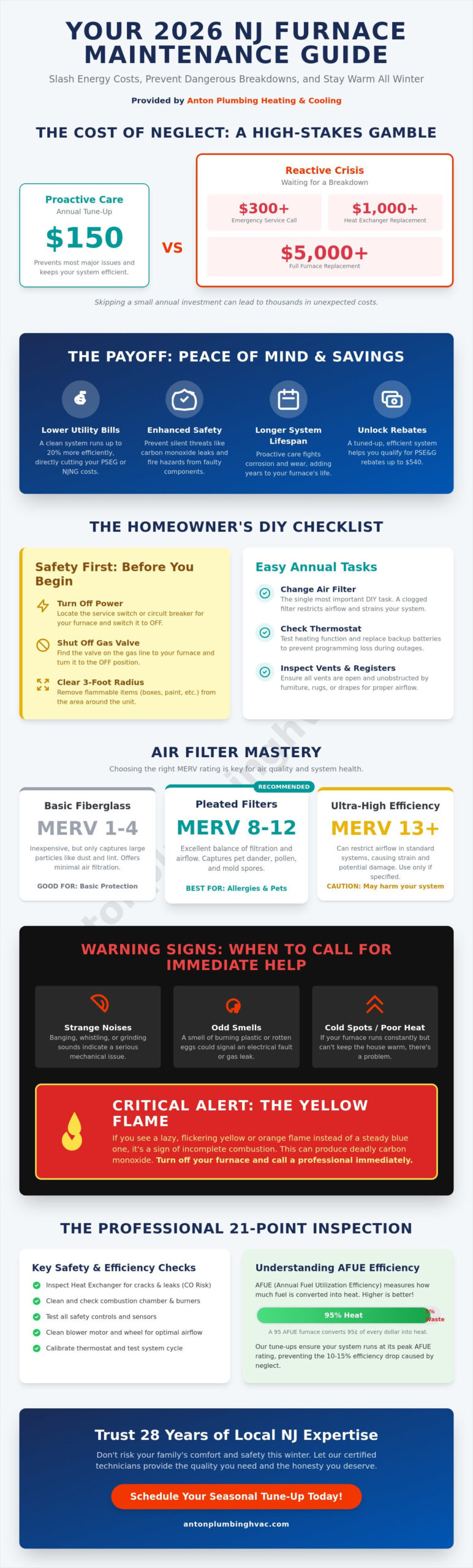
The financial difference between proactive care and reactive crisis is stark. A professional tune-up typically costs around $150, while an emergency furnace replacement can easily reach $5,000 or more in 2026. For homeowners in Old Bridge, our humid coastal air accelerates internal corrosion. Salt-air can degrade intake vents and internal components faster than in inland states. Dust accumulation in these local homes doesn’t just clog filters. It circulates allergens and forces the motor to overheat. If your system fails during a January freeze, you aren’t just facing a cold night. You’re risking a “frozen pipe” emergency that can cause thousands of dollars in water damage to your basement or crawlspace.
Efficiency Ratings and Your AFUE Score
Understanding how furnaces work starts with the AFUE score. Routine cleaning and calibration prevent the 10-15% drop in system efficiency that naturally occurs due to soot buildup and sensor misalignment. Keeping your AFUE score high ensures you’re getting the full value of every dollar spent on fuel. AFUE is the percentage of fuel converted to heat. This rating determines how much gas is wasted during the combustion process. High-efficiency units require precise tuning to maintain their performance levels throughout the season. Our technicians ensure your system hits its target rating every time it cycles on.
The Homeowner’s DIY Furnace Maintenance Checklist
Before you touch a single component, remember the golden rule: safety is paramount. Furnace maintenance starts with power and fuel control. Always turn off the power at the service switch or breaker panel and shut the gas valve before opening any access panels. This simple step prevents accidental ignitions or electrical shocks while you work. We want you to feel confident, but we also want you to stay safe. Once the system is powered down, maintain a clear 3-foot radius around your unit. Removing flammable items like paint cans, cardboard boxes, or cleaning supplies from this safety zone is the easiest way to prevent a household fire.
Even smart thermostats in 2026 require physical attention. While many models are hardwired, they often contain backup batteries to preserve settings during a Middlesex County power outage. Check these batteries annually to ensure your system doesn’t lose its programming or connection to your Wi-Fi. A dead battery can lead to a “no heat” call that is easily avoidable. While DIY steps are helpful, following the standards set by professional HVAC organizations ensures your system stays within its manufacturer warranty. If you notice soot or unusual smells during your inspection, it is time to schedule a professional furnace check immediately.
Air Filter Mastery: Beyond the Basics
Choosing the right filter is a balancing act between air purity and system health. Basic fiberglass filters are inexpensive but only catch large dust particles. If you have pets or allergies, pleated filters are superior. However, avoid “ultra-high” MERV ratings above 13 unless your system is specifically designed for them. These dense filters can restrict airflow, causing the furnace to “short cycle,” which means it turns on and off too frequently. This adds unnecessary wear to the blower motor and spikes your energy bill. Use the “Hold it to the Light” test: if you cannot see light through the filter, it is already too dirty to function. Replacement every 90 days is the standard, but NJ homes with shedding pets should check every 30 days.
Vent and Intake Clearance
Modern high-efficiency furnaces use PVC pipes for intake and exhaust. In New Jersey, these are prime targets for bird nests, ice accumulation, or wind-blown debris. Check the exterior of your home to ensure these pipes are completely clear. Inside the home, walk through every room to confirm that supply and return registers are not blocked by heavy furniture or rugs. The return air path is the essential circuit that pulls cool air from your rooms back into the furnace for reheating, maintaining the critical pressure balance required for efficient operation. When these paths are blocked, the system struggles to breathe, leading to cold spots and mechanical strain.
The Professional Multi-Point Inspection: What the Pros Do
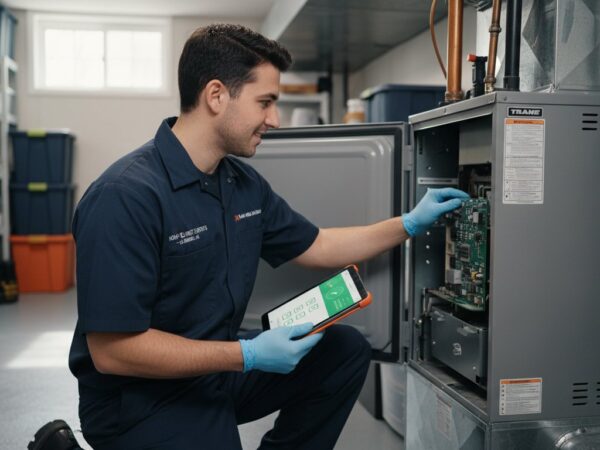
While DIY steps help manage dust, professional furnace maintenance involves a deep dive into the mechanical soul of your heating system. Our HVACR-certified technicians follow a rigorous 21-point checklist perfected over 28 years of service in New Jersey. We don’t just look at your furnace; we analyze its performance using advanced diagnostic tools. This process begins with the “heart” of the unit: the heat exchanger and combustion chamber. We inspect these components for microscopic cracks that could allow deadly gases to bypass the exhaust system. This is a high-stakes safety audit that protects your family from more than just the cold.
Precision is our standard. We calibrate gas pressure to ensure your burner operates at peak efficiency, preventing fuel waste and soot buildup. Our team inspects pilot lights and electronic igniters to guarantee reliable startup every time the temperature drops. To prevent friction-based motor burnouts, we lubricate all moving parts including the blower motor and inducer fan. These small adjustments prevent the wear and tear that leads to the average $300 service call. By fine-tuning these mechanical elements, we provide the quality you need and the honesty you deserve.
Carbon Monoxide and Gas Leak Detection
Safety is the primary reason professional testing is non-negotiable. Carbon monoxide is often called “The Silent Killer” because it is odorless and invisible. Our technicians use electronic sniffers and airflow analyzers to find leaks that are invisible to the human eye. We don’t guess; we use technology to verify that your home is safe. This includes a full verification of safety shut-off switches and limit controls. These components are designed to kill the power if the system overheats or detects a backdraft. If these sensors fail, your home is at risk. We ensure every safety layer is active and responsive.
Electrical and Mechanical Fine-Tuning
Minor electrical issues often cause major system “ghost” errors or even fire hazards. We tighten every electrical connection and inspect wiring for signs of heat damage or fraying. Maximizing airflow is another priority. We clean the entire blower assembly to ensure warm air moves efficiently through your ductwork. For high-efficiency units, we check the condensate drain line for blockages. In New Jersey’s humid climate, algae or debris can clog these lines, causing the furnace to shut down entirely to prevent water damage. We clear these paths to ensure your system runs without interruption all winter long. To understand exactly what this deep-cleaning process involves and how it protects your home, our guide to professional furnace cleaning for efficiency and safety covers every step in detail.
Detecting Trouble: Signs Your Furnace Needs Immediate Care
Your heating system often provides subtle warnings before a total mechanical collapse occurs. Identifying these “Big Three” warning signs, strange noises, odd smells, and cold spots, is the best way to avoid the stress of a mid-winter breakdown. While routine furnace maintenance prevents most issues, you should remain vigilant between professional visits. If you notice certain rooms in your home are suddenly drafty while others are sweltering, your system is struggling to distribute air correctly. This imbalance often signals a failing blower motor or significant ductwork obstructions that require immediate professional attention.
Pay close attention to the color of your burner flame. A healthy furnace produces a steady, crisp blue flame. If you see a “Yellow Flame,” it indicates an improper oxygen mixture and incomplete combustion. This is a major red flag for carbon monoxide production. Similarly, watch your monthly NJNG statement. A sudden spike in your gas usage without a corresponding drop in outdoor temperature is a mechanical “cry for help.” It means your system is running longer cycles just to maintain basic comfort. In Old Bridge homes, we often hear what residents call the “Old Bridge Rattle.” While this might just be a loose access panel, it frequently points to failing bearings in the motor assembly that could seize at any moment.
The Language of Furnace Noises
Different sounds tell different stories about your system’s health. A high-pitched screeching usually points to a frayed or slipping blower belt. If you hear a loud bang or pop when the heat kicks on, you are likely experiencing delayed ignition. This happens when gas builds up before the igniter catches, which can eventually crack your heat exchanger. A persistent humming sound often signals a dying capacitor or a struggling transformer. Never ignore a rapid clicking sound during the start-up cycle. This typically means the spark igniter is failing or the flame sensor is too dirty to recognize the pilot, preventing the system from firing up safely.
Odors You Should Never Ignore
It’s normal to smell a “dusty” scent during the first few minutes of the season as settled particles burn off the heat exchanger. However, other smells require immediate action. A “rotten egg” scent is the chemical mercaptan added to natural gas to alert you to a leak. If you smell this in your Old Bridge home, evacuate everyone immediately and call for help from a safe distance. A metallic, acrid “burning” smell is different. This signals that electrical components or wires are overheating. If your furnace is making strange sounds or emitting unusual odors, request a furnace inspection immediately to protect your home and family.
Scheduling Your Seasonal Tune-Up with Anton Plumbing Heating & Cooling
Don’t wait for the first hard frost to discover your heating system is struggling. Effective furnace maintenance is a proactive measure that should be completed before the peak of the New Jersey winter. At Anton Plumbing Heating & Cooling, we bring over 28 years of experience to every doorstep in Middlesex County. We aren’t just a service provider; we are your neighbors. Our trademarked promise, “Quality you need, Honesty you deserve,” means we never recommend a repair or part you don’t actually require. We value your trust as much as your comfort.
We understand that home maintenance can be a source of financial anxiety. That’s why we provide transparent, upfront pricing on every call. If our inspection reveals that your system needs a significant upgrade to meet 2026 safety standards, we offer 0% financing options to help manage the cost. Our 24/7 emergency availability serves as a permanent safety net for local families. If your heat fails in the middle of a January blizzard, our team is ready to respond at a moment’s notice. You are never alone when the temperature drops.
The Anton Maintenance Advantage
Choosing a family-operated expert provides a level of accountability that big-box contractors can’t replicate. We use advanced diagnostic tools like thermal imaging to detect heat loss and airflow analyzers to ensure your ductwork is performing at peak efficiency. This high-tech accuracy allows us to find small issues before they become expensive disasters. If our maintenance audit reveals deeper systemic problems, we are fully equipped for comprehensive HVAC repair in East Brunswick and the surrounding communities.
Ready for Winter? Call Anton Today
Securing your home’s well-being is as simple as a single phone call. While many NJ homes rely on forced air, we also maintain deep expertise in boiler repair and installation for those with radiator or baseboard systems. Whether you have a modern high-efficiency unit or a traditional setup, our HVACR-certified technicians ensure it is winter-ready. Don’t leave your family’s safety to chance this season. Need a Plumber or HVAC Pro? Call Anton!
Secure Your Home Comfort for the 2026 Winter Season
Protecting your household from the volatility of a New Jersey winter requires more than just a thermostat adjustment. You now have the tools to identify the “Big Three” warning signs and the knowledge to perform basic safety checks. However, comprehensive furnace maintenance is the only way to guarantee your system meets 2026 safety and efficiency standards. By addressing minor issues before they become $300 emergency calls, you ensure your family stays warm and your NJNG bills stay manageable.
At Anton Plumbing Heating & Cooling, we’ve spent over 28 years serving the Middlesex County community. Our licensed, HVACR-certified professionals provide the technical precision your home deserves. We believe in upfront, honest pricing with no surprises; this ensures you get the quality you need without the stress of hidden fees. Don’t wait for the first sub-zero night to test your system’s reliability. Schedule your $129 Seasonal Furnace Tune-Up with Anton today! We are ready to act as your home’s guardian, providing the peace of mind you need to enjoy a safe, comfortable winter.
Frequently Asked Questions
How often should I schedule professional furnace maintenance in New Jersey?
Schedule your professional service once every year, ideally during the autumn months before the first frost hits Middlesex County. This annual cadence ensures your system continues to meet the 81% AFUE minimum standard required by New Jersey law since 2023. Regular inspections allow our technicians to find minor wear before it turns into a $300 emergency service call during a mid-winter blizzard.
Can I perform furnace maintenance myself to save money?
You can manage basic tasks like monthly filter changes and maintaining a 3-foot safety zone around the unit. However, professional furnace maintenance involves high-stakes technical work like calibrating gas pressure and using thermal imaging to find heat exchanger cracks. Attempting to service internal gas valves or electrical components yourself can void your manufacturer warranty or create significant fire hazards.
What is the average cost of a furnace tune-up in Old Bridge, NJ?
A standard professional furnace tune-up in the Old Bridge area typically ranges from $120 to $180 depending on the complexity of your system. This is a strategic investment compared to the $1,000 cost of replacing a major component like a cracked heat exchanger. We provide upfront pricing so you know the exact cost of our 21-point safety audit before any work begins.
Does regular maintenance really lower my NJNG or PSEG heating bills?
Yes, routine cleaning prevents the 10% to 15% drop in efficiency that occurs when soot and dust accumulate on internal components. Since the average New Jersey household spends approximately $1,200 on winter heating, a well-tuned system can save you up to $180 per season. It ensures you get the full value of every therm billed by your utility provider.
What happens if I skip furnace maintenance for one year?
Skipping service for even one year increases the likelihood of a sudden system failure by nearly 40% during peak usage. Dust buildup forces the blower motor to work much harder, which leads to overheating and premature mechanical burnout. You also lose the opportunity to detect “The Silent Killer,” carbon monoxide leaks, which require professional electronic sniffers to identify. Learn how professional furnace cleaning prevents these costly breakdowns and keeps your system running safely all season long.
Will furnace maintenance prevent my system from breaking down in a winter storm?
While no service can guarantee perfect uptime, annual furnace maintenance reduces the risk of mid-storm breakdowns by approximately 95%. Our technicians identify failing capacitors and frayed blower belts that would likely snap under the strain of a sub-zero freeze. We ensure your system is robust enough to handle the 24/7 operation required during a Garden State cold snap.
Does maintenance improve the air quality in my home?
Maintenance significantly improves indoor air quality by removing the dust, pet dander, and allergens trapped inside the blower assembly. We also verify that your air filters are correctly fitted and have the appropriate MERV rating for your specific furnace model. This prevents harmful particles from recirculating through your rooms, which is vital for families with respiratory sensitivities.
How long does a professional furnace tune-up typically take?
A comprehensive professional tune-up typically takes between 60 and 90 minutes to complete. Our technicians use this time to perform a rigorous 21-point inspection, which includes cleaning the burner assembly and testing all safety limit controls. We work efficiently to restore your home comfort and safety without disrupting your entire afternoon schedule.


