Last Tuesday, a local family was preparing for a weekend gathering when a sharp, rotten egg odor drifted from the hallway guest bathroom. It wasn’t just a nuisance; it was an immediate source of anxiety and embarrassment. Dealing with a sewer gas smell in bathroom Old Bridge homes is more than just a minor inconvenience. It often signals a breakdown in the protective barriers that keep your household safe from methane and sewer bacteria.
You’re right to feel concerned about your family’s well-being and the potential for hidden pipe failures. This guide will help you pinpoint exactly where that foul odor is coming from and determine if you’re facing a simple dry trap or a serious sewer line emergency. We’ll walk through the common culprits, from blocked vent stacks to compromised wax seals, so you can restore comfort and security to your home. By the time you’re finished reading, you’ll know exactly how to eliminate the smell and when it’s time to call in a professional for a definitive fix. Your peace of mind is our priority, and getting your plumbing back to peak performance is the first step toward a healthy household.
Key Takeaways
- Understand why a “rotten egg” odor is a serious warning sign that your plumbing system’s protective vapor barrier has failed.
- Discover how simple DIY steps like priming dry P-traps can resolve a sewer gas smell in bathroom Old Bridge homes immediately.
- Identify the critical red flags, such as multi-fixture backups or lush yard patches, that signal a major sewer line emergency.
- Learn to spot a failing toilet wax ring before it allows dangerous methane levels to compromise your household’s air quality.
- See how professional smoke testing pinpoints hidden leaks with surgical precision to ensure your family’s safety and well-being.
Identifying Sewer Gas in Your Old Bridge Bathroom
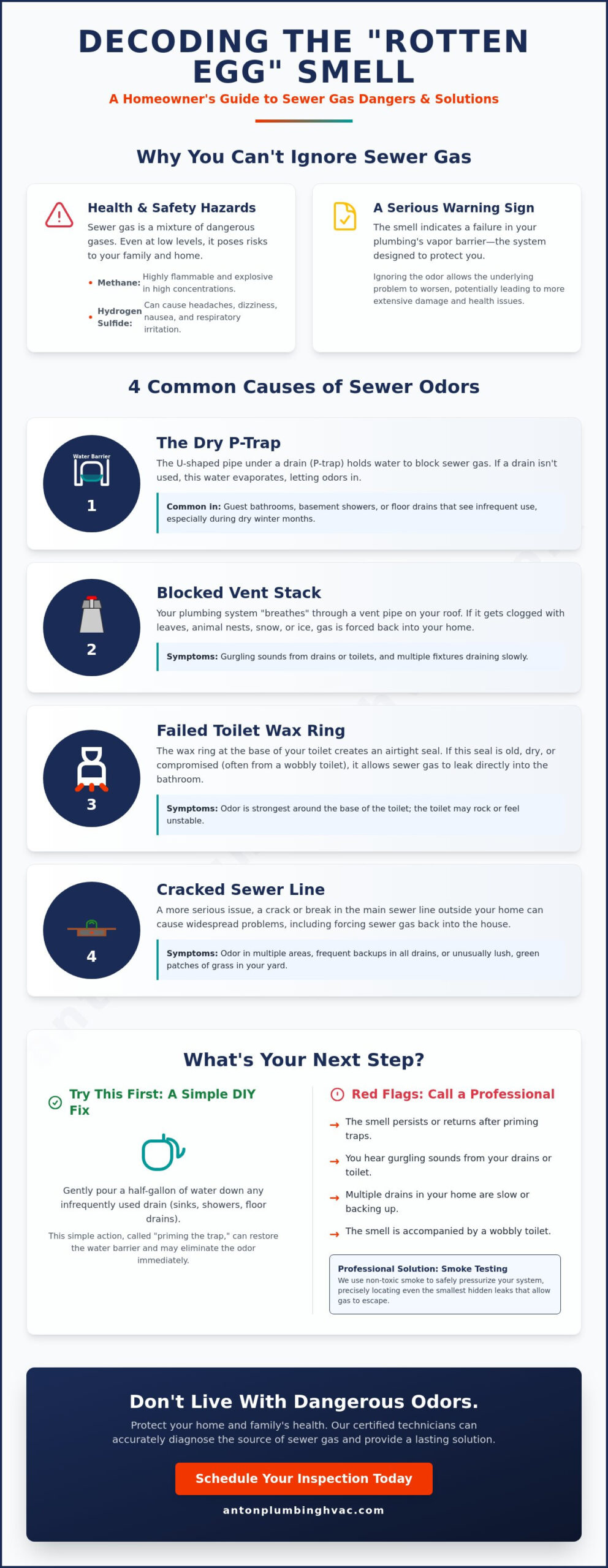
Detecting a sewer gas smell in bathroom Old Bridge homes is an experience that triggers immediate concern. It isn’t just a foul scent; it’s a clear warning from your home’s infrastructure. Sewer gas is a complex mixture of toxic and non-toxic gases, including methane and hydrogen sulfide. When that distinct “rotten egg” odor fills the air, it’s a sign that your plumbing’s vapor barrier is compromised. This barrier is designed to keep waste byproducts in the pipes where they belong. In Old Bridge, persistent odors often fluctuate based on local humidity levels and barometric pressure changes, which can push gases back into your living space through weak points in the system.
Is Sewer Gas Dangerous?
While a faint smell might seem like a minor annoyance, the components of these gases require your attention. Methane is highly flammable in high concentrations, making leak detection a safety priority for any homeowner. Hydrogen sulfide is equally concerning. It causes respiratory irritation and can lead to “olfactory fatigue,” a dangerous condition where your nose stops detecting the scent even as concentrations rise. Beyond the smell, high concentrations of these gases can lead to physical symptoms such as headaches, dizziness, or nausea. Sewer gas represents a genuine health risk that requires immediate ventilation and a professional inspection to ensure your home remains a safe sanctuary.
Common Odor “Hot Spots” in the Bathroom
Pinpointing the source is the first step toward a solution. You should check the sink, the shower drain, and the base of the toilet. A true sewer gas leak often smells worse at night or immediately after a heavy New Jersey rainstorm, as rising water tables or pressure shifts force air out of the sewer lines. You can usually distinguish a gas leak from a simple drain clog by the location and intensity of the scent. A clog typically smells like rotting organic matter localized within the drain itself. In contrast, sewer gas feels more pervasive, often wafting from the base of a wobbly toilet or an unused floor drain.
Our experience in local homes shows that these smells rarely go away on their own. They tend to worsen as seals degrade or vent stacks remain blocked. Taking action now prevents long-term exposure and protects your property from the risks associated with compromised sewer lines. If the odor is persistent, it’s a signal that your home’s protective systems are no longer functioning as intended.
4 Common Causes of Sewer Odors in NJ Homes
Identifying why your home suddenly smells like a wastewater facility is the first step toward reclaiming your domestic comfort. While the scent is overwhelming, the cause is usually tied to one of four specific mechanical failures. Most issues stem from a breach in the plumbing system’s vapor barrier, which is designed to keep sewer gases out of your living space. In our experience servicing the local community, a sewer gas smell in bathroom Old Bridge homes typically originates from a dry trap, a failed seal, or a ventilation blockage caused by our local environment.
The Role of the P-Trap and Water Barrier
Every sink, shower, and tub in your home relies on a U-shaped pipe called a P-trap. This simple component holds a standing pool of water that acts as a physical shield against rising gases. Problems arise when this water evaporates. This happens frequently in guest bathrooms or basement showers that go unused for weeks. During the dry New Jersey winter heating season, indoor humidity levels drop significantly, accelerating evaporation. If you haven’t used a particular drain recently, the water barrier may have vanished, leaving a direct path for odors to enter. Understanding these Possible Causes and Fixes allows you to maintain your home’s safety with minimal effort.
NJ Weather and Vent Pipe Obstructions
Your plumbing system needs to “breathe” through vent stacks that exit through your roof. These pipes allow sewer gases to escape safely while equalizing pressure so drains flow smoothly. However, Old Bridge’s wooded neighborhoods and harsh winters create unique obstructions. Squirrels and birds often find the warmth of a vent pipe inviting for nesting. Furthermore, heavy snow and ice buildup during a January freeze can completely seal the vent opening. When air can’t escape through the roof, it gets pushed back through your drains. You’ll often hear gurgling sounds from your toilet or notice multiple slow drains if a vent is blocked.
Beyond these external factors, structural issues like a faulty toilet wax ring or a cracked sewer line can be the culprit. A wax ring provides an airtight seal at the base of your toilet. If the toilet wobbles, that seal breaks. If you suspect the issue lies deeper within your home’s infrastructure, a professional sewer line repair and replacement expert can use diagnostic tools to find the exact breach. Structural cracks in pipes under your slab or in the yard are serious matters that require immediate professional attention to prevent property damage.
How to Fix Sewer Gas Smells: DIY Troubleshooting
Dealing with a persistent sewer gas smell in bathroom Old Bridge properties doesn’t always require a major excavation. Many odor issues result from simple maintenance lapses that you can address in a single afternoon. Before you assume the worst about your main sewer line, follow these systematic troubleshooting steps to rule out the most common household culprits. Taking a proactive approach now can save you from unnecessary stress and protect your home’s air quality.
Priming Your Drains
The most frequent cause of bathroom odors is a dry P-trap. If you have a guest bathroom or a basement shower that rarely sees use, the water barrier meant to block gases has likely evaporated. To fix this, run water in every drain for two to three minutes to ensure the traps are fully primed. For drains in seasonal rooms or secondary bathrooms, add a teaspoon of mineral oil after the water. The oil sits on top of the water and significantly slows the evaporation process during the dry New Jersey heating season. If the smell returns within hours of priming, you should suspect a hairline crack in the trap itself rather than simple evaporation.
Testing the Toilet Seal
Your toilet relies on a wax ring to create an airtight seal between the fixture and the floor flange. When this seal fails, sewer gas bypasses the internal trap and enters your bathroom directly from the floor. Perform the “wobble test” by gently nudging the toilet bowl with your leg. If the toilet moves even slightly, the wax ring is likely compromised. Look for water seepage around the base or floor tiles that feel soft or discolored. Be cautious with DIY repairs here. Pulling a toilet without the right tools can lead to cracked flanges or floor damage, especially in older Old Bridge homes with cast iron piping.
Cleaning Biofilm and Overflows
Sometimes the odor isn’t coming from the sewer main but from bacteria living inside your fixtures. The sink overflow is a hidden harbor for biofilm and organic debris. Use a small, flexible brush and a mixture of vinegar and baking soda to scrub this channel thoroughly. Flush it with hot water to kill odor-causing colonies. This simple cleaning step often eliminates “musty” smells that homeowners frequently mistake for a sewer gas smell in bathroom Old Bridge environments. Additionally, check your roof vent stacks safely from the ground using binoculars. If you see visible debris like leaves or bird nests, the system cannot breathe, forcing gases back through your drains. For more precise tracking, you can use a non-toxic DIY smoke test kit to see exactly where air currents are escaping near your bathroom fixtures.
When the Smell Signals a Major Sewer Line Problem
A persistent sewer gas smell in bathroom Old Bridge residences often serves as the final warning before a total system failure. If your troubleshooting steps from the previous section didn’t clear the air, you’re likely facing a main line obstruction. This isn’t just about a bad smell; it’s about preventing a catastrophic backup that could flood your home with raw sewage. Understanding the difference between a simple clog and a structural breach is vital for your home’s protection.
Watch for the “gurgle factor.” When you flush your toilet, listen closely to the shower drain. A bubbling or gurgling sound indicates that air is being forced out of the system because the main exit is blocked. Similarly, if the sink, tub, and toilet all drain slowly at the same time, the issue lies deep within the main sewer line. These symptoms combined with a sewage odor suggest a significant breach that DIY chemicals cannot fix. Your plumbing system is a closed loop, and when that loop is broken, the results are both messy and hazardous.
Your yard also tells a story. Look for unusually lush, bright green patches of grass that seem to grow faster than the rest of your lawn. While they look healthy, they often indicate a leaking sewer pipe that is “fertilizing” the soil from beneath. In more severe cases, you might notice damp spots or new cracks in your basement foundation. These are high-stakes indicators that sewage is escaping under your home’s footprint, compromising both air quality and structural integrity. These issues require immediate attention to prevent long-term damage to your property.
Tree Root Intrusion in Old Bridge
Mature trees are a hallmark of Middlesex County neighborhoods, but they are also the leading cause of pipe failure in older homes. Tiny roots enter the joints of clay or cast iron pipes in search of moisture. Once inside, they expand rapidly, creating cracks that allow sewer gas to seep into your home. This type of obstruction demands expert drain cleaning services to clear the line and assess the structural damage before a full collapse occurs.
Sewer Camera Inspections: Seeing the Unseen
Gone are the days of digging up your entire yard just to find a leak. Professionals now use high-definition waterproof cameras to pinpoint the exact location and nature of a break with surgical precision. This technology saves you money by targeting the repair only where it’s needed. Modern trenchless sewer repair can often fix these lines from the inside, protecting your landscaping and driveway from destruction. If you suspect a main line breach, contact a professional for a sewer line repair and replacement consultation to secure your property immediately.
Professional Sewer Gas Leak Detection in Old Bridge
When DIY troubleshooting fails to clear the air, you need a level of precision that only advanced technology can provide. A persistent sewer gas smell in bathroom Old Bridge homes is a diagnostic challenge that requires more than just a quick look under the sink. Anton Plumbing utilizes specialized smoke testing and electronic gas detectors to find the exact breach in your plumbing’s vapor barrier. Our smoke testing process involves pushing non-toxic, odorless smoke through your waste and vent system. If there’s a crack in a pipe hidden behind a wall or a loose fitting in the attic, the smoke will emerge at the leak site, revealing the problem instantly.
We complement smoke testing with high-sensitivity electronic gas detectors. These devices pick up trace amounts of methane and hydrogen sulfide that are too faint for the human nose but still present a health risk. Our 28+ years of experience in New Jersey homes means we’ve seen every possible failure point, from the older cast iron systems in established neighborhoods to the modern PVC configurations in newer developments. We don’t guess; we use modern signature technology to ensure your family’s air quality is restored with surgical accuracy.
Financial clarity is just as important as technical excellence. We provide transparent, upfront pricing before any work begins. You’ll never have to worry about hidden fees or surprise costs when you’re already dealing with a household crisis. Our goal is to provide immediate relief and long-term security, ensuring your home remains the safe sanctuary it’s meant to be.
Why Trust Anton Plumbing Heating & Cooling?
As a family-operated business, we treat your home’s integrity as if it were our own. We serve the Old Bridge and East Brunswick communities with a “Protective Expert” approach. This means we don’t just patch a visible leak; we evaluate your entire ventilation system to ensure it meets current New Jersey plumbing codes. Our licensed and insured professionals are committed to ethical standards and domestic well-being. We position ourselves as your long-term maintenance partner, ready to respond at a moment’s notice when your home’s infrastructure falters.
Schedule Your Inspection Today
Don’t wait for a minor odor to turn into a major health concern or a costly sewer backup. Sewer gas issues never resolve themselves; they only worsen as seals degrade and cracks expand. You can prepare for our visit by ensuring we have clear access to your home’s main sewer cleanout, usually located in the basement or near the front of the property. We offer 24/7 emergency response for odors that cause immediate distress or nausea, providing the fast fix you need to breathe easy again. Contact Anton Plumbing for 24/7 emergency sewer gas detection in Old Bridge.
Restore Safety and Comfort to Your Old Bridge Home
A persistent odor in your bathroom is more than a nuisance; it’s a direct signal that your home’s protective plumbing barriers have failed. We’ve explored how to identify the source of these smells, from simple dry P-traps to complex main line breaches caused by tree root intrusion. You now have the knowledge to perform basic DIY troubleshooting and the foresight to recognize when a gurgle in the drain requires professional intervention. Taking action today prevents long-term health risks and protects your property from the high costs of a total sewer collapse.
Don’t let a sewer gas smell in bathroom Old Bridge homes compromise your family’s well-being or cause you embarrassment. Anton Plumbing provides the definitive answers you need through advanced smoke testing and high-tech leak detection. With over 28 years of local experience, our licensed and insured NJ plumbing experts are committed to securing your household infrastructure. We maintain 24/7 emergency availability to ensure that help is always just a phone call away. Schedule Your Sewer Gas Diagnostic with Anton Plumbing and take the first step toward a fresh, safe, and worry-free home environment. Your peace of mind is our priority.
Frequently Asked Questions
Is the sewer gas smell in my bathroom toxic?
Sewer gas is toxic because it contains methane and hydrogen sulfide. Methane is a significant fire hazard in enclosed spaces, while hydrogen sulfide can cause dizziness, headaches, and respiratory issues. If you feel lightheaded or nauseous, ventilate the area and seek professional help immediately. Protect your family’s health by addressing odors before concentrations reach dangerous levels in your living environment.
Can a clogged drain cause a sewer gas smell?
A clogged drain can produce a foul odor, but it usually smells like rotting food or hair rather than raw sewage. A true sewer gas smell in bathroom Old Bridge residences suggests that the plumbing’s water seal is broken or bypassed. While a clog might smell bad, it won’t typically contain the flammable methane or high levels of sulfur found in a main sewer line leak.
Why does my bathroom smell like sewage only at night?
Changes in barometric pressure and cooling outdoor temperatures at night often force sewer gases back into your home. When your family stops using water for the evening, P-traps aren’t being refreshed, allowing existing odors to become more noticeable. Atmospheric shifts can also create a “downdraft” effect in your vent stacks, pushing smells into the bathroom when the air is still and the house is closed up.
How much does it cost to fix a sewer gas leak in Old Bridge?
The cost to resolve a sewer gas issue varies based on the underlying cause and the complexity of the repair. A simple dry trap requires no professional expense, while replacing a toilet wax ring or clearing a blocked vent stack involves standard labor and material fees. Major structural repairs to a main sewer line are more significant projects that require a detailed diagnostic to determine the full scope of the required work.
Will pouring water down the drain stop the sewage smell?
Pouring water down the drain will stop the smell only if the cause is a dry P-trap. The water creates a physical barrier that prevents gases from rising into your living space. If a sewer gas smell in bathroom Old Bridge properties persists after you’ve flushed every drain for several minutes, you likely have a failed toilet seal or a cracked pipe that water cannot fix.
How do I know if my toilet wax ring is leaking gas?
You can identify a failing wax ring by performing a “wobble test” on your toilet fixture. If the toilet moves even slightly when you push against it, the airtight seal at the floor is broken. You might also notice water seepage around the base or a persistent odor that seems to originate from the floor tiles rather than the sink or shower drain.
Can a dead animal in the walls smell like sewer gas?
A dead animal produces a cloying, sickly sweet scent that differs from the distinct “rotten egg” smell of hydrogen sulfide. While both are unpleasant, an animal’s odor remains constant and doesn’t change when you run water or flush the toilet. If the smell is localized to a wall and doesn’t fluctuate with drain usage, it’s likely a pest issue rather than a plumbing failure.
When should I call an emergency plumber for a bathroom odor?
Call an emergency plumber if you experience physical symptoms like nausea or if the smell is accompanied by multiple slow-draining fixtures. These signs suggest a high concentration of gas or a significant main line blockage that could lead to a sewage backup. Immediate intervention is necessary to secure your home’s air quality and prevent structural damage from wastewater overflows.


