What if the most expensive mistake in your kitchen remodel isn’t the high-end marble countertop, but the aging pipe hiding behind your brand-new backsplash? You’ve likely spent months choosing the perfect brass fixtures, yet the fear of hidden damage or confusing NJ codes for your Old Bridge plumbing for kitchen remodel can quickly turn excitement into anxiety. It’s natural to feel protective of your home’s integrity when so much of your budget is at stake.
We understand that professional infrastructure is the real foundation of your domestic well-being and security. This guide provides the technical clarity you need to master your renovation with total confidence. We’ll walk you through the 2026 standards for the NJ Uniform Construction Code and the specific permit process required by the Old Bridge Township Building Department. This ensures your project passes every inspection on the first try while keeping your new kitchen safe, functional, and leak-free for years to come.
Key Takeaways
- Learn why a “plumbing-first” strategy prevents expensive reconstruction by identifying hidden pipe damage before your new cabinets are installed.
- Master the essential checklist for water line upgrades and drain venting to ensure your modern fixtures operate at peak performance.
- Understand the technical requirements and costs associated with relocating island sinks or performing gas line installations for new professional-grade ranges.
- Navigate the specific requirements for your Old Bridge plumbing for kitchen remodel, including NJ Uniform Construction Code (UCC) compliance to guarantee you pass inspections.
- Discover how 28+ years of local experience provides the protective expertise needed to safeguard your home’s long-term domestic well-being and security.
The Plumbing-First Approach to Kitchen Remodeling in Old Bridge
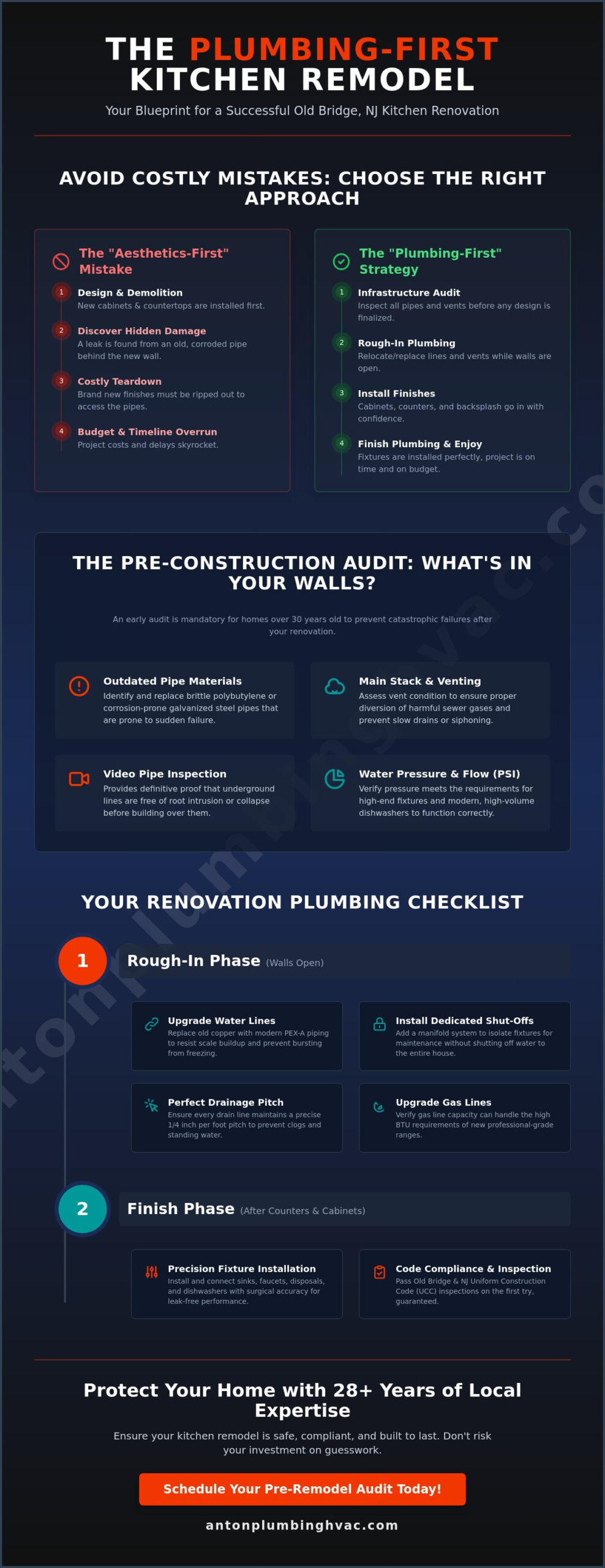
A successful renovation starts long before the first cabinet is hung. For an Old Bridge plumbing for kitchen remodel, we advocate for a “plumbing-first” strategy that prioritizes the health of your home’s infrastructure. This approach treats your pipes as the foundation of the project rather than an afterthought. By conducting a thorough audit of your plumbing systems during the planning phase, you protect your domestic well-being and avoid the nightmare of tearing out brand-new finishes to fix a hidden leak later. Infrastructure audits are the primary tool we use to prevent $10,000 mistakes that often arise from unforeseen pipe corrosion or outdated venting.
While a general contractor oversees the aesthetic transformation, a licensed plumber serves as the guardian of your household’s mechanical safety. Don’t rely on a “jack-of-all-trades” to handle complex line relocations or gas connections. We focus on the technical precision required to meet the 2026 NJ Uniform Construction Code standards. Your project timeline must account for two critical phases: the rough-in and the finish. The rough-in happens immediately after demolition while the walls are open. This is when we move supply lines and set the stage for your new layout. Finish plumbing occurs only after the countertops are cured and the cabinets are secured, ensuring every fixture is installed with surgical accuracy.
To give your new kitchen a truly clean start, we recommend integrating expert drain cleaning services before the walls are closed. Clearing decades of accumulated grease and sediment from your main lines ensures your high-end appliances won’t face a backup in their first month of use. It’s a proactive step that guarantees your investment is protected from the inside out.
The Infrastructure Audit: What’s Behind Your Walls?
Many homes in our community still contain outdated galvanized steel or brittle polybutylene piping that is prone to sudden failure. During our audit, we also assess the condition of your main stack vents to ensure sewer gases are properly diverted away from your living space. For homes built over 30 years ago, a video pipe inspection is mandatory because it provides the only definitive proof that your underground lines are free of root intrusion or structural collapses before you build over them.
Why Aesthetics Depend on Flow and Pressure
Your choice of a designer faucet won’t matter if the water pressure is insufficient to power it. High-end fixtures often require specific PSI levels that old, narrowed pipes simply can’t provide. We also verify that your drain capacity matches modern, high-volume dishwashers to prevent slow drainage and standing water. Every fixture we install includes a dedicated shut-off valve. This allows you to isolate a single sink for future maintenance without ever needing to shut off water to the rest of your home.
Essential Plumbing Checklist for Your Kitchen Renovation
Your kitchen’s efficiency depends on more than just high-end appliances; it relies on the diameter of your pipes and the pitch of your drains. When planning an Old Bridge plumbing for kitchen remodel, start at the source. We prioritize upgrading your main water line shut-off and installing a modern manifold system. This allows you to isolate specific lines for the dishwasher or pot filler without disabling the entire house. It’s a level of control that provides immediate relief during future maintenance or minor repairs. This checklist is the standard for any Old Bridge plumbing for kitchen remodel we oversee to ensure long-term domestic well-being.
Drainage is equally vital for a functional home. We ensure every drain line maintains a precise pitch of one-quarter inch per foot to prevent standing water and sediment buildup. Proper venting is the silent hero of a leak-free kitchen. Without it, siphoning can occur, leading to sewer odors and slow drains. We also evaluate your gas line capacity. Professional-grade ranges require significantly more BTUs than standard models. If your existing line is undersized, your expensive new stove won’t reach its full cooking potential.
The Rough-In Phase: Piping and Gas Lines
Rough-in plumbing is the critical stage where all supply and waste lines are installed and inspected before the drywall hides them from view. We often recommend replacing legacy copper pipes with modern PEX-A because it resists scale buildup and handles the expansion of freezing water better. If you’re upgrading to a high-output range, our team provides expert gas line installation to ensure your home meets all safety standards for fuel delivery. We verify that every connection aligns with the New Jersey Administrative Code, which dictates specific requirements for residential water connections and sink installations.
Fixture and Appliance Connections
Modern kitchens often feature deep farm-style sinks that require a customized P-trap configuration to drain effectively. We run dedicated water lines for built-in coffee makers and steam ovens to prevent pressure drops when multiple appliances run simultaneously. Safety is our priority, so we install anti-scald valves on high-pressure sprayers. This prevents sudden temperature spikes that could cause injury to your family. For homeowners seeking the highest water quality, we integrate secondary filtration systems or under-sink reverse osmosis (RO) units during this final connection phase.
Evaluating Layout Changes: Sink Relocation vs. Gas Upgrades
Changing your kitchen layout is the most ambitious part of any Old Bridge plumbing for kitchen remodel. While moving a sink three feet might seem minor, it often requires a complete reconfiguration of the waste and vent system. We specialize in the technical logistics required for a successful Old Bridge plumbing for kitchen remodel, especially when the project involves moving major utilities. We prioritize the structural integrity of your home during these shifts, ensuring that every new line is integrated with surgical precision. A significant layout change might also impact your hot water delivery. If you’re adding a second sink or a high-capacity dishwasher, it’s the ideal time to consider a water heater replacement to ensure your system meets the new demand without fluctuating temperatures.
Converting from an electric range to a high-output gas stove is a popular 2026 trend in Middlesex County. This upgrade provides superior temperature control but demands a precise gas line installation. We evaluate your existing gas manifold to ensure it can handle the increased BTU load required by professional-grade appliances. Managing drain slopes is the other half of the equation. We strictly adhere to the one-quarter inch per foot slope rule, even when rerouting lines through tight joist spaces. This technical discipline prevents the chronic clogs that often plague poorly planned renovations.
Moving the Sink: Slab vs. Crawlspace Logistics
The “invisible” work of relocating a sink depends heavily on your home’s foundation. In many Old Bridge neighborhoods, homes built on concrete slabs require trenching to move drain lines. This is a high-stakes process that we manage with extreme care to protect your foundation. Rerouting vent stacks through second stories is another common challenge. We find the most efficient path for these pipes to ensure your system breathes correctly without compromising closet space or structural beams. A clear cost-benefit analysis at the start helps you decide if a major layout shift aligns with your long-term goals.
Gas Line Relocation and Safety
Gas safety is non-negotiable. When extending lines, we choose materials based on the specific needs of your home, typically weighing the benefits of flexible CSST versus traditional Black Iron piping. Proper ventilation is also critical for high-BTU gas ranges to maintain indoor air quality. Once the lines are in place, we perform rigorous pressure testing. We employ advanced diagnostic tools to verify that every new connection is airtight before we ever turn the gas back on. This commitment to safety acts as a guardian for your family’s domestic well-being.
Navigating Old Bridge Permits and NJ Code Compliance
Skipping permits is a high-stakes gamble that often ends in a crisis. An emergency plumber Old Bridge NJ is frequently called to homes where unpermitted work has resulted in active leaks or sewer backups behind new walls. These failures don’t just ruin your new flooring; they compromise the safety of your family. For an Old Bridge plumbing for kitchen remodel, following the law is the only way to ensure your domestic well-being remains intact. We act as your knowledgeable guide through these complexities, providing the steady professionalism needed to clear legal hurdles.
New Jersey operates under the Uniform Construction Code (UCC), specifically N.J.A.C. 5:23. This statewide standard ensures every home meets rigorous safety benchmarks. If you bypass these rules, you’ll likely face significant hurdles when selling your home. Savvy buyers and home inspectors in Middlesex County look for closed permits as proof of quality. Unpermitted plumbing can lead to mandatory tear-outs or heavy fines. This turns your beautiful renovation into a legal liability that can haunt your finances for years.
Required Permits for Old Bridge Kitchens
In Old Bridge, a simple fixture swap might not require a permit, but any “major alteration” requires official approval. This includes moving a sink, adding a dishwasher line, or installing a gas range. You must file the appropriate subcode paperwork with the Old Bridge Township Building Department. The minimum fee for a plumbing subcode permit is $75, while a demolition permit for capping services is $100. In Old Bridge, clean permit applications are typically processed in 2-3 weeks, so plan your project start date with this timeline in mind.
2026 NJ Plumbing Code Highlights
The 2026 standards for the NJ plumbing code introduce stricter requirements for sustainable design and material safety. While traditional venting through the roof remains the gold standard, some specific layouts may allow for Air Admittance Valves (AAVs) under strict conditions. We also prioritize backflow prevention on all sprayers and pot fillers to keep your potable water safe from contamination. All soldering must be lead-free, and we only use materials that meet or exceed current NJ standards. Ensure your renovation is legal and safe from day one by scheduling a professional plumbing maintenance consultation for your project.
Why Old Bridge Trusts Anton for Kitchen Plumbing
With over 28 years of experience serving Middlesex County, we’ve seen every possible complication that can arise during an Old Bridge plumbing for kitchen remodel. We don’t view ourselves as simple contractors. We’re the protective experts who act as guardians of your household’s safety. Our team strikes a balance between the technical precision required for high-stakes utility work and the calm professionalism of a long-term maintenance partner. We understand that a renovation is stressful. That’s why we prioritize clear financial expectations and offer flexible financing options to keep your project on track without compromising on quality.
Coordination is the key to a seamless build. We work hand-in-hand with your kitchen designers to ensure that every rough-in pipe is placed exactly where it needs to be. This proactive communication prevents the delays that occur when plumbing and cabinetry don’t align. By choosing a team that values transparency and ethical standards, you ensure your Old Bridge plumbing for kitchen remodel is completed with integrity and technical excellence.
The Anton Advantage: Precision and Integrity
Our commitment to your home begins with a clean workspace and on-time arrivals. We treat your property with the respect it deserves, using drop cloths and protective gear to safeguard your flooring. When we encounter the “surprise” issues often found behind old cabinets, such as mold from slow leaks or corroded stack vents, we provide immediate, transparent solutions. Our deep background in commercial plumbing maintenance allows us to bring industrial-grade precision to large-scale residential projects. We use advanced diagnostic technology to verify the health of your entire system before we ever sign off on a job.
Start Your Remodel with a Professional Consultation
The first step toward your dream kitchen is a comprehensive site survey. During this meeting, we’ll evaluate your existing infrastructure and discuss your layout goals. To make the most of our first visit, have your architectural blueprints and appliance specification sheets ready. We’ll walk you through the technical requirements for your new island sink or professional range with total clarity. Don’t leave your home’s safety to chance. Contact our team today to book your consultation and ensure a worry-free, leak-free kitchen that serves your family for decades.
Build Your Dream Kitchen on a Foundation of Confidence
Your kitchen is the heart of your home, and its success depends on the invisible infrastructure behind your walls. By adopting a plumbing-first strategy, you protect your investment from costly reconstruction and ensure every modern fixture performs exactly as intended. We’ve discussed the critical importance of infrastructure audits, the technical logistics of relocating island sinks, and the necessity of NJ code compliance. Planning your Old Bridge plumbing for kitchen remodel doesn’t have to be a source of stress when you have a seasoned veteran by your side.
With over 28 years of local NJ experience, our licensed and insured professionals act as the guardians of your household’s domestic well-being. We provide the technical excellence and ethical standards your family deserves, including 24/7 emergency support for immediate relief when you need it most. Don’t leave your renovation to chance. Schedule your Old Bridge kitchen plumbing consultation today! We’re ready to help you create a beautiful, functional space that serves your family for a lifetime.
Frequently Asked Questions
Do I need a permit for a kitchen remodel in Old Bridge, NJ?
Yes, any major alteration to your home’s infrastructure requires a permit from the Old Bridge Township Building Department. This includes moving a sink, adding a dishwasher line, or installing a new gas range. While minor repairs might not need official paperwork, most renovations fall under the NJ Uniform Construction Code to ensure your family’s safety and domestic well-being.
How much does it cost to move a kitchen sink to a new island?
Relocating a sink is a complex task that involves trenching concrete slabs or rerouting waste lines through a crawlspace. Because every home’s foundation and drainage pitch are unique, the total investment depends on the technical difficulty of the move. You should consult with a professional to receive a clear financial expectation based on your specific Old Bridge plumbing for kitchen remodel goals.
Can I use my existing gas line for a new professional-grade range?
Your existing line may be insufficient if it wasn’t sized for high-BTU appliances. Professional-grade stoves require a specific volume of fuel to operate safely and reach peak temperatures. We evaluate your current gas manifold and line diameter to determine if an upgrade is necessary to prevent performance issues or safety hazards in your new kitchen.
What is the difference between rough-in and finish plumbing?
Rough-in plumbing happens while your walls are open and involves the installation of all supply, waste, and gas lines. Finish plumbing occurs only after your cabinets and countertops are securely in place. This final phase focuses on the precise connection of your faucets, sinks, and appliances to the infrastructure we prepared during the rough-in stage.
How long does the plumbing phase of a kitchen remodel usually take?
The rough-in phase typically requires 2 to 5 days of active work, depending on the complexity of your layout changes. Once your surfaces are ready, the final finish phase usually takes another 1 to 2 days. We prioritize an efficient rhythm to ensure your project stays on schedule without compromising our high technical standards.
Should I replace my pipes while the walls are open during a remodel?
We strongly recommend replacing legacy galvanized or polybutylene pipes with modern PEX-A while your walls are accessible. This proactive step acts as a guardian for your renovation, preventing the nightmare of a hidden leak ruining your new cabinetry. It’s the most cost-effective way to ensure the long-term security of your home’s plumbing system.
Is a pot filler worth the extra plumbing cost?
A pot filler is a hallmark of “function-first luxury” that adds significant convenience to your cooking routine. While it requires a dedicated cold water line and precise placement behind the stove, many homeowners find the investment worthwhile for its utility. It eliminates the need to carry heavy, water-filled pots across the kitchen, reducing physical strain and potential spills.
Does Anton Plumbing work with my chosen kitchen designer?
Yes, we prioritize seamless coordination with your design team to ensure technical requirements match your aesthetic vision. This collaborative approach prevents installation errors and ensures your Old Bridge plumbing for kitchen remodel meets every NJ code standard. We act as a steady professional partner to help your designer’s plans become a functional reality.