
A furnace blowing cold air in Old Bridge is often a safety-triggered shutdown rather than a simple mechanical failure. When your vents start pushing out icy drafts instead of comforting warmth, it’s natural to feel a sense of panic about freezing temperatures and rising repair costs. You’re likely wondering if you can resolve the issue yourself or if you’re facing a total system replacement. We understand that your household’s security depends on a reliable heating system, especially during a New Jersey winter. Our team sees these issues daily and knows how much stress a cold house puts on a family.
We’ve designed this guide to help you identify the root cause of the failure and find the fastest path back to a warm home. You’ll learn which simple fixes you can handle safely, such as checking thermostat settings or replacing a clogged filter. We’ll also explain the specific technical indicators that mean it’s time to call a licensed expert to handle complex gas or electrical components. This walkthrough provides the clarity you need to protect your family and your budget while getting your heat back on track.
Key Takeaways
- Distinguish between a normal three-minute warm-up cycle and a genuine mechanical failure to avoid unnecessary stress during a cold snap.
- Verify your thermostat settings to ensure the blower isn’t circulating unheated air through your home while the “Fan On” mode is active.
- Learn why a furnace blowing cold air Old Bridge is often triggered by a dirty air filter or a faulty flame sensor rather than a total system breakdown.
- Identify the specific safety boundaries between simple DIY maintenance and the “Danger Zone” repairs that require a licensed NJ professional.
- Understand how proactive annual maintenance and professional tune-ups can prevent emergency failures and extend the lifespan of your heating system.
Why Is Your Furnace Blowing Cold Air? (Initial Troubleshooting)
When you realize your furnace is blowing cold air in Old Bridge, your first instinct might be to worry about a massive repair bill. Before you assume the worst, it’s essential to understand that not every chilly draft indicates a broken system. Modern heating units are complex machines that rely on precise sequences to generate warmth. Understanding How a Furnace Works can help you distinguish between a temporary hiccup and a serious mechanical failure that threatens your home’s security.
The Thermostat Check: Settings vs. Reality
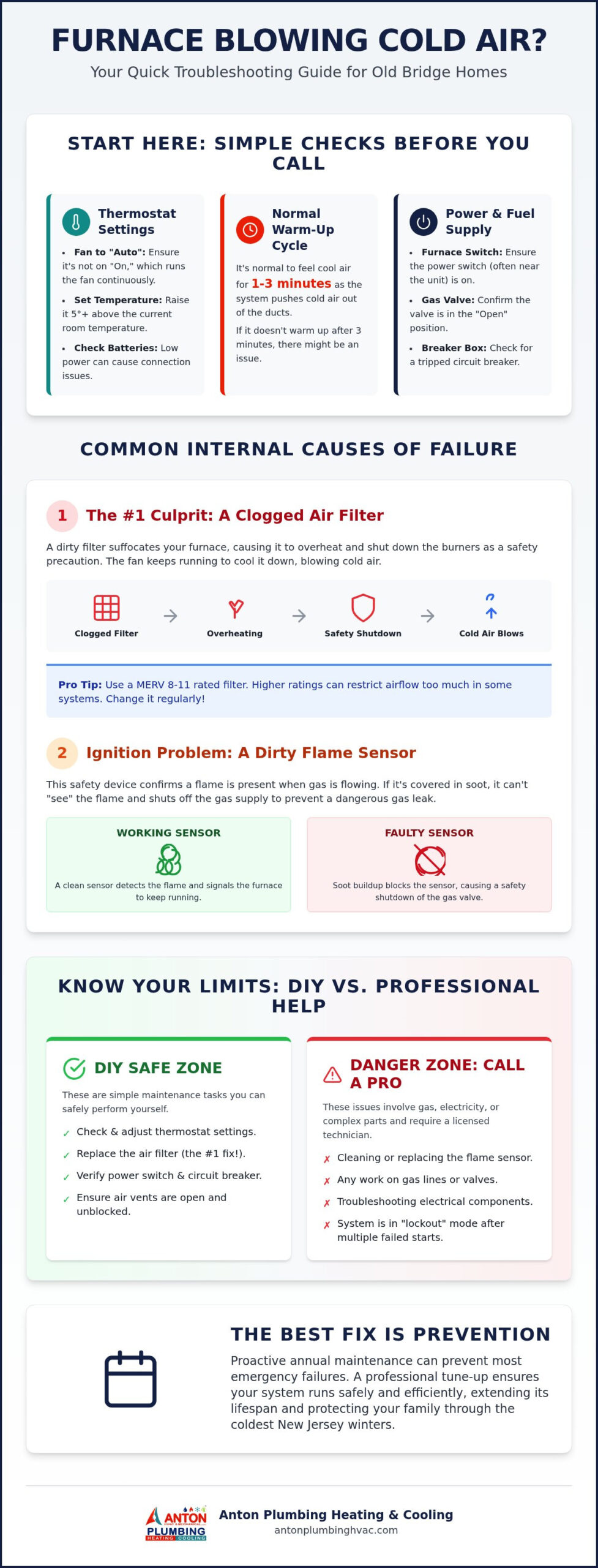
The most common reason for cold air isn’t a broken furnace; it’s a simple thermostat setting. Look at your thermostat right now. If the fan setting is set to “On” instead of “Auto,” the blower motor will run continuously. This means the fan pushes air through your vents even when the furnace isn’t heating it. Switch it to “Auto” so the fan only runs during a heating cycle. Additionally, check your batteries. Low voltage can cause the thermostat to lose its connection with the furnace, preventing the ignition signal from ever reaching the unit. Ensure the display is bright and the temperature is set at least five degrees above the current room temperature to force a call for heat.
Normal Warm-Up vs. Mechanical Failure
Living through a New Jersey winter means your ductwork often sits in unconditioned spaces like attics or crawlspaces. When the heat first kicks on, the furnace must push out all the cold air trapped in those pipes before you feel the warmth. If you’re dealing with a furnace blowing cold air Old Bridge winters make those first few minutes feel like an eternity. However, this is usually just the initial 1 to 3 minute warm-up period. If the air doesn’t turn hot after three minutes, the system has likely skipped the ignition phase. Watch for these signs of a failed start:
- The blower runs, but you never hear the “click” of the gas valve.
- You hear the inducer motor start, but no flames appear.
- The system attempts to light three times and then enters a “lockout” mode.
Finally, verify the basics of your power and fuel supply. Ensure the furnace power switch, which looks like a standard light switch near the unit, hasn’t been flipped off by mistake. Check your gas valve to confirm it’s in the “open” position. If your home has other gas appliances, check if they’re working to rule out a utility-wide outage. These small steps often restore heat without needing a professional service call, protecting both your family’s comfort and your budget.
Common Causes for Furnace Ignition and Airflow Failures
If your thermostat settings are correct but your home remains chilly, the issue likely resides within the mechanical components of your heating system. Internal failures often trigger safety protocols that stop the heating process while keeping the blower fan running. This leads to the frustrating experience of a furnace blowing cold air Old Bridge families face when their systems haven’t been serviced recently. Understanding these common culprits helps you determine if you can resolve the issue with a quick maintenance task or if you need professional intervention.
The Air Filter: Your Furnace’s First Line of Defense
A clogged air filter is the most frequent cause of “short cycling.” When dust and debris block the airflow, the internal temperature of the furnace rises rapidly. To prevent the heat exchanger from cracking or causing a fire, a safety device called a high-limit switch shuts off the burners. The fan continues to run to cool the system down, which results in cold air blowing through your vents. To check your filter safely, follow these steps:
- Turn off the power to your furnace at the nearby service switch.
- Locate the filter slot, usually found where the return duct meets the furnace cabinet.
- Slide out the old filter and hold it up to a light source. If you cannot see light through the fibers, it’s time for a change.
- Install a new filter with the airflow arrows pointing toward the furnace.
For most homes in our area, we recommend using filters with a MERV rating between 8 and 11. While higher MERV ratings provide better filtration, they can also restrict airflow in older systems, potentially leading to the very overheating issues you’re trying to avoid.
Flame Sensors and Pilot Lights: The Ignition Heart
The flame sensor is a critical safety component designed to detect if a flame is actually present when the gas valve is open. If this small metal rod becomes coated in carbon or soot, it fails to “see” the flame. As a result, the system shuts off the gas to prevent a dangerous buildup in your home. A telltale sign of a dirty flame sensor is a furnace that ignites for about 10 seconds and then immediately goes cold. While some online guides suggest cleaning this yourself, we strongly advise against it. These sensors are fragile and require precise positioning. Damaging this component can lead to more expensive repairs or safety risks.
In older units, a “standing pilot” light that has blown out will prevent ignition entirely. Modern high-efficiency systems instead use electronic igniters or intermittent pilots. These systems also produce condensation during operation. If the condensate drain line becomes blocked by algae or debris, a float switch will cut power to the burners to prevent water damage. If you notice water pooling around the base of your unit, this is likely why your heat has failed. If these basic checks don’t restore your comfort, our licensed heating specialists are ready to provide a precise diagnosis using advanced diagnostic tools.
DIY Troubleshooting vs. When to Call an Old Bridge Professional
Facing a furnace blowing cold air Old Bridge winters bring can tempt any homeowner to grab a toolbox and start searching for a fix. While we encourage self-sufficiency for basic maintenance, your furnace is a high-voltage, gas-fueled machine that requires respect. The goal is to restore your heat quickly without compromising your family’s safety or your equipment’s longevity. Knowing where the line exists between a simple adjustment and a dangerous repair is the first step in being a responsible guardian of your home.
Safe Homeowner Fixes You Can Try Now
Before you schedule a service call, perform a few low-risk checks. First, head to your electrical panel and locate the HVAC circuit breaker. Sometimes a power surge or a momentary overload can trip the switch. Flip it completely to the “Off” position and then back to “On” to perform a hard reboot of the control board. Next, step outside. High-efficiency furnaces use PVC pipes to vent exhaust and intake fresh air. In Old Bridge, heavy snow or even a stray bird’s nest can block these pipes. If the furnace can’t “breathe,” it won’t ignite. Finally, if you’ve recently had utility work done, ensure the yellow gas valve handle near the unit is turned parallel to the pipe. If it’s perpendicular, your fuel supply is cut off.
Signs You Need an Expert Technician
Certain symptoms indicate that the problem has moved into the “Danger Zone.” If you hear aggressive banging, whistling, or grinding noises, shut the system down immediately. These sounds often signal a failing blower motor or a cracked heat exchanger. You should also be alert for the smell of gas or a persistent “burning dust” odor. While a faint dusty smell is normal during the first start of the season, a strong, lingering scent suggests electrical overheating or a gas leak. If your furnace blowing cold air Old Bridge is accompanied by these red flags, professional intervention is mandatory.
Choosing a professional diagnostic is often more cost-effective than attempting a part replacement yourself. Modern HVAC systems are protected by manufacturer warranties that often become void if an unlicensed individual performs internal repairs. A failed DIY attempt could cost you thousands in lost warranty coverage or damaged control boards. Our team brings 28 years of experience and advanced diagnostic technology to every home. We act as guardians of your household, ensuring that every fix is not only fast but ethically sound and technically perfect. If your breakers continue to trip or the burners won’t stay lit after your basic checks, it’s time to rely on a seasoned veteran.
Preparing for New Jersey Winters: Prevention & Maintenance
Preventing a heating crisis is always more effective than managing one after your home has already lost its warmth. Proactive maintenance is the most reliable way to ensure you never wake up to a furnace blowing cold air Old Bridge winters often trigger. A neglected system works 20% harder to maintain the same temperature, which increases energy consumption and places unnecessary strain on internal components. By addressing small issues before the first frost, you act as a guardian of your household’s comfort and security.
The Annual Tune-Up Checklist
A professional inspection goes far beyond a simple filter change. Our licensed technicians perform a deep cleaning of the burner assembly to ensure efficient combustion and inspect the ignition system for signs of wear. We also calibrate your thermostat to ensure it communicates accurately with your furnace. A Heat Exchanger is the critical component that separates toxic combustion gases from the breathable air in your home while transferring thermal energy to provide warmth. During a tune-up, we carefully examine this part for hairline cracks that could lead to carbon monoxide leaks.
- Inspect safety limit switches to prevent overheating.
- Check the inducer motor for proper venting.
- Clear condensate lines to prevent water-triggered shutdowns.
- Test the gas pressure to ensure optimal fuel delivery.
Local NJ Considerations: Weather and Utilities
In our region, extreme summer humidity in East Brunswick can lead to moisture buildup in ductwork, which eventually impacts airflow during the winter. This moisture can cause corrosion or mold growth that restricts the very air your furnace needs to function. For more localized advice, you can explore our guide on HVAC Repair in East Brunswick, NJ to see how our coastal climate affects your system. Additionally, both NJNG and PSEG recommend that homeowners keep their external gas meters and intake pipes clear of heavy snow and ice to prevent pressure fluctuations or safety lockouts.
When a furnace blowing cold air Old Bridge families experience isn’t fixed quickly, the danger extends to your plumbing. Dropping indoor temperatures can lead to frozen pipes, especially in homes with poor attic insulation. Ensuring your attic is properly sealed reduces the workload on your furnace and protects your water lines from bursting. If you haven’t scheduled your seasonal service yet, book your furnace tune-up today to secure your home against the upcoming freeze.
Emergency Furnace Repair in Old Bridge: The Anton Advantage
When your home is plummeting toward freezing temperatures, you need more than a generic repair service. You need a guardian who understands the local climate and the immediate stress a heating failure causes. We provide 24/7 emergency response because we know that a furnace blowing cold air Old Bridge families encounter doesn’t always happen during business hours. Our team arrives with the urgency required for a crisis and the steady professionalism of a long-term home maintenance partner. We don’t just fix machines; we restore the security of your household.
Why 28+ Years of Experience Matters
Since 1996, we’ve been a family-owned and operated business serving Middlesex County. This extensive tenure means we’re intimately familiar with the diverse housing stock in our area, from historic homes to modern developments. We understand the specific quirks of the heating systems installed across our community, allowing us to identify failures faster than less experienced contractors. This heritage of integrity ensures that we prioritize your safety over a quick sale. If your heating failure has also impacted your water lines, you can find immediate assistance through our Emergency Plumber Old Bridge NJ service. We believe in providing a comprehensive answer to every household utility crisis.
Our Protective Expert Approach
We distinguish ourselves through our commitment to advanced diagnostic technology. While other providers might rely on guesswork, we use high-tech accuracy to pinpoint exactly why your system is failing. This precision prevents unnecessary part replacements and ensures the job is done right the first time, saving you both time and frustration. As your Protective Expert, our focus is on your domestic well-being and long-term comfort. This includes guiding you through the complexities of high-efficiency HVAC systems and helping you navigate NJ state rebate programs for eligible upgrades.
Transparency is the backbone of our service. We provide clear financial expectations and offer same-day HVAC replacement options for systems that have reached the end of their safe operating life. Don’t let a furnace blowing cold air Old Bridge winter nights bring turn into a household disaster. Our licensed NJ HVACR professionals are standing by to restore your heat and your peace of mind. Contact us today for a reliable, professional solution that puts your family’s security first.
Secure Your Home’s Comfort and Safety
Don’t let a furnace blowing cold air Old Bridge winters bring compromise your family’s well-being. You now understand that a simple thermostat adjustment or a fresh air filter can often restore warmth without a service call. However, when ignition failures or safety sensor issues persist, relying on professional expertise is the most ethical and cost-effective choice. Protecting your household requires a balance of proactive maintenance and knowing exactly when to call for help.
Since 1996, our team has served as a guardian for local families facing utility failures. Our licensed NJ HVACR professionals bring over 28 years of industry experience and advanced diagnostic technology to every home we visit. We provide 24/7 emergency availability to ensure you’re never left in the cold during a Middlesex County freeze. Restore your heat today with Anton Plumbing Heating & Cooling and experience the peace of mind that comes with seasoned, local expertise. Your home deserves the steady care of a dedicated professional partner.
Frequently Asked Questions
Is it dangerous if my furnace is blowing cold air?
While cold air itself isn’t harmful, the underlying cause might be a significant safety risk. Your system often blows cold air because a safety protocol has shut down the burners to prevent overheating or gas leaks. If you notice a persistent smell of gas or hear unusual banging sounds, you should shut the system down immediately. These signs often point to a cracked heat exchanger or a failing gas valve.
How long should I wait before calling a repairman for cold air?
Give your system about five minutes to complete its initial startup sequence. In the peak of a New Jersey winter, it takes time to purge the standing cold air from your ductwork. If the air remains chilly after this period and you’ve already checked your thermostat settings, it’s time to call a professional. Waiting too long can lead to secondary issues like frozen pipes if indoor temperatures drop too low.
Why does my furnace blow cold air then turn off?
This behavior, known as short cycling, usually indicates that a safety sensor is stopping the heating process. The furnace starts its ignition sequence, but if the flame sensor doesn’t detect a fire within seconds, it cuts the gas for your protection. The blower fan then runs for a few minutes to cool the internal components before the entire system enters a lockout mode. This cycle repeats until the sensor is cleaned or replaced.
Can a dirty air filter really cause cold air?
A clogged filter is a leading cause for a furnace blowing cold air Old Bridge homeowners encounter during the winter. When dust restricts airflow, the internal temperature of the unit spikes rapidly. This triggers the high-limit switch, which kills the burners to prevent a fire or equipment damage. The fan continues to run to dissipate the excess heat, resulting in unheated air blowing through your vents until the system resets.
How do I reset my furnace in Old Bridge?
Locate your electrical panel and find the breaker labeled for your heating system. Flip the switch to “Off,” wait at least 30 seconds, and then flip it back to “On.” You should also verify that the service switch near the furnace itself hasn’t been accidentally turned off. If the system fails to produce heat after one reset attempt, don’t keep trying. Repeated resets can damage sensitive electronic control boards or ignore a serious safety hazard.
What is the most common reason for a furnace to stop blowing heat?
Thermostat setting errors and neglected maintenance are the most frequent culprits. Many people accidentally set their thermostat fan to “On” instead of “Auto,” which causes the blower to run even when the burners are off. Beyond that, a dirty flame sensor or a clogged air filter accounts for the majority of service calls. These issues are easily preventable through the annual tune-ups we provide to ensure your system remains reliable and safe.
Do I need to replace my furnace if it starts blowing cold air?
Not necessarily, as many causes for a furnace blowing cold air Old Bridge families experience are repairable. Components like igniters, sensors, and limit switches can be replaced individually to restore your heat. However, if your unit is over 15 years old and requires frequent repairs, we may recommend a high-efficiency upgrade. Our technicians use advanced diagnostic technology to determine which path provides the best long-term security and domestic well-being for your home.
How much does a typical furnace repair cost in New Jersey?
Repair costs vary based on the specific part that failed and the complexity of the labor involved. A standard service visit typically includes the diagnostic fee to identify the root cause of the failure. Minor fixes like cleaning a sensor or replacing a capacitor are relatively affordable. Major repairs involving the blower motor or heat exchanger are more significant investments. We provide clear financial expectations and transparent communication before any work begins on your system.


