Did you know that water expands by 9% when it freezes? This physical reality is the primary cause of burst pipes, often turning a quiet winter night into a high-stakes emergency for your family. If you are looking for a reliable home winterization plumbing checklist Old Bridge experts recommend, it is likely because you want to avoid the stress of a flooded basement or a failing furnace. It is completely normal to feel anxious about the unpredictable New Jersey weather, but you deserve to feel secure in a house that is fully prepared for the 2026 season.
We understand the pressure of maintaining your home and managing complex outdoor systems before the first frost hits. This guide provides a clear, actionable path to protecting your property and ensuring your plumbing remains functional all winter. By following our professional recommendations, you’ll gain total peace of mind and the benefit of lower utility bills through efficient heating. We will cover everything from draining exterior spigots and insulating vulnerable lines to the critical maintenance steps that prevent your boiler or furnace from quitting when you need it most.
Key Takeaways
- Learn how to prevent ice from backing into your home by properly disconnecting outdoor hoses and securing internal shut-off valves.
- Identify high-risk areas in your basement or attic and use this home winterization plumbing checklist Old Bridge homeowners trust to secure vulnerable pipes.
- Discover the mechanical maintenance steps, like flushing your water heater, that prevent system failure and keep utility bills low during a freeze.
- Understand the “Old Bridge Freeze” and why local humidity requires a specific strategy for sealing air leaks around plumbing penetrations.
- Find out how to leverage professional safety audits and New Jersey state rebate programs to upgrade your home’s efficiency for the 2026 season.
Why Old Bridge Homeowners Need a Strategic Winterization Plan
The “Old Bridge Freeze” is a phenomenon that catches many Middlesex County residents off guard. It isn’t just about the raw temperature; it is the combination of late-autumn humidity and the sharp, sudden temperature drops that characterize our local climate. To understand what is winterization in a professional sense, you must view it as a proactive shield for your home’s infrastructure. It is the process of preparing your property to survive freezing conditions by removing water from vulnerable areas and reinforcing the home’s thermal envelope before the first frost arrives.
Following a comprehensive home winterization plumbing checklist Old Bridge experts recommend is a small investment of time that prevents a massive financial catastrophe. While a basic DIY checklist might cost you a few hours on a weekend, the average cost of a single burst pipe emergency can reach thousands of dollars in structural damage and mold remediation. At Anton Plumbing Heating & Cooling, we have spent 28 years acting as a guardian for local households. We have seen firsthand how a few overlooked steps in October can lead to a flooded living room in January. Our goal is to provide you with the technical confidence to secure your home properly and avoid the high-stakes stress of utility failures.
The Science of Frozen Pipes
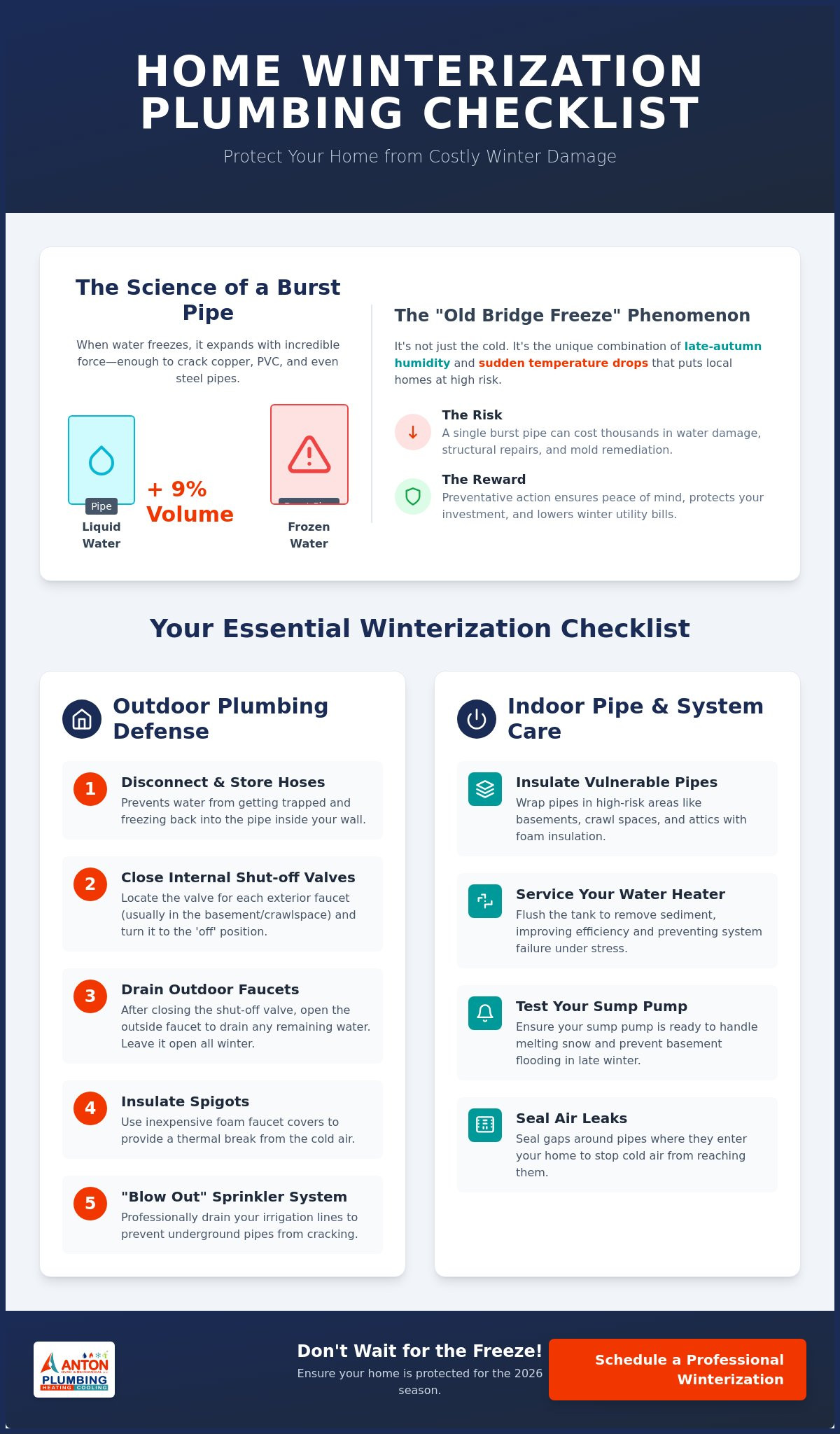
When water freezes, it expands with incredible force, creating enough pressure to crack copper, PVC, and even galvanized steel. It isn’t just the ice itself that causes the break; it is the massive pressure spike created between the ice blockage and the closed faucet. This pressure has nowhere to go but out through the pipe wall. In many Old Bridge homes, the most dangerous zones are uninsulated crawl spaces and rim joists where cold air can whistle through small gaps and hit stagnant water lines. If you find yourself facing a sudden rupture despite your best efforts, you will need an emergency plumber Old Bridge NJ residents trust to stop the flow and minimize damage immediately.
The 2026 Winter Outlook for Middlesex County
Early preparation is the only reliable strategy for the 2026 season. Local weather patterns suggest that Middlesex County may experience earlier hard frosts than in previous years, making October the ideal time to run through your home winterization plumbing checklist Old Bridge. Waiting until December to start is a high-risk strategy that leaves your home exposed to sudden overnight drops that can catch any homeowner unprepared. Preventative maintenance is always more affordable than a crisis call. By securing your system now, you ensure your family stays warm and your bank account stays protected from the high costs of emergency restoration and the utility spikes caused by inefficient, struggling systems.
Outdoor Plumbing Defense: Faucets, Hoses, and Sprinklers
Your outdoor plumbing is the first line of defense against the unique climate challenges mentioned previously. If you leave water trapped in these exterior lines, you are inviting structural damage into your foundation. Following a proper home winterization plumbing checklist Old Bridge homeowners use to protect their property ensures that a simple garden hose doesn’t lead to a costly repair bill. Take these five steps before the first hard frost to secure your exterior fixtures and maintain the integrity of your home’s perimeter.
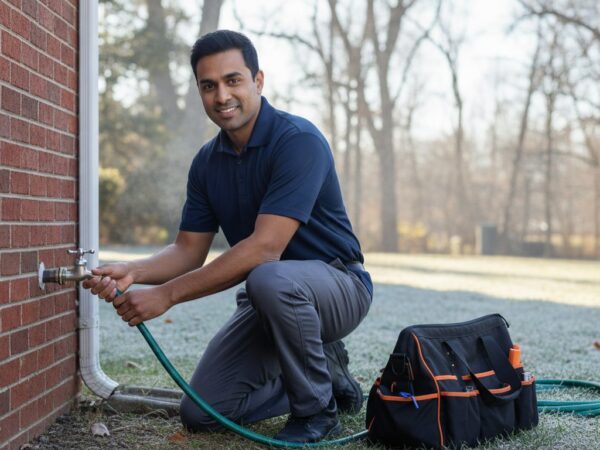
- Step 1: Disconnect and store all garden hoses. If you leave a hose attached, water remains trapped in the faucet’s neck. When this water freezes, it expands back into the sillcock, often causing a rupture that you won’t discover until you turn the water on next spring.
- Step 2: Locate and close internal shut-off valves. These are usually found in the basement or crawl space near where the pipe exits the house.
- Step 3: Open the outdoor faucet to drain remaining water. This allows any residual moisture to escape. Leave the faucet in the “open” position throughout the winter to allow for air expansion.
- Step 4: Insulate spigots with foam covers. These inexpensive insulated caps provide a critical thermal break between the cold air and your home’s plumbing.
- Step 5: Schedule a professional sprinkler “blow out.” Underground lines are prone to cracking if even a small amount of water remains in the PVC joints.
Managing Exterior Sillcocks and Spigots
Many modern homes feature “frost-free” faucets, which have a long stem that keeps the actual valve inside the heated portion of your home. However, these are not foolproof. If a hose is left attached, the vacuum breaker cannot drain, and the unit will still freeze and burst. Standard faucets are even more vulnerable and require absolute isolation from the main water supply. To test if your shut-off valve is fully seated, close it firmly and check the outdoor faucet for any persistent drips over the next ten minutes. For broader safety tips beyond your pipes, consult a winter preparedness checklist from the National Weather Service.
Underground Irrigation and Pool Lines
Old Bridge yards often hide a network of PVC pipes that are highly susceptible to the freeze-thaw cycle. Gravity draining is rarely enough for New Jersey irrigation systems because low spots in the lines will always trap water. A high-volume air compressor is required to “blow out” the system completely. If you notice soft spots in your yard or a sudden drop in water pressure after a freeze, you may need expert main water line Repair and Installation to restore your home’s exterior infrastructure. Anton Plumbing Heating & Cooling provides the specialized equipment needed to diagnose these underground issues accurately. Taking these steps now ensures your landscaping and pool stay protected through 2026. If you aren’t sure where your shut-off valves are located, contacting a professional for a quick walkthrough can help you map your system for a worry-free winter.
Indoor Pipe Protection and Sump Pump Readiness
While securing your outdoor spigots is a vital first step, the interior of your property requires equal vigilance. The most effective home winterization plumbing checklist Old Bridge residents can follow must prioritize the unheated zones where cold air infiltrates. Start by identifying every inch of exposed pipe in your basement, attic, and garage. Wrap these lines in high-quality foam sleeves to prevent the 9% water expansion that leads to ruptures. Don’t forget to seal air leaks near plumbing penetrations with spray foam or caulk. A tiny draft of sub-zero air hitting a copper pipe can cause a freeze in minutes, regardless of the temperature in the rest of your house.
Modern technology offers a level of security that traditional insulation alone cannot provide. We recommend installing a smart water monitor shutoff to act as a 24/7 digital sentry. These advanced systems, such as the intelligent automation solutions provided by J3 Automated Systems, detect minute changes in water pressure and flow, automatically shutting off your main water line if a leak is detected while you are away. Integrating these steps into your home winterization plumbing checklist Old Bridge ensures that you aren’t just reacting to problems, but preventing them entirely. This is a game-changer for homeowners who travel during the holidays or own vacant rental properties in Middlesex County.
Critical Areas for Pipe Insulation
Focus your insulation efforts on pipes running along exterior walls or through cold crawl spaces. These are the highest-risk areas in New Jersey homes. During periods of extreme, sustained cold, you can employ the “Trickle Method” by letting a single faucet drip at a slow, steady rate. This movement prevents pressure buildup and keeps the water from sitting stagnant. If you suspect a problem is already brewing, utilizing the best leak detectors NJ has to offer can help you locate hidden issues before they become visible and destructive.
Sump Pump and Drainage Maintenance
Your sump pump isn’t just for summer rainstorms. In Old Bridge, winter thaws and rapid snowmelts can send high volumes of water toward your foundation. Test your pump now by pouring a bucket of water into the pit to ensure the float switch activates immediately. Inspect the check-valve to confirm it is functioning properly; this component prevents pumped water from flowing back into the pit. Check the discharge line to ensure it is clear of debris and ice. A frozen discharge line will cause the pump to burn out and your basement to flood. Regular drain cleaning services are essential to ensure that your home’s drainage infrastructure can handle the sudden influx of melted snow without backing up into your living space.
Servicing Your Mechanical Core: Water Heaters and Boilers
Your home winterization plumbing checklist Old Bridge remains incomplete until you address the mechanical systems that generate heat and hot water. These units are the engine of your household, and they face their toughest trials during the peak of a New Jersey freeze. A failure here doesn’t just mean a cold shower; it means your entire plumbing network is at risk of freezing from the inside out. We recommend a full mechanical audit by Anton Plumbing Heating & Cooling to ensure your home remains a sanctuary during the 2026 winter season.
- Flush your water heater. Removing sediment improves heating efficiency and prevents the tank from overheating and cracking.
- Inspect the T&P relief valve. This safety mechanism must be tested to ensure it can release pressure if the system malfunctions.
- Schedule a professional boiler tune-up. A seasoned expert can identify worn components before they fail on the coldest night of the year.
- Verify gas line integrity. High-demand periods put extra stress on connections, making leak detection essential for family safety.
Optimizing Your Water Heater for Winter
During a typical New Jersey winter, the temperature of the water entering your home from the main line drops significantly. This cold intake water forces your heater to work approximately 20% harder just to maintain standard household temperatures. If your unit is struggling to keep up or making knocking sounds, it may be time for a water heater replacement before the first hard freeze. Many homeowners are also moving toward tankless hot water boiler repair and installation to provide endless hot water while reducing the energy waste associated with traditional tanks.
Heating System Synergy: Boilers and Radiators
Your heating system and your plumbing are inextricably linked. If your boiler fails, your pipe insulation is only a temporary buffer. Bleeding your radiators is a critical step to remove trapped air, which ensures even heat distribution across every room. Professional hvac repair east brunswick services are often the best way to ensure your thermostat and mechanical core are communicating properly. Always keep your thermostat set to a minimum of 55°F, even when you are away, to prevent the ambient temperature from dropping to the freezing point. If you haven’t had your system inspected this year, schedule your winter safety tune-up today with Anton Plumbing Heating & Cooling to ensure your home stays protected and your utility bills stay manageable.
Professional Winterization: The Anton Plumbing Advantage
Completing a home winterization plumbing checklist Old Bridge residents can handle on their own is a fantastic first step toward property safety. However, some vulnerabilities in your home’s infrastructure require the seasoned eye of a professional. Anton Plumbing brings 28 years of local experience to every service call, acting as a Protective Expert for your family. We don’t just look for obvious leaks; we perform a comprehensive home safety audit designed to identify the microscopic cracks and thermal gaps that DIY methods often miss. Our goal is to provide immediate relief and long-term security before the first Middlesex County frost arrives.
The Value of a Professional Inspection
A licensed New Jersey plumber understands the specific nuances of the state’s Uniform Construction Code and how it applies to your older Old Bridge home. We utilize advanced diagnostic technology, such as specialized equipment for underground leak detection, to find problems buried deep beneath your lawn or foundation. This precision saves you from the high costs of invasive digging and sudden utility spikes. Beyond immediate repairs, routine professional maintenance is often a requirement to preserve your manufacturer warranties on boilers and water heaters. If you skip these documented services, you may find yourself paying out of pocket for a major component failure later in the season.
Financing Your Home Protection
We believe that every family deserves a warm, safe home, regardless of their immediate budget. That is why we help our neighbors navigate the New Jersey State Rebate program for high-efficiency upgrades. If you are considering a new high-efficiency HVAC system or a heat pump water heater, these incentives can significantly offset your initial investment. To further reduce friction, we provide zero-interest financing options for necessary winter repairs and installations. This transparent approach to financial expectations ensures you can secure your mechanical core without stress. Our commitment to ethical standards and community well-being means we prioritize your safety over a sales pitch. If you are ready to move beyond the basics, Schedule your 2026 winterization audit with Anton Plumbing today! We are ready to respond at a moment’s notice with 24/7 emergency support for those rare times when the New Jersey winter proves too much for even the best-prepared systems.
Secure Your Home for a Worry-Free Winter
Don’t wait for the first hard freeze to discover a hidden vulnerability in your plumbing. With 28+ years of NJ experience, our licensed NJ Plumbing and HVACR professionals are ready to act as your home’s guardian. We offer 24/7 emergency availability to ensure you’re never left in the cold. Whether you need a comprehensive safety audit or a high-efficiency system upgrade, we provide the technical excellence and ethical service you deserve. Book Your Professional Winterization Service Now and enjoy the security of a fully prepared home. Your domestic well-being is our top priority, and we’re here to help you navigate the winter with confidence.
Frequently Asked Questions
At what temperature do pipes actually freeze in Old Bridge?
Pipes typically begin to freeze when the outside temperature drops to 20°F or lower for several consecutive hours. While water technically freezes at 32°F, the thermal mass of your home provides a temporary buffer until the mercury hits that critical 20°F threshold. In Old Bridge, high humidity can accelerate frost formation on exposed metal surfaces, so it is vital to have your insulation in place before the first hard frost arrives.
Can I use a hair dryer to thaw a frozen pipe safely?
You can use a hair dryer to safely thaw a frozen pipe as long as you work slowly and keep the corresponding faucet open. Start heating the pipe from the faucet end and move toward the frozen area to allow melting water and steam to escape. Never use an open flame or torch for this task. These heat sources create a severe fire hazard and can cause the pipe to burst from rapid, uneven expansion.
How much should I let my faucets drip during a New Jersey cold snap?
A slow, steady drip is all that is necessary to prevent pressure buildup during a severe New Jersey cold snap. Aim for roughly five to ten drops per minute from the faucet located furthest from your main water shutoff valve. This movement keeps the water from sitting stagnant in vulnerable lines. This simple action is a key step on any home winterization plumbing checklist Old Bridge homeowners follow to avoid midnight emergencies.
Is it necessary to drain my indoor water heater for winter?
It is not necessary to drain your indoor water heater if your home remains heated above 55°F throughout the winter. However, you should still flush the tank to remove sediment that reduces heating efficiency during the high-demand months. If you plan to leave the property vacant and unheated for the season, a full system drain is mandatory to prevent the tank from cracking as the internal water temperature drops.
What should I do if I find a frozen pipe but it hasn’t burst yet?
Keep the faucet open and apply gentle heat using a space heater or hair dryer if you discover a frozen pipe. Opening the valve ensures that as the ice melts, the resulting water and steam have an exit point to relieve internal pressure. If the frozen section is located behind a wall or in a difficult crawl space, contact a licensed professional immediately to prevent a rupture and subsequent water damage.
Does a sump pump need winterization if it is located in the basement?
Yes, your sump pump requires winterization even if the pump itself stays in a heated basement. The most critical component is the exterior discharge line, which must remain clear of snow and ice to prevent water from backing up and burning out the motor. Ensure the line is sloped away from the foundation so gravity can pull water out before it has a chance to freeze inside the pipe.
How do smart water shutoff valves help during the winter?
Smart water shutoff valves provide 24/7 automated protection by detecting unusual flow patterns or pressure drops that indicate a leak. If a pipe freezes and cracks while you are away, the system will automatically close the main valve to prevent catastrophic water damage. This modern technology is a powerful addition to a comprehensive home winterization plumbing checklist Old Bridge property owners use for total domestic security.
What is the best way to insulate pipes in a crawl space?
The best way to insulate pipes in a crawl space is to use pre-slit polyethylene foam sleeves that match the diameter of your pipes. Slide the sleeves over the lines and seal the seams with high-quality tape or cable ties to ensure no gaps remain. For added protection in extremely cold Middlesex County winters, consider adding a layer of fiberglass wrap over the foam in areas where cold air infiltrates the foundation.


