Imagine waking up at 2 AM to that unmistakable rotten-egg odor. Your heart races, and your first instinct is to find the source, but in that moment, every second counts. Knowing exactly what to do if you smell gas in your house Old Bridge is the most important safety skill you can possess as a homeowner. It’s natural to feel overwhelmed by the fear of an explosion or the confusion of whether to call the utility company or a plumber. You aren’t alone in worrying about how to handle a high-stakes utility failure while keeping your family secure.
This guide provides the precise, life-saving steps you need to take immediately and shows you how to secure the professional repairs required to get your home back to normal. We’ll cover everything from emergency evacuation protocols to understanding why PSE&G might shut off your meter. You’ll learn how to navigate the transition from an emergency shut-off to a legal, professional restoration so you can breathe easy again.
Key Takeaways
- Prioritize immediate evacuation and avoid using any electronics or switches to prevent sparks during a suspected leak.
- Identify a gas leak through the distinct rotten-egg smell of Mercaptan or by listening for unusual hissing sounds near your gas lines.
- Distinguish between the safety role of your utility provider and the repair responsibilities of a licensed local plumber to restore service quickly.
- Discover the essential steps of what to do if you smell gas in your house Old Bridge, including how professional pressure testing ensures your system is secure.
- Learn how annual inspections and specialized detectors can safeguard your family against future gas emergencies and carbon monoxide risks.
Emergency Action Plan: What to Do If You Smell Gas in Your Old Bridge Home
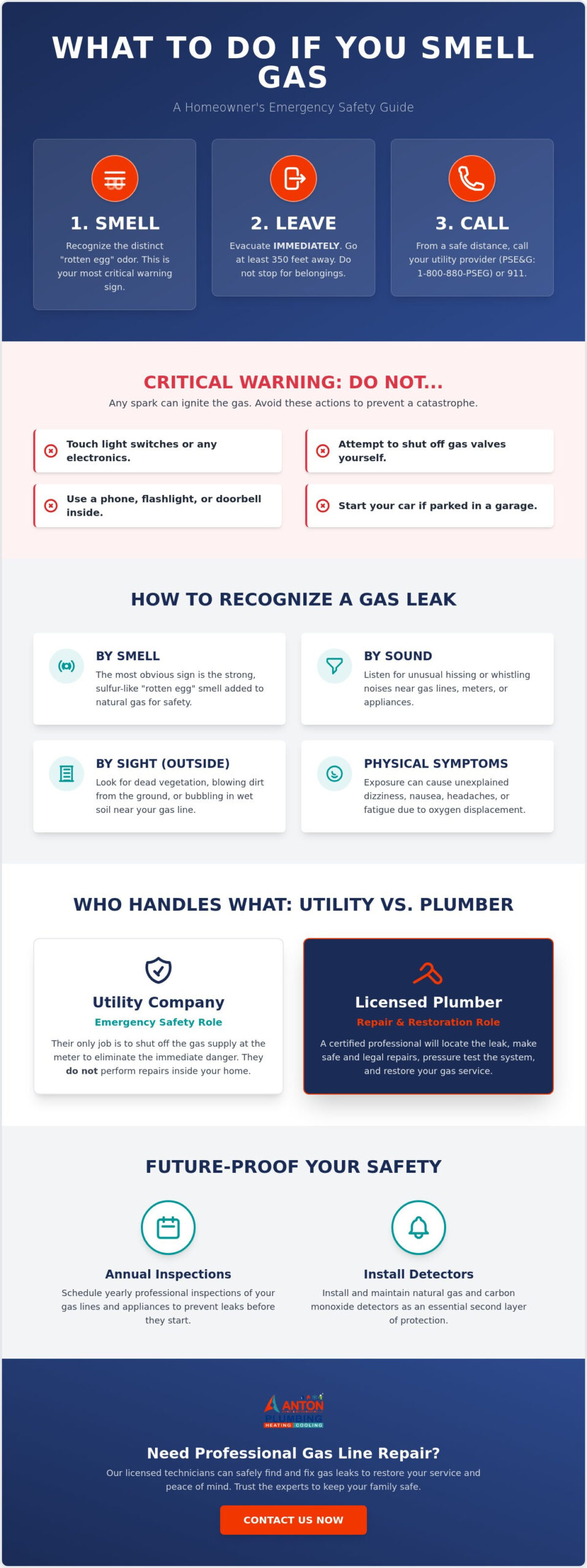
The moment you detect that sulfurous, rotten-egg scent, your priority shifts entirely to life safety. A gas leak is never a minor issue that can wait until morning. Knowing exactly what to do if you smell gas in your house Old Bridge starts with resisting the urge to investigate the source. Natural gas is highly combustible, and even the smallest static discharge can ignite a concentrated pocket of fuel. Stop what you are doing immediately. Do not finish the dishes, do not look for your keys, and do not try to find where the smell is strongest. Your only goal is to get every person and pet out of the structure as quickly as possible.
Old Bridge residents should follow the “Smell. Leave. Call.” protocol without exception. This strategy is designed to remove you from the immediate danger zone before you even pick up a phone. You can find more foundational Gas leak safety information to understand why these volatile situations require such rapid movement. Once you’re safely away, contact PSE&G at 1-800-880-PSEG (7734) or call 911. Never use a phone inside the house where the leak is suspected, as the electronic components can generate a tiny spark sufficient to cause an ignition.
The Immediate “Do Not” List
In a crisis, your habits can become your biggest enemies. Don’t touch light switches, whether you’re turning them on or off. Avoid using thermostats, doorbells, or even flashlights. These actions create small electrical arcs that are invisible to the eye but dangerous in a gas-rich environment. Don’t attempt to shut off the gas valves if they are located near the odor. While it’s tempting to try and stop the flow, lingering in the area increases your risk of inhalation or being caught in a fire. Most importantly, don’t start your car if it’s parked in an attached garage or near the home, as the ignition system is a major spark source.
Evacuation Procedures for Families and Pets
Speed is more valuable than your belongings. Exit the building through the nearest door and leave it open behind you to allow some gas to vent as you flee. Don’t stop to grab jewelry, laptops, or heirlooms. Ensure you have a pre-designated meeting spot for your family, such as a specific neighbor’s driveway or a localized landmark. Safety experts recommend a minimum distance of 350 feet from the building, which is roughly the length of a football field. This distance protects you from the potential blast radius and falling debris. Once you’ve reached this safe zone, perform a quick head count of all family members and pets before making your emergency calls.
Recognizing the Signs of a Natural Gas Leak
Natural gas is naturally colorless and odorless, which makes it a silent threat without intervention. To keep your family safe, utility providers inject a chemical additive that produces a sharp, unpleasant scent. Understanding these sensory triggers is the first step in knowing what to do if you smell gas in your house Old Bridge. Beyond the smell, your home often provides auditory and visual clues that a leak is occurring. These signs can appear in your basement or deep under your front lawn.
The Rotten Egg Odor (Mercaptan)
Mercaptan is a harmless safety additive used by NJ utilities to give natural gas its distinctive, sulfur-like odor.
The presence of this odor is your most reliable warning sign. If the smell is faint, it might indicate a pilot light that has gone out or a minor appliance issue. However, an overpowering rotten egg smell suggests a significant breach in the system. You can review more Natural Gas Safety tips to better understand how these odorants function as a primary defense. Don’t ignore physical symptoms like sudden dizziness, nausea, or unexplained fatigue. These can be signs of gas displacing oxygen in your living space.
Signs Outside Your Home
Not all leaks occur behind your walls. Underground leaks can manifest as dead spots in your landscaping where grass or shrubs suddenly turn brown and wither despite regular watering. If you notice dirt blowing upward from the ground or see bubbles forming in puddles or mud near your gas meter, these are clear indicators of a pressurized leak. In Old Bridge, where aging cast iron pipelines are still present in some areas, these underground leaks can migrate toward your foundation. This creates a high risk of gas accumulation inside your home. Staying vigilant helps you determine exactly what to do if you smell gas in your house Old Bridge before a small leak becomes a major hazard.
Listen for unusual noises near your appliances or gas lines. A steady hissing, whistling, or even a low roaring sound near your furnace or water heater often points to a high-pressure leak. If you notice these signs but aren’t currently in an emergency situation, scheduling professional gas line leak repair can help identify the exact location of the fault. Detecting a problem early prevents a dangerous buildup. Recognizing these secondary signs ensures you aren’t relying solely on your sense of smell to protect your household.
Who to Call: Understanding the Roles of NJ Utilities and Your Local Plumber
Homeowners often feel a sense of relief once they’ve contacted the utility company, assuming the technician will handle every aspect of the repair. However, there’s a critical distinction between securing a site and actually fixing the problem. Knowing what to do if you smell gas in your house Old Bridge includes understanding exactly who is responsible for which part of your home’s infrastructure. If you suspect an immediate threat, such as an active fire or an inability to evacuate safely, call 911 first. For all other suspected leaks, your first call should be to your utility provider to shut off the supply and eliminate the immediate risk of explosion.
In Old Bridge and throughout Middlesex County, the primary natural gas provider is Public Service Enterprise Group (PSE&G), though some neighboring residents may be served by New Jersey Natural Gas (NJNG). These organizations follow strict Natural Gas Safety Guidelines to ensure public welfare. When a technician arrives, their goal is to identify the leak and stop the flow of gas. If the leak is located anywhere past the gas meter—meaning inside your home’s piping or within an appliance—the utility worker will “Red Tag” the system. This means they will lock your meter and leave a notice stating that service cannot be restored until a licensed professional performs the necessary repairs and verifies the system’s integrity.
The Utility Company’s Responsibility
Utility providers like PSE&G are responsible for the gas mains in the street and the service lines leading up to your individual meter. Their authority generally ends at the meter’s discharge side. While a utility technician is highly skilled at detection, they aren’t authorized to perform repairs on customer-owned equipment. They won’t fix your furnace, repair a leaking stove connector, or replace corroded interior pipes. Their job is to make the situation safe, which often results in your home being left without heat, hot water, or cooking capabilities until you hire a private contractor.
The Role of Anton Plumbing Heating & Cooling
This is where our team steps in to bridge the gap between safety and service. Once the utility has secured the site and issued a red tag, you need a partner who can navigate the legal and technical requirements of gas line restoration. We provide expert gas line installation and leak repair in Old Bridge and East Brunswick, ensuring your home meets all New Jersey state plumbing and HVACR licensing standards. Our technicians use advanced diagnostic tools to pinpoint the exact location of the fault that the utility technician identified.
We understand the urgency of being without essential utilities. If you’re facing a service interruption, our team offers the specialized support detailed in our Emergency Plumber Old Bridge NJ: 24/7 Rapid Response FAQ & Guide. We don’t just patch the leak; we perform a comprehensive pressure test of your entire system to ensure there are no secondary issues. This professional verification is often required by the utility company before they will agree to unlock your meter and restore your gas service. We act as your advocate and expert, turning a stressful red-tag situation into a resolved, safe home.
Professional Gas Line Leak Detection and Repair in Old Bridge
Once the utility company has locked your meter and left a red tag, the path forward requires technical precision and licensed expertise. Knowing what to do if you smell gas in your house Old Bridge shifts from immediate evacuation to professional restoration. Our team doesn’t just look for obvious signs; we use a systematic approach to identify every vulnerability in your home’s gas infrastructure. This process is governed by strict New Jersey state Plumbing and HVACR license requirements, ensuring that every repair is performed to the highest safety standards and meets local building codes.
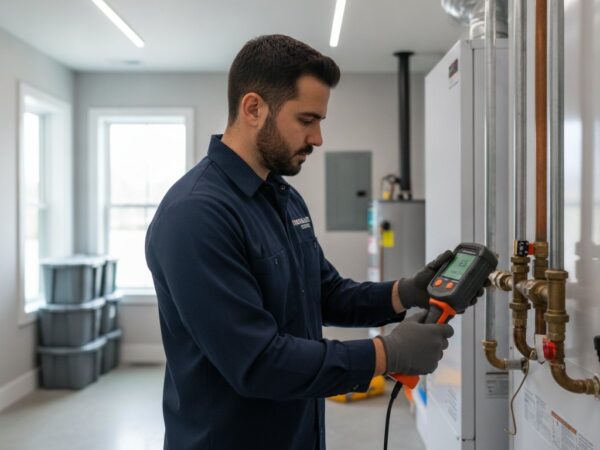
We employ advanced diagnostic technology to locate leaks that are invisible to the naked eye. Our technicians use electronic “sniffers” capable of detecting gas concentrations in parts per million, alongside ultrasonic leak detectors that pick up the high-frequency sound of gas escaping from a pressurized line. After a leak is identified and repaired, we conduct a comprehensive pressure test. During this test, we isolate the gas system and monitor it with a sensitive gauge to ensure the entire network of pipes is airtight. This verification is essential for your domestic security and is often a prerequisite for the utility company to restore your service.
How We Locate Hidden Leaks
Gas can travel through wall cavities and floor joists, appearing far from the actual source of the breach. We use specialized sensors to track these migration patterns, testing every joint, valve, and appliance connector in the system. Common culprits often include corroded black iron pipes in damp basements or loose fittings on older furnaces. While some homeowners try to find leaks with soap bubbles, this DIY method is insufficient for safety because it cannot detect leaks hidden behind walls or within the internal components of your HVAC system. We leave nothing to chance, ensuring every inch of your gas line is inspected and secured.
Repairing and Replacing Gas Lines
When a section of pipe is compromised, we determine the best material for the replacement based on your home’s specific needs. We typically utilize traditional black iron pipe for its durability or Corrugated Stainless Steel Tubing (CSST) for its flexibility in complex retrofits. Every installation is performed with meticulous attention to detail to prevent future vibrations or corrosion from causing new leaks. If you are managing a business property, the requirements are even more stringent. You can learn more about specialized infrastructure needs in our guide to Commercial Plumbing Maintenance in Old Bridge, NJ: The Complete Buying Guide.
Restoring your home’s gas service shouldn’t be a source of stress. Our “Protective Expert” approach means we handle the technical complexities and the paperwork required to satisfy utility inspectors. If you are facing a red-tagged meter or suspect an issue with your pipes, contact us for professional gas line installation and leak repair to secure your home today. We prioritize your family’s safety and work efficiently to get your heat and hot water back online legally and safely.
Preventing Future Gas Leaks: Maintenance and Safety Upgrades
While knowing what to do if you smell gas in your house Old Bridge is vital for emergencies, the best strategy is to ensure that smell never occurs. Most gas leaks result from avoidable mechanical failures, such as dried-out seals, corroded fittings, or vibrating pipes that have loosened over time. By shifting from a reactive mindset to a proactive one, you protect your family from the stress of a red-tag service interruption. Routine maintenance acts as a safeguard, identifying microscopic cracks in heat exchangers or brittle appliance connectors before they become hazardous breaches.
Start by upgrading your home’s hardware. If your home still uses older, brass-colored appliance connectors, replace them with modern, plastic-coated stainless steel versions. These newer connectors are more resistant to corrosion and chemical damage. Additionally, ensure every gas-burning appliance has a dedicated, easy-to-reach shut-off valve. These simple upgrades provide immediate control during a minor issue and ensure your home remains compliant with current New Jersey safety standards. Professional inspections focus on these high-wear areas, providing the technical accuracy needed to keep your infrastructure secure.
The Importance of Seasonal Tune-Ups
Your heating system is the most significant consumer of natural gas in your home. Before the NJ winter hits, it’s essential to have a licensed professional check the integrity of your furnace or boiler connections. Vibrations during the heating season can cause joints to settle or loosen, creating slow leaks that are difficult to detect without specialized equipment. This is also the ideal time to inspect the gas lines feeding your water heater, as these often sit in damp basements where corrosion is more likely to occur. For those in neighboring areas, our HVAC Repair in East Brunswick, NJ: Your 2026 Homeowner’s Guide to Comfort provides a deeper look at keeping your systems running safely all year long.
Safety Technology for Your Home
Modern technology offers layers of protection that go beyond your sense of smell. While many homeowners are familiar with a smart water monitor shutoff for plumbing leaks, similar technology exists for gas safety. Installing dedicated explosive gas detectors on every level of your home provides an early warning system that can trigger long before the odor of Mercaptan becomes overwhelming. Place these detectors near your furnace, water heater, and kitchen, but keep them at least 10 feet away from appliances to prevent false alarms. These devices should be used alongside Carbon Monoxide (CO) detectors to provide comprehensive coverage against both combustible gas and toxic exhaust.
Your domestic security is our highest priority. By combining advanced detection technology with annual professional maintenance, you significantly reduce the likelihood of ever needing to search for what to do if you smell gas in your house Old Bridge. Anton Plumbing Heating & Cooling stands as a guardian of the household, bringing a 28-year legacy of ethical service and technical excellence to every Old Bridge family. We don’t just fix pipes; we provide the peace of mind that comes from knowing your home’s infrastructure is handled by seasoned experts who value your safety as much as you do.
Secure Your Home and Restore Your Peace of Mind
Navigating a gas emergency requires a clear head and a fast response. By prioritizing immediate evacuation and recognizing the sensory signs of a leak, you’ve already taken the most critical steps toward safety. Remember that while your utility provider stops the immediate danger, it takes a licensed professional to perform the repairs and verify your system’s integrity so your service can be restored. Understanding exactly what to do if you smell gas in your house Old Bridge ensures you aren’t left stranded with a red-tagged meter and no heat.
Our team brings over 28 years of local New Jersey experience to every crisis. As licensed and insured master plumbers, we provide the technical precision and advanced diagnostic tools necessary to secure your home’s infrastructure. We are committed to your family’s domestic well-being and are ready to act as your knowledgeable guide through any utility failure. Smell gas? Don’t wait. Call Anton Plumbing Heating & Cooling for 24/7 Emergency Gas Leak Repair. We are here to help you breathe easier and keep your household safe.
Frequently Asked Questions
Is it normal to smell a little gas when I turn on my stove?
A brief, faint whiff of gas is common when you first ignite a burner as the gas reaches the pilot or igniter. However, if the odor persists after the flame is lit or if you smell gas while the appliance is turned off, you have a problem. This often indicates a failing valve or a slow leak in the connector that requires immediate professional attention to prevent a hazard.
Will PSE&G charge me for coming out to check a gas leak in Old Bridge?
No, PSE&G does not charge residential customers to respond to and investigate reports of suspected gas leaks. They prioritize community safety and encourage everyone to call their emergency line at 1-800-880-PSEG (7734) without hesitation. While the safety check is free, the utility company is not responsible for repairing the pipes or appliances inside your home; those costs fall to the homeowner.
How much does it cost to repair a gas leak in a house?
The investment required for gas leak repair depends on several factors, including the leak’s location and the materials needed for the fix. Costs vary based on whether the leak is at a simple appliance connection or deep within your home’s main distribution lines. We provide clear, transparent expectations after our licensed technicians perform a diagnostic “sniffer” test and pressure evaluation of your specific system.
Can I use a wrench to tighten a gas fitting myself if I find the leak?
No, you should never attempt to repair or tighten a gas fitting yourself. Gas lines require specific torque levels and specialized pipe dope or gas-rated tape to ensure a permanent, airtight seal. Using the wrong tool or over-tightening can crack the fitting or strip the threads, which turns a small leak into a major emergency. Always leave gas work to a licensed master plumber.
How long does it take for a plumber to fix a gas leak and restore service?
Determining what to do if you smell gas in your house Old Bridge includes managing your timeline expectations for repairs. Most minor leaks are resolved in a few hours, but the total time to restore service depends on the utility company’s schedule for a final inspection. We perform the necessary pressure testing immediately after the repair to speed up the process and get your heat back on as quickly as possible.
What happens if the utility company “Red Tags” my gas meter?
A “Red Tag” means the utility technician has identified a safety risk and legally disabled your gas supply to prevent an explosion. They will lock the meter and provide a notice explaining the fault. You cannot legally or safely turn the gas back on yourself. You must hire a licensed professional to repair the system and certify its safety before the utility will return to unlock the meter.
Does home insurance cover gas line leak repairs in New Jersey?
Standard homeowners insurance policies typically don’t cover gas line repairs caused by age, corrosion, or general wear and tear. Coverage usually only applies if the damage resulted from a covered “peril,” such as a fire or a sudden accidental event. It’s a good idea to check your specific policy for a “service line coverage” endorsement, which some New Jersey homeowners add to cover underground utility lines.
Should I open the windows if I smell gas, or just leave?
If you’re unsure what to do if you smell gas in your house Old Bridge, remember that evacuation is more important than ventilation. Don’t stop to open windows, as this delays your exit and could potentially create a spark through friction. Leave the door open as you exit to allow some gas to escape, but focus entirely on reaching a safe distance of at least 350 feet before calling 911 or PSE&G.


