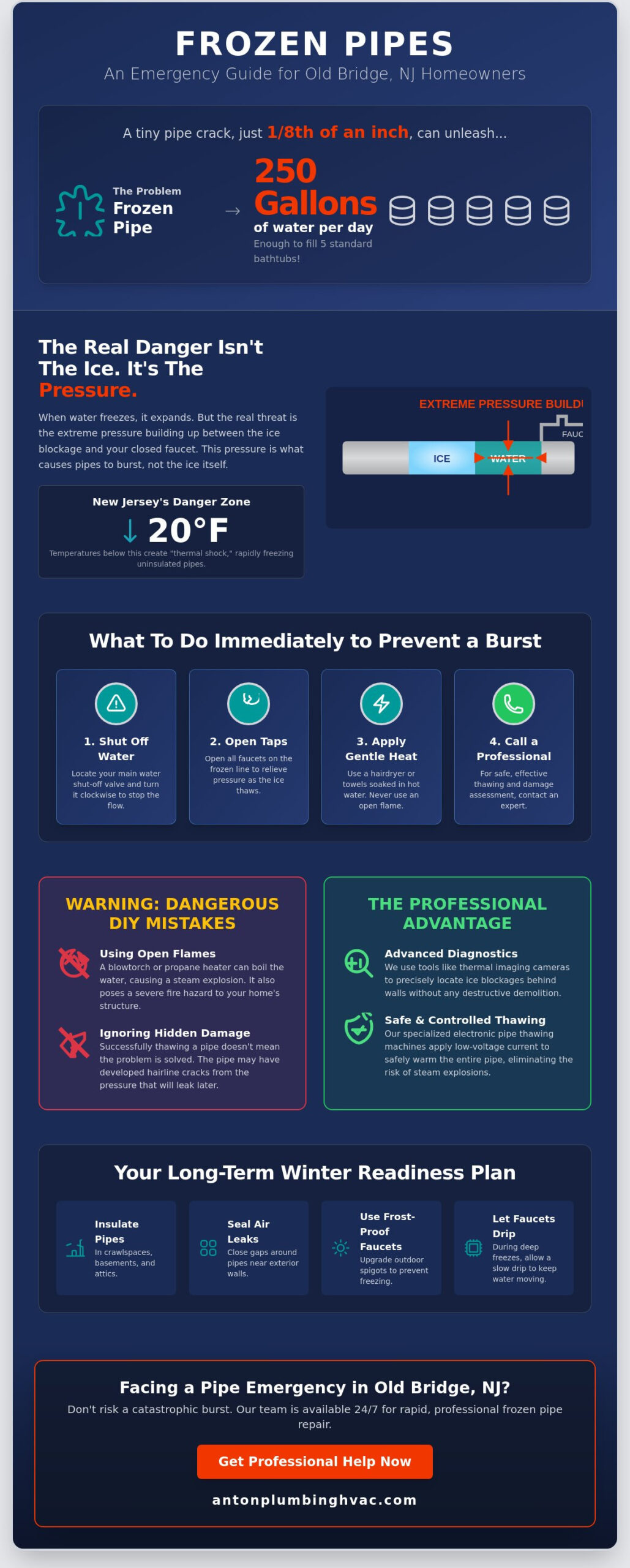
Did you know that a crack as small as one-eighth of an inch in a frozen pipe can release up to 250 gallons of water in a single day? That’s enough to flood a basement and cause significant property damage before you even finish your morning coffee. When the temperature drops below 20 degrees Fahrenheit in New Jersey, your home’s infrastructure faces a silent, high-pressure crisis. If you’ve turned on the tap only to find a trickle, you likely need immediate frozen pipe repair Old Bridge NJ to prevent a total disaster. We understand that your home’s security is your top priority, and we’re here to act as your technical guide and guardian through this utility failure.
It’s completely normal to feel overwhelmed by the threat of water damage, but you don’t have to face it alone. This article teaches you how to handle frozen pipes safely and explains exactly when you need professional intervention to prevent a catastrophic burst. We’ll walk through the critical steps for emergency thawing, the dangers of using open flames, and how our local team provides the fast, transparent service you need to restore your water flow without the guesswork. You’ll gain the clarity needed to protect your household and ensure your plumbing remains reliable all winter long.
Key Takeaways
- Relieve internal pressure immediately by locating your main water shut-off and opening specific faucets to prevent a catastrophic burst.
- Identify the common architectural weak points in Middlesex County homes that lead to thermal shock during rapid New Jersey temperature drops.
- Secure professional frozen pipe repair Old Bridge NJ to avoid the severe fire hazards and steam explosion risks associated with dangerous DIY thawing methods.
- See how modern diagnostic tools like thermal imaging allow experts to pinpoint ice blockages behind walls without the need for destructive demolition.
- Implement a long-term winter readiness strategy using professional pipe insulation and frost-proof outdoor faucets to safeguard your home infrastructure.
Immediate Steps to Take for Frozen Pipes in Old Bridge
When you turn on the tap and only a few drops come out, you’re in a race against physics. Most homeowners assume the ice itself causes a pipe to fail, but the real danger is the extreme pressure buildup between the ice blockage and the closed faucet. Acting within the first few minutes can be the difference between a simple thaw and a full-scale flood. If you suspect a freeze, your priority is to manage that pressure immediately. This is the critical window where professional frozen pipe repair Old Bridge NJ can save your home from the high costs of water restoration.
Locating the Freeze Point
Start your search in the coldest parts of your home. In many Middlesex County residences, Piping systems are often routed through unheated crawlspaces, basements, or attics. Check these areas first. You’re looking for visible frost on the exterior of the pipe or a slight bulging in the metal or plastic. Pay close attention to lines running along exterior walls; these are notorious weak points in New Jersey home construction. If the pipe is hidden behind a wall, feel the surface of the drywall for unusually cold spots or dampness that might indicate a hairline fracture has already occurred.
Relieving Pressure to Prevent the Burst
Relieving internal pressure is your most effective defense. When water freezes, it expands, but it also traps a column of liquid water between the ice and your faucet. As the ice grows, it pushes that water toward the faucet, creating immense pressure that eventually snaps the pipe. To prevent this, you must keep the affected faucet open. Even if water isn’t flowing, an open valve provides an escape route for the pressure and any steam that might be created during the thawing process. If you’re currently experiencing a deep freeze, maintaining a slow drip in faucets served by vulnerable lines can prevent the ice from forming a solid, pressurized plug in the first place.
Follow these steps immediately to stabilize your home infrastructure:
- Shut off the water: Locate your main water shut-off valve and turn it clockwise until it’s fully closed. This stops the flow of water in case a pipe has already split.
- Open the taps: Turn on all faucets connected to the frozen line to release trapped air and water pressure.
- Clear the area: Move electronics, furniture, and valuables away from the suspected freeze point to minimize damage if a leak starts during thawing.
- Apply gentle heat: If the pipe is visible and accessible, wrap it in towels soaked in hot water. Avoid using any devices with an open flame.
- Call for help: Contact a licensed emergency plumber in Old Bridge NJ to perform a professional assessment and safe electronic thawing.
Managing a frozen line requires a steady hand and technical knowledge. While these DIY steps can mitigate immediate risks, frozen pipe repair Old Bridge NJ often requires specialized equipment to ensure the entire line is cleared without causing structural fatigue. Don’t wait for the ice to find its own way out; taking decisive action now protects your property and your peace of mind.
Why New Jersey Winters Are Harsh on Local Plumbing
New Jersey winters are notoriously volatile. In Old Bridge, we often see temperatures plummet from a mild 45 degrees to a bone-chilling 15 degrees in a matter of hours. This rapid shift creates “thermal shock” within your home’s infrastructure. While many believe that pipes only freeze during prolonged deep freezes, the reality is that the 20-degree Fahrenheit mark is the critical danger zone for local plumbing. Once the thermometer hits this threshold, uninsulated pipes lose heat faster than the surrounding air can buffer them. If your home lacks modern insulation, you may find yourself searching for frozen pipe repair Old Bridge NJ sooner than you expect.
The architecture of Middlesex County also plays a significant role in these utility failures. Many older residential builds feature rim joists and floor headers that aren’t perfectly sealed. These small gaps allow frigid air to whistle through the home’s skeleton, creating a localized wind chill effect. A pipe located near a drafty rim joist can freeze even if the rest of the basement feels relatively warm. This is why a neighborly professional plumbing assessment is often the best way to identify these hidden vulnerabilities before the next cold snap arrives.
Vulnerable Areas in Old Bridge Homes
Certain areas of your home act as magnets for ice blockages. Crawlspaces are a primary culprit, especially those lacking a proper vapor barrier or adequate foundation insulation. Without these protections, the earth’s moisture and the winter’s chill combine to create a refrigerator effect under your feet. Kitchen sinks located on exterior walls are also high-risk zones. The cabinets underneath often block the home’s ambient heat from reaching the pipes, leaving them exposed to the freezing temperatures radiating through the siding. Finally, outdoor hose bibs that weren’t properly winterized can trap water that expands backward into the house, causing a rupture deep inside your walls.
The Science of the Burst
Understanding the physics of a pipe failure helps you respect the urgency of the situation. It isn’t actually the ice expansion itself that usually breaks the pipe. Instead, as ice forms, it creates a solid plug that traps water between the freeze point and the closed faucet. The pressure of this downstream water increases exponentially as the ice grows. According to the American Red Cross guide to frozen pipes, this pressure is what eventually causes the material to fail. While rigid copper pipes are highly susceptible to snapping under this strain, modern PEX piping is more flexible and can sometimes withstand the expansion, though it is not entirely immune to damage. Regardless of your pipe material, professional frozen pipe repair Old Bridge NJ is essential to ensure the structural integrity of your system hasn’t been compromised by these invisible pressure spikes.
The Dangers of DIY Pipe Thawing
When your morning routine is interrupted by dry faucets, the urge to grab a space heater or a blowtorch is strong. Attempting a DIY fix often escalates a plumbing inconvenience into a life-threatening emergency. Professional frozen pipe repair Old Bridge NJ is designed to manage thermal expansion safely, whereas unregulated heat sources can cause catastrophic structural damage. You’re dealing with immense internal pressure; adding extreme external heat without the right tools is a recipe for disaster.
High-wattage space heaters left unattended in tight crawlspaces are a leading cause of winter house fires. Even more dangerous is the use of an open flame. According to the Dunstable, MA Fire Department’s advice on safely thawing frozen pipes, you should never use a torch or any open flame device. These tools reach temperatures that far exceed the limits of residential plumbing materials and the wood framing surrounding them.
Why Open Flames are Never the Answer
The dry wood framing found in Old Bridge basements and attics acts like tinder. A single spark or excessive radiant heat can ignite a fire behind your walls where you can’t see it until it’s too late. Localized high heat from a torch can also soften and weaken copper soldering points, causing joints to fail even if the pipe itself doesn’t burst. A blowtorch can turn a plumbing issue into a house fire in seconds. Additionally, the physical danger of a steam explosion is very real. If you apply intense heat to one spot while the rest of the pipe is still blocked by ice, the water inside can boil and turn into high-pressure steam. This trapped steam has nowhere to go and can cause the pipe to explode with shrapnel-like force.
The Deception of the ‘Successful’ DIY Thaw
Many homeowners believe they’ve won when water finally starts flowing again. This is a dangerous assumption. Just because the ice is gone doesn’t mean the pipe is safe. Frozen water often creates hairline fractures that remain invisible while the pipe is cold. Once the material warms and expands, these cracks begin to weep. Small, undetected leaks behind walls or under floors lead to chronic mold growth and structural rot over time. This is why a professional pressure test is a non-negotiable part of a frozen pipe repair Old Bridge NJ service. We ensure that every inch of the line is sound before we consider the job finished.
Don’t rely on “quick fixes” like electrical tape, epoxy putty, or C-clamps. These temporary solutions fail to meet the 2021 National Standard Plumbing Code used in New Jersey. They’re prone to sudden failure under the standard operating pressures of a modern home. For the safety of your family and the longevity of your property, always choose a licensed professional over a risky shortcut.
Anton’s Professional Frozen Pipe Repair Process
Dealing with a frozen line requires more than just heat; it requires a systematic approach to protect your home’s integrity. While DIY attempts often lead to property damage, our professional frozen pipe repair Old Bridge NJ utilizes advanced technology to resolve the issue with surgical precision. We treat your home as if it were our own, ensuring that every step of the process prioritizes safety and long-term reliability. Our goal is to restore your water flow while eliminating the risk of hidden leaks that could cause rot later.
Diagnostic Technology at Work
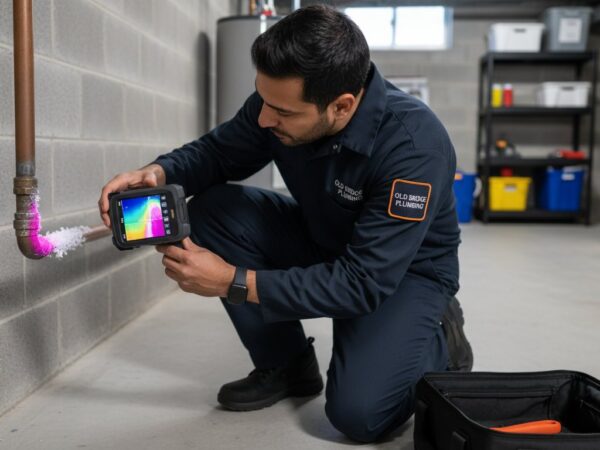
Our process begins with non-invasive diagnostics. We use advanced thermal imaging cameras to “see” through your drywall and locate the exact point of the ice blockage. This technology allows us to pinpoint the problem without tearing down your walls or ceiling unnecessarily. In finished basements where pipes are hidden behind expensive finishes, these non-invasive pipe locating tools are essential. We also deploy moisture meters to scan for signs of existing hairline fractures that may have occurred during the freeze. If we discover that a blockage is actually caused by debris rather than ice, we can immediately transition to our expert drain cleaning services to clear the line safely.
Once the blockage is located, we use controlled electronic thawing equipment. Unlike dangerous open flames, these machines provide safe, even heating by passing a low-voltage electrical current through the pipe. This warms the material from the inside out, melting the ice plug gradually to avoid the steam explosions associated with rapid, uneven heating. After the water begins to flow, we perform high-tech leak detection and a comprehensive system pressure test. This post-thaw verification is critical for identifying “weeping” cracks that are too small to see but large enough to cause mold growth over time.
Repairing vs. Replacing
Not every frozen pipe can be saved. If our inspection reveals that the pipe has suffered a structural failure or significant bulging, sectional replacement is the only ethical solution. We follow strict criteria to determine if a patch is sufficient or if a full run replacement is necessary. We look for signs of metal fatigue and thinning walls that indicate the pipe will likely fail again during the next cold snap. When a replacement is required, we often recommend upgrading to freeze-resistant materials like PEX. This flexible piping can expand and contract more effectively than traditional copper, providing an extra layer of security for your home infrastructure.
All of our work meets or exceeds the current 2021 National Standard Plumbing Code. We don’t just fix the immediate problem; we conduct a comprehensive system inspection to identify other at-risk areas in your home. If you suspect your pipes are at their breaking point, contact our expert plumbing team for an immediate professional assessment.
Preventing Frozen Pipes: Your Winter Readiness Plan
Proactive guardianship of your home is the most effective way to avoid the stress of a plumbing emergency. While we are always ready to provide frozen pipe repair Old Bridge NJ, our ultimate goal is to help you prevent the damage before it starts. A few strategic upgrades to your home’s infrastructure can create a robust defense against the harsh Middlesex County winters. By addressing vulnerabilities now, you protect your family’s daily routine and your property’s long-term value.
Start by identifying all exposed lines in unheated areas such as crawlspaces, attics, and garages. Professional pipe insulation is a high-impact, low-cost solution that significantly slows the rate of heat loss. For high-risk lines that are particularly susceptible to the “danger zone” temperatures mentioned earlier, we can install specialized heat tape equipped with integrated thermostats. This technology monitors the pipe’s surface temperature and provides a gentle, consistent warmth only when needed. Additionally, replacing standard exterior spigots with frost-proof outdoor faucets, or hose bibs, ensures that water is shut off deep inside the heated portion of your home, eliminating the risk of ice traveling backward into your walls.
Homeowner Maintenance Tips
Daily habits play a vital role in preventing utility failures during extreme cold snaps. Follow these simple steps to safeguard your system:
- Drain exterior systems: Disconnect all garden hoses and ensure your underground sprinkler system is professionally blown out before the first hard frost.
- Circulate ambient heat: Keep kitchen and bathroom cabinet doors open when temperatures drop below 20 degrees. This allows the home’s warm air to reach the pipes hidden behind the cabinetry.
- Maintain minimum temperatures: Set your thermostat no lower than 55 degrees Fahrenheit, even if you are leaving for a winter vacation. Keeping the home’s core warm prevents the skeleton of the building from reaching freezing levels.
- The slow drip: If you know a specific faucet is served by a vulnerable exterior wall pipe, let it drip at a very slow rate to keep water moving and relieve potential pressure.
Long-Term Solutions for Old Bridge Homes
For a truly winter-ready home, look toward structural improvements. Sealing air leaks in your foundation and rim joists with professional-grade spray foam stops frigid drafts from creating localized “wind chill” on your pipes. If you are planning major upgrades, such as a water heater replacement, consider this an ideal time to reroute any vulnerable piping away from exterior walls and into the home’s heated envelope. These permanent changes offer the highest level of protection against future freeze events.
A seasonal plumbing inspection from a protective expert can identify hidden risks you might miss. We examine your entire system to ensure your insulation is intact and your shut-off valves are fully functional. Don’t wait for the next deep freeze to test your home’s limits. Contact Anton Plumbing today for a comprehensive winterization audit and ensure your home remains a safe, secure sanctuary all season long.
Protect Your Home From Winter Water Damage
Facing a frozen pipe is a race against time and pressure. By now, you understand that managing internal pressure and avoiding the hazards of open flames are your first lines of defense. Whether you’ve identified a vulnerable exterior wall or you’re already dealing with a silent ice blockage, acting quickly prevents a small trickle from becoming a massive flood. Expert frozen pipe repair Old Bridge NJ ensures that your plumbing infrastructure is restored using safe, electronic thawing technology rather than risky DIY shortcuts.
Our team brings over 28 years of local NJ experience to every emergency. As licensed and insured master plumbers, we provide the technical precision and ethical standards your household deserves. We maintain 24/7 emergency availability in Old Bridge to ensure you’re never left without a knowledgeable guide during a utility failure. Don’t let a cold snap compromise your home’s security and domestic well-being.
Call Anton Plumbing for 24/7 Emergency Frozen Pipe Repair! We are here to restore your water flow and your peace of mind today.
Frequently Asked Questions
How do I know if my pipes are frozen or just have low pressure?
You can identify a frozen pipe by checking if the water flow issue is isolated to a single fixture, especially one located on an exterior wall. If the rest of your home has normal pressure but one tap only produces a trickle or nothing at all, an ice blockage is the likely culprit. You should also look for visible frost or bulging on any exposed pipes in your basement or crawlspace.
Can I use a hairdryer to thaw a frozen pipe safely?
Using a hairdryer is a safer alternative to an open flame, but you must use it with extreme caution. Always keep the dryer away from standing water to avoid electric shock and never leave the heat source unattended. While this method can work for visible pipes, it’s often too slow to manage the internal pressure of a deep blockage, which is why professional frozen pipe repair Old Bridge NJ is recommended for hidden or stubborn lines.
What should I do if a frozen pipe has already burst?
Immediately close your main water shut-off valve to stop the flow of water into your home. Once the water is off, open the affected faucets to drain the remaining liquid and reduce further pressure on the plumbing system. After stabilizing the situation, contact a licensed plumber to assess the damage and perform a code-compliant repair before you attempt to turn the water back on.
Does homeowners insurance in New Jersey cover frozen pipe repair?
Most New Jersey homeowners insurance policies cover the water damage resulting from a burst pipe, provided the incident was sudden and accidental. However, many providers require proof that you maintained adequate heat in the building, typically at least 55 degrees Fahrenheit. In 2023, State Farm recorded over 400 claims for frozen pipe damage in New Jersey alone, highlighting how common these insurance events are during our local winters.
How long does it take for a professional to thaw frozen pipes?
Professional electronic thawing typically takes between 45 minutes and two hours to fully restore water flow. The exact time depends on the length of the ice blockage and how accessible the pipe is within your home’s structure. Using specialized equipment allows us to warm the pipe evenly and safely, which is much faster and more reliable than traditional DIY methods like heat lamps or space heaters.
Will pouring boiling water down the drain thaw a frozen pipe?
Pouring boiling water down a drain is ineffective and can actually damage your plumbing system. Most frozen pipes occur in the supply lines that bring water into your home, not the drain pipes. The extreme temperature of boiling water can also cause porcelain sinks to crack or melt the glue in PVC joints, leading to even more expensive repairs without ever reaching the ice blockage.
How can I prevent my pipes from freezing if the power goes out?
Open every faucet in your home to a steady drip to keep water moving through the system during a power outage. Moving water is much harder to freeze than standing water, and the open valves help relieve the pressure that causes pipes to burst. You should also keep all interior doors and cabinet doors open to allow what remains of the home’s ambient heat to circulate around the plumbing skeleton.
At what temperature do pipes usually freeze in Old Bridge?
Pipes in Old Bridge typically reach the freezing point when outdoor temperatures drop to 20 degrees Fahrenheit or lower. While water freezes at 32 degrees, it takes a sustained drop to 20 degrees to overcome the residual heat inside your home’s walls and crawlspaces. This 20-degree threshold is the critical point where uninsulated pipes in drafty areas like rim joists are most likely to fail.