What if the fine layer of gray dust on your furniture is actually a symptom of a heating system that’s wasting 20% of the energy you pay for every month? It’s stressful to watch your NJNG or PSEG bills climb while your home still feels drafty and the air feels stale. You aren’t alone in worrying about the safety of an older system; many homeowners fear the silent threat of carbon monoxide leaks as their equipment ages. At Anton Plumbing Heating & Cooling, we’ve spent over 28 years serving as the protective experts for local families, ensuring their comfort never comes at the expense of their safety. This guide will show you how professional furnace cleaning is a precision safety calibration that can slash your utility costs and protect your household. We’ll explore the 2026 federal efficiency mandates, the role of AI-driven diagnostics, and how a maintenance investment averaging $150 can help your system reach its full 20 year lifespan.
Key Takeaways
- Learn how professional furnace cleaning serves as your family’s first line of defense against carbon monoxide leaks caused by soot and restricted airflow.
- Discover the 2026 diagnostic protocol that uses thermal imaging and airflow analyzers to catch hidden system failures before they lead to a total shutdown.
- Distinguish between safe DIY monthly maintenance tasks and the complex internal components that require the expert hand of a licensed professional.
- Find out how a precision tune-up can lower your monthly NJ utility bills and help your heating system reach its full 20-year lifespan.
- Improve your household’s indoor air quality by identifying and removing the deep-seated debris and microbial growth that trigger seasonal allergies.
Why Furnace Cleaning is Essential for NJ Home Safety and Comfort
Professional furnace cleaning isn’t a surface-level housekeeping chore; it’s a comprehensive removal of soot, debris, and microbial growth from the heart of your home. During the humid New Jersey summers, moisture settles into the dust within your unit, creating a corrosive paste that eats away at metal components while the system sits dormant. As your “Protective Expert,” we view this service as a safety mission rather than a simple mechanical task. We clean to protect your family from respiratory irritants and mechanical failures, ensuring your central heating system operates as a reliable guardian of your home comfort. When sensors are coated in grime, they can’t accurately read temperatures, leading to “ghost” cycles that wear out your motor years before its time.
The Link Between Dust and System Failure
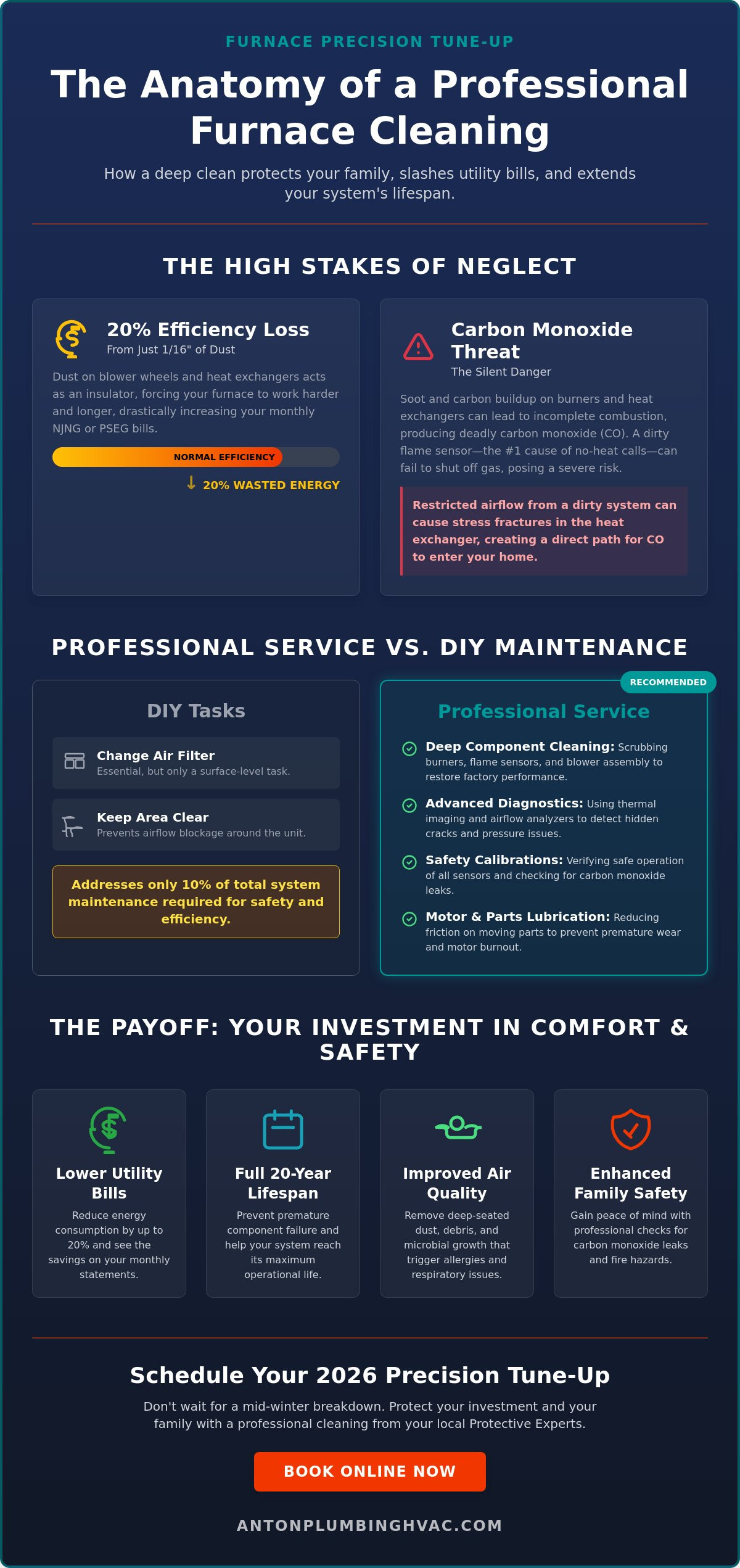
Precision is everything in modern HVAC. Research indicates that just 1/16th of an inch of dust accumulation on a blower wheel or heat exchanger can reduce your furnace’s operating efficiency by 20%. This fine layer of grime acts as an “insulation layer” on sensitive motor components and electrical sensors. Instead of dissipating heat as designed, these parts retain it, leading to chronic overheating and premature component failure. While many homeowners believe changing a standard pleated filter is enough, that only addresses about 10% of the maintenance required to keep a system safe. A professional deep-clean targets the internal burners and the blower assembly to eliminate the friction and restricted airflow that cause energy bills to spike.
NJ Winter Demands: Why Local Context Matters
Living in Old Bridge or East Brunswick means your furnace faces unique environmental stressors. Our region frequently experiences rapid temperature swings where a mild 50-degree afternoon can plummet to a freezing 15 degrees by midnight. These extreme cycles force your heat exchanger to expand and contract rapidly, making it prone to stress fractures if it’s struggling with uneven heat. Thorough furnace cleaning ensures these components are free of carbon buildup, which allows for even heat distribution and prevents the “hot spots” that cause metal fatigue. Before the high-demand months of January and February arrive, a deep-clean prepares your system for the relentless 24/7 operation required during a Jersey freeze. For a broader look at maintaining your home’s mechanical health, consult our HVAC Repair East Brunswick guide to stay ahead of seasonal failures.
The Anatomy of a Professional Furnace Cleaning Service
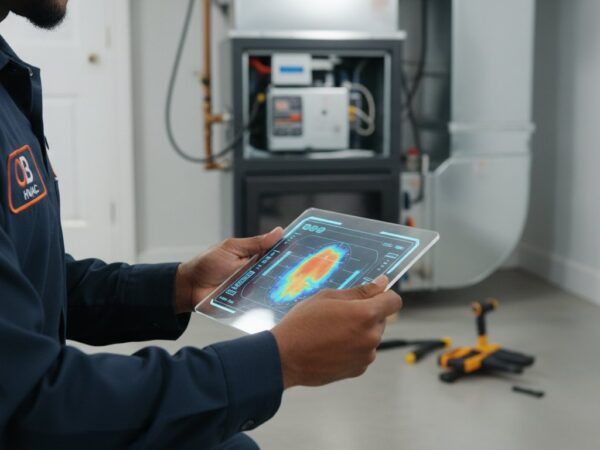
A professional furnace cleaning in 2026 looks significantly different than the simple vacuuming services of the past. Our technicians follow a rigorous standard protocol that moves beyond the surface to perform a deep component calibration. We utilize advanced diagnostic tools like thermal imaging cameras to identify heat exchanger cracks and airflow analyzers to measure static pressure within your ducts. These high-tech sensors allow us to see what the naked eye cannot, ensuring your system is safe before we ever pack up our tools. The blower assembly serves as the lungs of your home’s heating system, inhaling cool air and exhaling the warmth your family relies on. Investing in a comprehensive furnace cleaning is the most effective way to prevent mid-winter breakdowns and keep your utility bills predictable.
Cleaning the Blower and Motor Assembly
The blower’s job is to move massive volumes of air through your vents. When dust accumulates on the fan blades, even a few grams of weight can unbalance the wheel. This leads to excessive vibration, which manifests as clunking or whistling noises and eventually causes motor burnout. By cleaning and lubricating these moving parts, we eliminate the friction that forces your system to work harder. This precision care ensures your unit runs quietly while reducing the electrical draw on your monthly bill. It’s a simple step that prevents the high-stakes urgency of a motor failure during a January freeze.
Scrubbing the Burners and Flame Sensors
Burners must produce a clean, steady blue flame to operate safely. Over time, carbon buildup creates orange, flickering flames that lead to uneven heating and dangerous “hot spots” on the heat exchanger. The flame sensor acts as a critical safety gatekeeper; if it doesn’t detect a flame, it shuts off the gas to prevent a disaster. A dirty sensor is the #1 reason for emergency “no-heat” calls during a cold snap. Neglecting these small components increases the dangers of carbon monoxide poisoning, making professional intervention a non-negotiable safety step. If you’ve noticed your system struggling to stay lit, it’s time to schedule a precision tune-up with a veteran technician who understands these high-stakes mechanics. We bring over 28 years of experience to every call, providing the technical excellence your home infrastructure deserves.
The High Stakes of Neglect: Carbon Monoxide and Efficiency
Neglecting your heating system creates risks that go far beyond a cold living room. Carbon monoxide (CO) is the primary concern for any homeowner with a gas-fired unit. When soot and grime accumulate on the burners, they restrict the oxygen flow required for a clean, safe burn. This restriction leads to incomplete combustion, which is the chemical process that generates carbon monoxide instead of harmless carbon dioxide. Routine furnace cleaning ensures that the combustion process remains stable and that toxic gases are properly vented out of your home. If your property uses hydronic heat rather than forced air, maintaining the latest boiler repair and installation standards is equally critical for preventing these safety hazards.
The Cracked Heat Exchanger Risk
The heat exchanger is a series of metal coils that separates the combustion process from the air your family breathes. Its job is to transfer heat from the fire to the air without allowing exhaust gases to mix in. When dirt builds up on these coils, it creates an “insulation effect” that prevents heat from escaping. This causes the metal to exceed its design temperature, leading to stress fractures and cracks. A cracked heat exchanger is a non-negotiable safety hazard because it allows carbon monoxide to leak directly into your vents. During a professional furnace cleaning, our technicians perform both visual and electronic inspections to catch these microscopic cracks before they become a life-threatening emergency.
Restoring Your AFUE Rating
Annual Fuel Utilization Efficiency (AFUE) is a metric that represents the percentage of fuel your furnace converts into usable heat versus how much is wasted through the chimney. For example, a 96% AFUE furnace should only lose 4% of its energy. However, a dirty burner or a clogged blower can easily drop that efficiency by 15% or more. This means you are paying for gas that never actually warms your home. We’ve seen homeowners reduce their monthly NJNG or PSEG bills by approximately 10% to 15% simply by restoring their system to factory-spec cleanliness. A clean burner ensures a consistent flame, while a clear blower path allows that heat to move through your home with minimal electrical resistance. We bring over 28 years of experience to every inspection, ensuring your system meets the higher 2026 federal efficiency mandates without compromising your safety.
Professional Cleaning vs. DIY: Knowing Your Limits
Maintaining a safe and efficient home doesn’t mean you have to do everything yourself. At Anton Plumbing Heating & Cooling, we believe in providing the “Quality you need, Honesty you deserve.” This means empowering you to handle basic upkeep while being transparent about the technical risks of complex repairs. While some online tutorials might make furnace cleaning look like a simple weekend project, the internal mechanics of a 2026 high-efficiency system require specialized calibration. By understanding where your responsibilities end and professional expertise begins, you protect both your family and your equipment’s warranty. For a complete guide on what you can manage at home, review our Furnace Maintenance 101 checklist.
The Homeowner’s Monthly Checklist
Your primary contribution to system health is airflow management. You should inspect your air filters every 30 days. If you have pets or suffer from seasonal allergies, plan to replace them every 60 to 90 days. A clogged filter is the most common cause of restricted airflow, which leads to the overheating issues discussed earlier in this guide. Additionally, maintain a strict 3-foot “clearance zone” around your unit. Never store flammable materials, cleaning chemicals, or cardboard boxes near the furnace cabinet. Finally, monitor your thermostat for accuracy. If you notice a 3-degree or higher discrepancy between the setting and the room temperature, it’s a clear signal that your system needs a professional diagnostic check.
When to Call Anton: The Professional Boundary
The boundary for DIY work is the furnace cabinet door. Opening this panel can immediately void manufacturer warranties, leaving you responsible for the full cost of any future repairs. Beyond warranty concerns, the interior of your furnace contains high-voltage electrical circuits and gas manifolds under specific pressure. Only a technician with a New Jersey Master HVACR Contractor License should adjust gas valves or test electrical draw. Professional furnace cleaning also involves specialized equipment to reach the secondary heat exchanger and evaporator coils. These components are easily damaged by standard household vacuums or stiff brushes. If you suspect a mechanical issue or haven’t had a safety inspection this year, contact our team for a professional precision tune-up today. We ensure your system meets the rigorous state maintenance standards required to qualify for PSEG or NJNG energy-efficiency incentives.
Scheduling Your 2026 Furnace Precision Tune-Up with Anton
Anton Plumbing Heating & Cooling has served as the guardian of Old Bridge home comfort for over 28 years. We understand that your heating system is one of the most significant investments in your property. Our approach to furnace cleaning is rooted in the belief that every family deserves immediate relief and long-term security. As your local Protective Expert, we don’t just perform a mechanical service; we provide a comprehensive safety audit that protects your household from utility failures. Whether you’re facing a sudden system lockout or simply want to lower your monthly PSEG bill, our team is available 24/7 to respond at a moment’s notice. We bring technical confidence and a neighborly, family-operated approach to every doorstep.
The Anton Difference: Transparency and Tech
We distinguish ourselves from traditional contractors by utilizing a modern signature of advanced diagnostic tools. During every furnace cleaning appointment, our HVACR-certified technicians use airflow analyzers and thermal imaging cameras to provide objective proof of your system’s performance. You don’t have to take our word for it; we show you the thermal data that confirms your heat exchanger is intact and your burners are firing at peak efficiency. Being a family-operated business means we know the specific infrastructure of Middlesex County homes intimately. This includes specialized knowledge in heating radiator repair for our neighbors in older, historic properties who rely on traditional hydronic systems for their winter warmth.
Protecting Your Investment and Your Family
Annual maintenance is a high-yield investment in your home’s future. By adhering to a consistent cleaning schedule, you can help your furnace reach its full 20-year lifespan, delaying a full unit replacement that can cost up to $16,500 in 2026. We value clarity and honesty, which is why we offer upfront pricing on every job. If our technicians discover a critical component failure during your cleaning, we provide 0% financing options to ensure your safety isn’t delayed by budget constraints. Our Master Plumbers and HVAC experts are committed to the integrity of your home infrastructure. Don’t wait for a January emergency to discover a hidden crack or a clogged burner. Secure your home’s well-being with a professional precision tune-up from a team that treats your family like our own.
Quality you need, Honesty you deserve. Need a Plumber or HVAC Pro? Call Anton!
Take the First Step Toward a Safer, More Efficient Winter
Your heating system is the guardian of your family’s comfort during New Jersey’s harshest months. By prioritizing professional furnace cleaning, you effectively eliminate the silent threat of carbon monoxide leaks and prevent the soot buildup that drains your bank account through inefficient energy use. We’ve explored how a precision tune-up can extend your system’s life to its full 20-year potential while restoring factory-spec efficiency. Don’t wait for a mechanical failure in the middle of a January freeze to seek help. Our team brings over 28 years of local experience and Master HVACR-certified expertise to every home in Old Bridge. We provide the technical precision you need and the neighborly honesty you deserve, backed by 24/7 emergency availability for total peace of mind. Schedule your professional furnace cleaning with Anton today! We’re ready to ensure your home remains the safe, warm sanctuary it was meant to be.
Frequently Asked Questions
How often should a furnace be professionally cleaned?
You should schedule a professional cleaning once every year to maintain peak performance. Annual maintenance is the industry standard for ensuring your system remains safe and efficient during the harsh New Jersey winters. Scheduling this service during the spring or summer months often results in lower costs compared to the peak fall and winter rush.
What is the average cost of a professional furnace cleaning in NJ?
The average cost for a professional furnace cleaning is approximately $150 as of May 2026. Standard packages typically range between $60 and $150; however, advanced deep cleaning services can range from $150 to $400. Oil-fired systems are more complex and often cost between $100 and $1,000 depending on the level of soot buildup.
Can a dirty furnace cause a carbon monoxide leak?
Yes, a neglected furnace is a primary cause of carbon monoxide leaks in older homes. Soot buildup leads to incomplete combustion, which produces toxic CO gas instead of harmless exhaust. Additionally, the “insulation effect” of dirt causes heat exchangers to overheat and crack; this allows these dangerous gases to enter your living space directly through the vents.
Will cleaning my furnace really lower my energy bills?
Yes, restoring your system’s cleanliness can significantly reduce your monthly NJNG or PSEG bills. Research shows that just 1/16th of an inch of dust accumulation reduces furnace efficiency by 20%. By removing this debris, you restore the unit to its factory-spec AFUE rating and stop wasting fuel on heat that never actually reaches your rooms.
How long does a professional furnace cleaning service take?
A standard professional furnace cleaning usually takes between 1.5 and 3 hours to complete. This timeframe allows our technicians to perform a deep component calibration, which includes scrubbing the burners and testing the blower assembly. Older systems with significant debris or complex configurations may require additional time for a thorough safety inspection and diagnostic testing.
What are the signs that my furnace needs an immediate cleaning?
Look for yellow or orange flickering flames, unexplained spikes in your heating bills, or a sudden increase in dust around your home. If your furnace is “short-cycling” or making clunking noises, these are urgent signals that grime is interfering with the sensors or motor. Don’t ignore these warnings; they often precede a total system failure during a freeze.
Is furnace cleaning different from a furnace tune-up?
Yes, while the terms are often used interchangeably, a cleaning is specifically the removal of debris from internal parts. A full tune-up is more comprehensive. It includes the cleaning process plus safety inspections, part lubrication, and diagnostic tests using airflow analyzers to ensure the entire system meets the higher 2026 federal efficiency standards.
Does a smart thermostat tell me when it’s time for a cleaning?
Modern smart thermostats can alert you to efficiency drops, but they cannot replace a physical inspection. These devices track system run-time and can remind you to change filters every 30 to 90 days. However, they cannot detect microscopic cracks in a heat exchanger or carbon buildup on a burner. Only a certified technician can confirm your system is truly clean and safe.


