Imagine waking up on a 19-degree Tuesday morning in January only to find your bedroom freezing while the hallway is sweltering. Suddenly, a sharp, metallic banging echoes through the floorboards, followed by the unsettling hiss of steam near your floor molding. You shouldn’t have to worry about your home’s safety or comfort when the temperature drops. A noisy or leaking unit isn’t just an annoyance; it’s a sign that your system is struggling to protect your family. This guide provides the expert clarity you need for heating radiator repair, helping you distinguish between a minor air pocket and a major boiler failure.
At Anton Plumbing Heating & Cooling, we’ve spent over 28 years serving the Old Bridge community as a dedicated guardian of household well-being. We understand that uneven heat and whistling pipes cause real stress. Our goal is to help you restore consistent heat quickly while avoiding the fear of sudden water damage. You’ll learn how to identify common troubleshooting signs and recognize when you need a Master Plumber to ensure your home stays safe. Quality you need, honesty you deserve starts with knowing how your system works. If the cold becomes too much, remember: Need a Plumber? Call Anton!
Key Takeaways
- Identify the warning signs of radiator failure caused by harsh New Jersey winters and learn how to restore your home’s thermal distribution efficiency.
- Distinguish between steam and hot water systems to apply the correct troubleshooting methods for air management and circulation.
- Master safe DIY maintenance steps, such as bleeding valves and tightening union nuts, to resolve minor drips without flooding your room.
- Apply the “50-year rule” and cost-benefit analysis to determine when a professional heating radiator repair is viable versus when a full replacement is necessary.
- Gain peace of mind by understanding how Anton’s “Neighborly Expert” approach provides the upfront pricing and technical excellence your Old Bridge home deserves.
Why Heating Radiators Fail in Old Bridge Homes
Old Bridge homeowners rely on their heating systems for over 150 days each year. Since 1996, Anton Plumbing Heating & Cooling has witnessed how New Jersey’s volatile winters push aging infrastructure to the breaking point. We define heating radiator repair as the technical process of restoring your system’s thermal distribution efficiency. It’s about more than just patching a leak; it’s about ensuring every BTU of heat reaches your living space without waste. With 28 years of local experience, our technicians understand the specific plumbing codes and structural quirks of Middlesex County homes. We know that a Radiator (heating) system in a 50 year old home in Sayrewood South faces different challenges than one in a newer development.
Old Bridge’s local water supply contains specific mineral profiles that contribute to internal corrosion. Data from local utility reports indicates that water hardness in our area can lead to calcium and magnesium buildup inside cast iron and steel units. This sediment creates a thick layer of sludge that acts as an insulator. When this happens, your boiler must work 15% harder to push heat through the blockage, which spikes your utility bills and shortens the lifespan of your entire HVAC system. Our team uses advanced diagnostic tools to identify these internal obstructions before they cause a total system shutdown.
The Impact of NJ Climate on Your Heating
New Jersey weather is notoriously unpredictable. Rapid temperature shifts, sometimes exceeding 35 degrees in a single 24 hour period, cause the metal in your radiators to expand and contract violently. This physical stress often leads to hairline fractures or weakened valve seals. Additionally, the high humidity levels found in the Raritan Valley accelerate exterior rust and oxidation. Scheduling an inspection in September or October prevents a total system failure during a January freeze. We focus on proactive maintenance to ensure your home remains a sanctuary of comfort.
Signs Your Radiator Needs Professional Attention
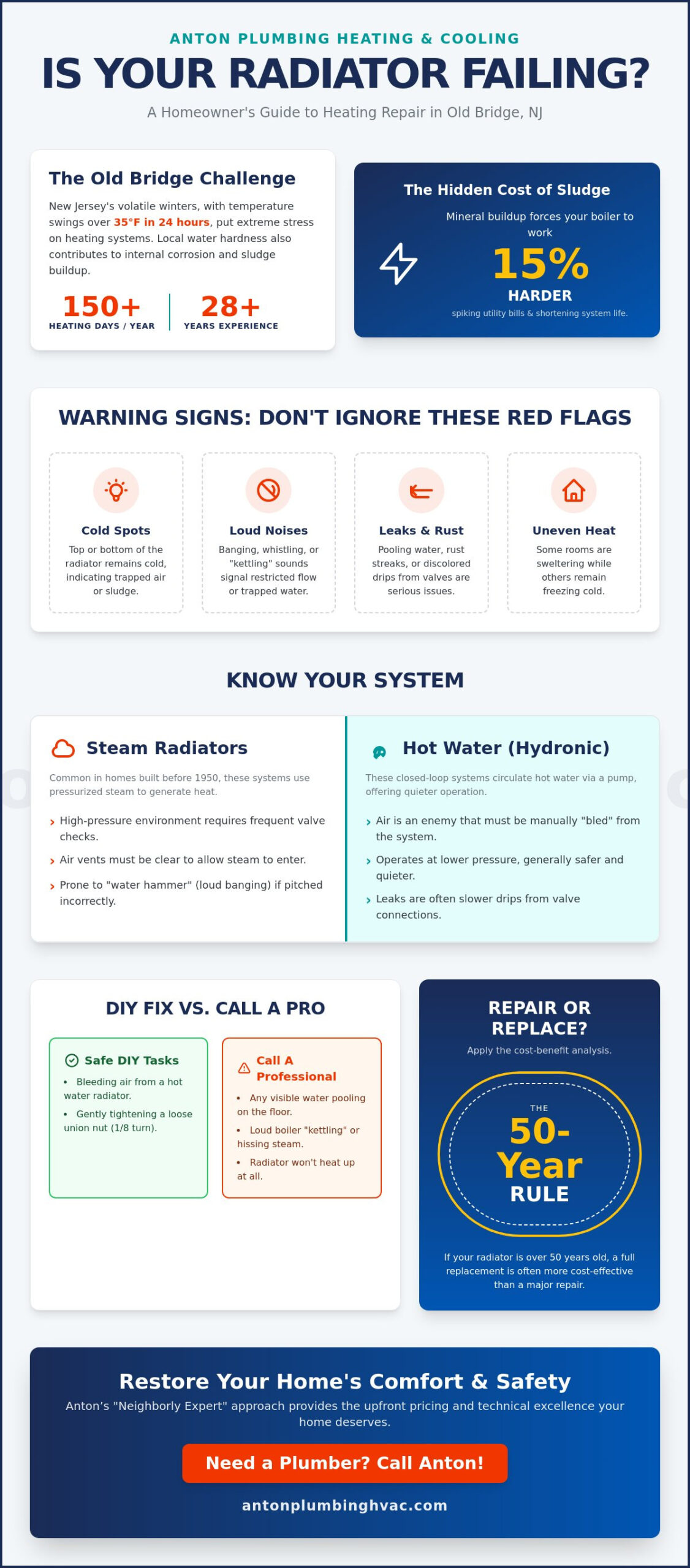
Don’t ignore the warning signs of a failing system. If you notice cold spots at the top or bottom of your unit, it usually indicates trapped air or settled sludge that requires professional heating radiator repair. Listen for “kettling” sounds, which resemble a whistling tea kettle or banging pipes. This often means your boiler is overheating due to restricted flow or lime scale. Watch for these visual cues:
- Rust streaks appearing on the floor or near the pipe connections.
- Pooling water near the base or the manual control valve.
- Discolored water leaking from the air vents or bleeder valves.
- Uneven heat distribution where some rooms stay cold while others overheat.
When these issues arise, you need a professional who prioritizes your family’s safety and comfort. Need a Plumber? Call Anton! We provide the technical accuracy and honest guidance your Old Bridge home deserves.
Steam vs. Hot Water Radiators: Comparing Repair Needs
Older residences across Old Bridge often feature one of two distinct heating technologies. Steam systems rely on boiling water to create pressure, while hot water (hydronic) systems use a pump to circulate liquid. Identifying your specific system is the first step in effective heating radiator repair. These two systems manage air and pressure in completely different ways, leading to unique maintenance requirements for New Jersey homeowners.
Steam radiators are high-pressure environments that require frequent valve inspections. Because steam must push air out of the unit to provide heat, the air vent is a common failure point. In contrast, hot water systems are closed loops where air is an enemy that must be manually removed. Understanding these mechanical differences helps you spot trouble before a minor leak turns into a mid-winter emergency. Homeowners throughout Middlesex County, including those seeking HVAC repair in East Brunswick, face similar challenges with aging heating infrastructure and benefit from the same proactive approach to system maintenance.
Steam Radiator Troubleshooting
Steam systems are common in local homes built before 1950. These units require precise air management to function. The air vent on the side of the unit must remain clear to allow steam to enter. When these vents clog with mineral deposits, the radiator stays cold even when the boiler is firing. You also need to monitor the “pitch” or angle of the unit. A radiator must tilt slightly back toward the supply pipe to allow condensed water to drain away. If the pitch is flat or angled incorrectly, you’ll hear loud banging noises known as water hammer. This isn’t a ghost in your pipes; it’s fast-moving steam hitting pockets of trapped water. To keep your system quiet and efficient, you can learn how to maintain a steam radiator by inspecting the air valves and checking for proper drainage.
Hot Water (Hydronic) Radiator Maintenance
Modern hydronic systems operate under lower temperatures and consistent pressure compared to their steam counterparts. The most frequent issue we see in Old Bridge involves trapped air, which creates “cold spots” at the top of the unit. Bleeding the radiator with a specialized key restores full heat in about 95% of cases. However, if multiple rooms remain cold, the problem usually stems from the circulator pump or a faulty zone valve. These mechanical components can seize after a long summer of inactivity. A malfunctioning zone valve can effectively “lock out” a specific room from the rest of the heating loop, leaving your family in the cold while the rest of the house stays warm.
Regular maintenance prevents these mechanical failures during a New Jersey freeze. If your system is underperforming or making unusual noises, our team at Anton Plumbing provides expert heating radiator repair to ensure your home remains a safe, warm sanctuary for your family.
Common Radiator Repairs: DIY Fixes vs. Professional Intervention
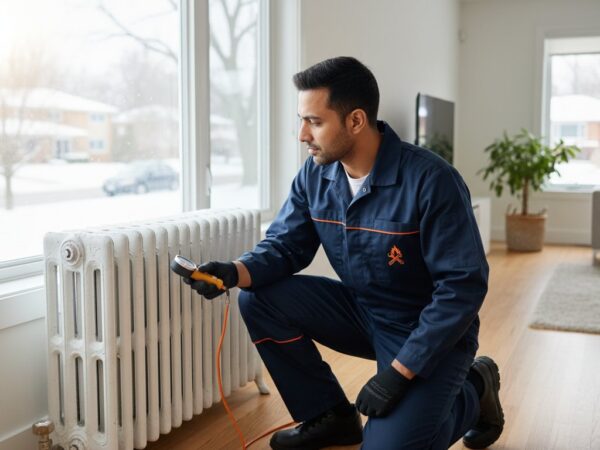
Maintaining a comfortable home in Old Bridge requires a basic understanding of your heating system. While some issues require an expert touch, you can handle minor maintenance to ensure your heating radiator repair needs don’t escalate into a midnight emergency. Always prioritize safety by wearing gloves and allowing the system to cool before you begin any work. Taking proactive steps now prevents the stress of a cold house during a New Jersey cold snap.
Safe DIY Troubleshooting for Homeowners
Radiator bleeding is the controlled release of trapped air that prevents hot water or steam from circulating effectively. Every Old Bridge homeowner should keep a standard 1/4 inch radiator key and a small pipe wrench in their toolkit. If your radiator is cold at the top but warm at the bottom, follow these steps to restore heat flow:
- Turn off your central heating to stop the pump from circulating air and water.
- Locate the bleed valve, usually found at the top end of the radiator.
- Place a bowl or towel directly under the valve to catch drips.
- Insert the key and turn it slowly counter-clockwise until you hear a hissing sound.
- Once a steady stream of water appears, close the valve immediately.
Beyond bleeding, you can improve convection by cleaning the radiator fins. Dust buildup can reduce heat transfer by up to 10 percent. Use a vacuum attachment or a specialized long-reach brush to clear these passages regularly. If you notice a minor drip near the floor, try tightening the union nut or the valve packing with your wrench. A simple quarter-turn often stops a nuisance leak without further intervention.
When to Call a Licensed NJ Master Plumber
Know your limits to protect your home’s safety. You should never attempt to service gas lines or the boiler’s high-pressure vessel. These components require a Master Plumber with the proper certifications to prevent explosions or carbon monoxide leaks. If you see a crack in a cast iron section, don’t reach for “leak stop” chemicals. These products often clog the narrow channels in modern, high-efficiency boilers. This can lead to a total system failure costing thousands of dollars in replacements.
Professional heating radiator repair is also necessary when a radiator stays cold despite being bled. This often indicates a deep blockage or “sludge” buildup within the pipes. Our team utilizes advanced diagnostic tools to determine if you need specialized drain cleaning services or a full system power flush to clear these obstructions. With over 28 years of experience, we provide the technical confidence needed to handle complex cast iron welding or manifold replacements. Quality you need, Honesty you deserve.
The Repair or Replace Dilemma: Evaluating Your Radiators
Old Bridge homes often feature beautiful, historic cast iron radiators that have provided warmth for decades. However, every mechanical system has a functional limit. We generally apply the 50-year rule; if your cast iron units were installed before 1974, they are likely approaching the end of their reliable lifespan. While a professional heating radiator repair can resolve a specific leak or a stubborn air pocket, it cannot reverse decades of internal scaling and metal fatigue.
Deciding between a fix and a full replacement requires a clear cost-benefit analysis. If a single repair estimate exceeds 50% of the cost of a modern replacement unit, investing in new equipment is the more honest, long-term solution. Modern slimline or baseboard units are often 25% to 30% more efficient than old, sludge-filled cast iron models. Our 28 years of experience shows that Old Bridge homeowners who upgrade often see immediate improvements in heat distribution and a noticeable drop in monthly utility bills. We can integrate these modern units directly into your existing boiler infrastructure, preserving your home’s character while boosting its performance.
Assessing Radiator Longevity
Our technicians look for “pitting,” which are tiny craters on the metal surface that signal the iron is thinning from the inside out. These weak spots eventually lead to catastrophic failures and water damage. To give you total clarity, we use advanced thermal imaging to identify cold spots and internal blockages that are invisible to the naked eye. This high-tech accuracy ensures you don’t spend money on a heating radiator repair for a unit that is fundamentally compromised. Protecting your home comfort means knowing when a radiator is a historic asset or a safety liability.
Modern Alternatives for Old Bridge Homes
You don’t have to stick with bulky, floor-hogging cast iron. European-style panel radiators provide a sleek, space-saving profile that fits modern New Jersey interior designs. We also recommend installing thermostatic radiator valves (TRVs) during any upgrade. These allow you to control the temperature in each room individually, potentially reducing wasted energy by 15% annually. Many local residents qualify for incentives through the New Jersey Clean Energy Program (NJCEP), which offers rebates for high-efficiency system components. Need a Plumber? Call Anton! We provide the quality you need and the honesty you deserve during every home inspection.
Stop guessing about your home’s heating health and get a professional opinion. Schedule a comprehensive radiator evaluation with our certified experts today.
Restoring Home Comfort: Why Old Bridge Trusts Anton
Old Bridge homeowners know that a failing radiator is more than a minor inconvenience; it’s a direct threat to your family’s safety when New Jersey temperatures drop below freezing. For over 28 years, Anton Plumbing Heating & Cooling has served Middlesex County as a neighborly expert. We don’t just fix pipes; we act as a guardian for your household well-being. Our commitment to “Honesty you deserve” means you’ll never face hidden fees or surprise costs. We provide upfront pricing and 0% financing options to ensure that essential heating radiator repair is accessible when you need it most. Because heating failures don’t follow a schedule, our team remains available 24/7 for emergency calls. We are ready to respond at a moment’s notice to keep your home warm and secure.
Our Local Expertise in Radiator Restoration
Our technicians arrive at your door equipped with advanced diagnostic technology that sets us apart from traditional contractors. We utilize high-precision airflow analyzers and electronic leak detection sensors to pinpoint the exact source of system inefficiency. This technical accuracy allows us to perform a heating radiator repair that addresses the root cause rather than just the symptoms. Our staff undergoes rigorous training in both historic steam systems found in older New Jersey estates and modern hydronic technology used in newer builds. As a family-operated business, we maintain a standard of excellence that reflects our deep roots in the community. We treat your living space with the steady professionalism of a long-term maintenance partner, ensuring every valve and connection meets our strict safety benchmarks.
Schedule Your Radiator Inspection Today
Securing your home’s warmth for the winter is a straightforward process. You can start by following these simple steps:
- Call Anton directly for immediate assistance or emergency service.
- Use our online request form to schedule a non-emergency diagnostic visit at your convenience.
- Review your diagnostic report provided by our HVACR-certified experts during the visit.
During a professional heating diagnostic, our Master Plumber will inspect your radiator’s thermal output, check for trapped air, and verify the integrity of all seals. We explain every finding in plain English so you can make an informed decision about your home infrastructure. We won’t leave until we’re certain your system is operating at peak efficiency. Don’t wait for a total system breakdown to seek professional help. Need a Plumber? Call Anton! Our team is dedicated to providing the quality you need and the peace of mind your family deserves all winter long.
Restore Your Home Comfort and Safety
Don’t let a failing system leave your family in the cold. Understanding whether you have a steam or hot water setup is the first step toward effective maintenance. While minor adjustments might solve some issues, professional heating radiator repair ensures your system operates at peak efficiency. Anton Plumbing Heating & Cooling has served the Old Bridge community for over 28 years. Our Licensed Master Plumbers and HVACR certified experts provide the technical precision your home requires. We believe in providing the quality you need and the honesty you deserve. Our team handles everything from minor leaks to full system restorations with the steady professionalism of a long-term maintenance partner. You can trust our seasoned veterans to protect your household’s well-being throughout the heating season. Need a Plumber? Call Anton!
Need a Radiator Expert? Call Anton Plumbing Heating & Cooling today!
Your warm, comfortable home is just a phone call away.
Frequently Asked Questions
How do I know if my radiator needs to be bled?
You’ll know it’s time to bleed your radiator if the top of the unit feels cold while the bottom remains hot. This temperature difference means air is trapped inside, preventing hot water from circulating properly. You might also hear distinct gurgling or clicking sounds when the heat kicks on. Our team has resolved these issues for 28 years, ensuring your home stays warm and efficient.
Why is my radiator making a loud banging or clanking noise?
Loud banging, often called water hammer, usually occurs when steam meets cooler water or when the unit isn’t tilted at the correct 2 degree angle toward the supply valve. In older Old Bridge homes, sediment buildup over 10 years can also cause these disruptive sounds. We use advanced diagnostic tools to find the exact cause. Need a Plumber? Call Anton to restore your peace and quiet.
Is it normal for a radiator to be hot at the bottom but cold at the top?
No, a functioning radiator should distribute heat evenly across its entire surface area. When the top stays cold, trapped air is blocking the thermal flow, which signals you need heating radiator repair to restore system balance. If you ignore this, your boiler may work 15% harder to compensate for the lost heat. This inefficiency leads to higher utility bills and unnecessary wear on your equipment.
Can a leaking radiator be repaired, or does it always need replacement?
Most leaks coming from the valves or union nuts can be fixed by replacing a $5 seal or tightening the connection. However, if the leak is caused by corrosion in the metal body, a replacement is the only safe solution. We’ve found that units over 30 years old are 40% more likely to develop these terminal pinhole leaks. We prioritize your safety and provide honest recommendations for every repair.
How much does a typical radiator repair cost in Old Bridge, NJ?
According to 2024 industry data from HomeAdvisor, homeowners typically spend between $150 and $500 for professional heating radiator repair. The final price depends on whether you’re replacing a simple air vent or a complex thermostatic valve. We provide upfront pricing before any work begins, following our promise of Quality you need, Honesty you deserve. This transparency ensures there are no surprises on your final bill.
Why is only one radiator in my house not getting warm?
This localized issue is usually caused by a stuck internal pin in the thermostatic radiator valve or a blockage in the individual supply line. If your other radiators are working, the boiler is likely fine, but that specific unit’s flow is restricted. Our HVACR-certified technicians can quickly clear these blockages. We’ve spent nearly three decades helping local families maintain consistent comfort in every room of their homes.
Should I turn off my boiler before trying to fix a radiator leak?
Yes, you must shut down the boiler and allow the system to cool for at least 45 minutes before attempting any adjustments. Working on a live system exposes you to pressurized water that can reach 180 degrees Fahrenheit. Safety is our top priority for every household we serve. Once the system is depressurized, it’s much safer to identify the leak’s source without risking a major flood or burn.
How often should I have my home radiator system inspected?
You should schedule a professional maintenance inspection every 12 months, preferably during the month of September or October. Annual checkups help us catch small leaks or valve failures before the first freeze of the winter. Regular service can extend the life of your heating system by 10 years, and pairing your radiator inspection with a complete furnace maintenance checklist ensures your entire heating system is prepared for the demands of a New Jersey winter. Our family-operated business takes pride in being the long-term partner you can trust for total home comfort.


