The puddle at the base of your tank might actually be a “silent” failure that can be saved if you act within the first 24 hours. Finding a water heater leaking from bottom Old Bridge homes is a stressful experience that naturally triggers fears of basement flooding and expensive replacements. You have likely spent the last hour wondering if you can fix it yourself or if you are about to lose your hot water for a week. It is a frustrating situation, but you don’t have to navigate it alone. We understand that your home’s safety and your family’s comfort are the top priorities right now.
This guide will teach you how to handle a bottom-leaking unit, diagnose the exact cause of the failure, and determine if a repair or a full replacement is necessary. We will cover the immediate steps to stop the leak and protect your property from water damage. You will also learn about the current $75 Old Bridge permit fee requirements and how 2026 DOE regulations regarding condensing technology impact modern installations. We provide a clear, professional roadmap so you can make the most ethical and cost-effective choice for your household.
Key Takeaways
- Learn the critical first steps to shut down your system safely and protect your property from expensive water damage.
- Discover how to determine if your water heater leaking from bottom Old Bridge is a simple valve fix or a permanent tank failure.
- Use the “50% rule” and the 10-year age threshold to decide if a repair is a smart fix or a waste of your money.
- Understand the 2026 Old Bridge plumbing code requirements to ensure your home remains safe and fully compliant with local safety standards.
- Master simple maintenance habits like anode rod inspections and annual flushing to extend your unit’s lifespan and prevent future emergencies.
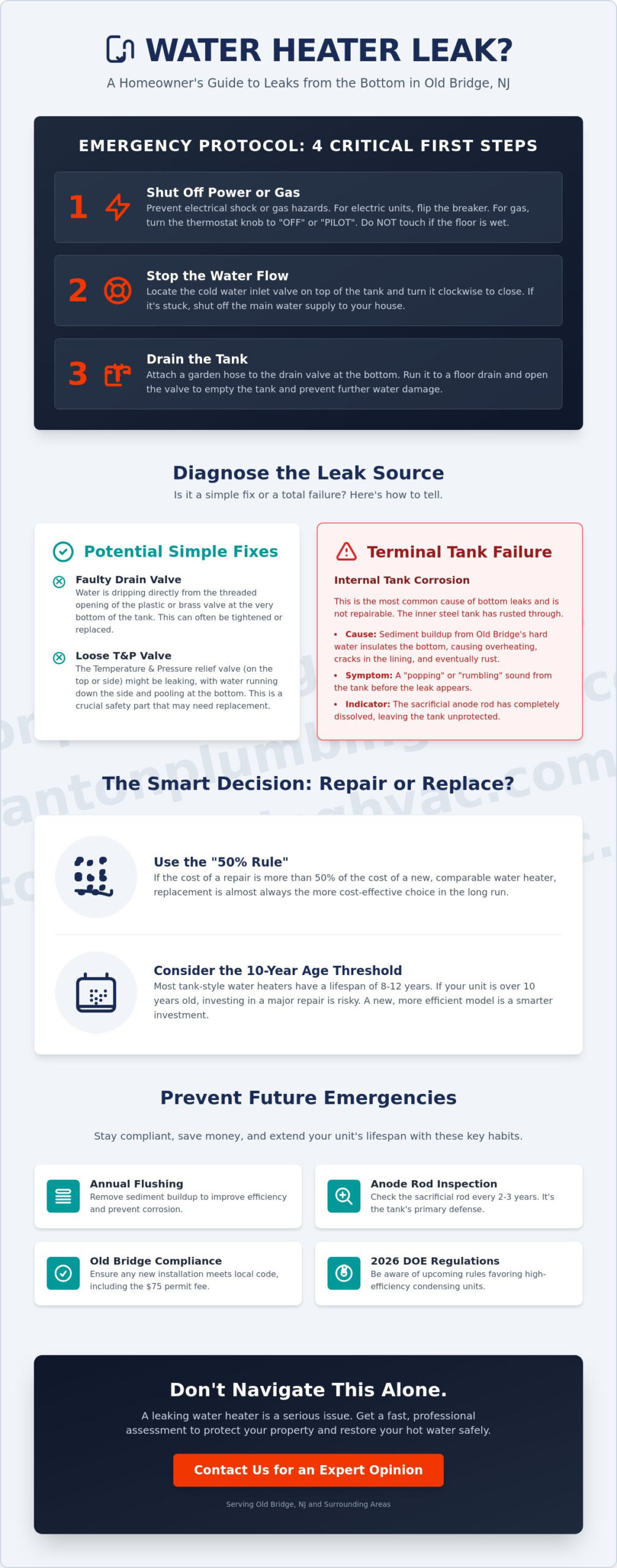
Immediate Steps for an Old Bridge Water Heater Leak
Discovering a water heater leaking from bottom Old Bridge homes is an immediate call to action. Before you grab a mop, you must prioritize your physical safety. Water heaters are high-energy appliances that combine pressurized hot water with either high-voltage electricity or combustible gas. Scalding burns can occur in seconds if a pressurized tank ruptures, and standing water near electrical components creates a lethal shock hazard. If the leak is significant or you hear a loud hissing sound, keep your distance and contact an emergency plumber in Old Bridge NJ to secure the site professionally.
Shutting Off Power and Gas Safely
Your first priority is to remove the energy source. For electric units, locate your home’s main electrical panel and flip the dedicated double-pole breaker to the “off” position. Do not attempt to touch the water heater if the floor is already wet. For gas units, find the thermostat dial on the front of the tank. Turn the knob to the “off” or “pilot” position. Even if the unit is still producing hot water, you must never leave a leaking gas heater “on” because internal tank damage can lead to unpredictable pressure buildup. Understanding how storage water heaters work helps clarify why this step is vital; the energy source constantly heats the water, which increases pressure and can worsen a structural leak in the tank’s base.
Controlling the Water Flow
Once the power is cut, you need to stop the flow of new water into the tank. Look for the cold water supply pipe entering the top of the unit. You will usually find either a handle-style ball valve or a circular gate valve. Turn the ball valve 90 degrees or rotate the gate valve clockwise until it stops. If the valve is stuck due to New Jersey’s common hard water mineral buildup, do not force it. Applying too much pressure to a corroded valve can cause it to snap, creating a second, more aggressive leak. In this case, locate the main water shut-off valve for your entire house, which is typically found near the water meter in your basement or crawlspace. Closing the main valve is a reliable last resort to protect your flooring and drywall from further saturation.
After the water is off, attach a standard garden hose to the drain valve at the very bottom of the tank. Run the other end of the hose to a floor drain or out a nearby window. Open a hot water faucet elsewhere in the house to vent the system and allow the tank to empty. This reduces the weight of the unit and prevents the remaining 40 to 50 gallons of water from seeping into your foundation while you wait for a professional assessment.
Identifying Why Your Water Heater is Leaking from the Bottom
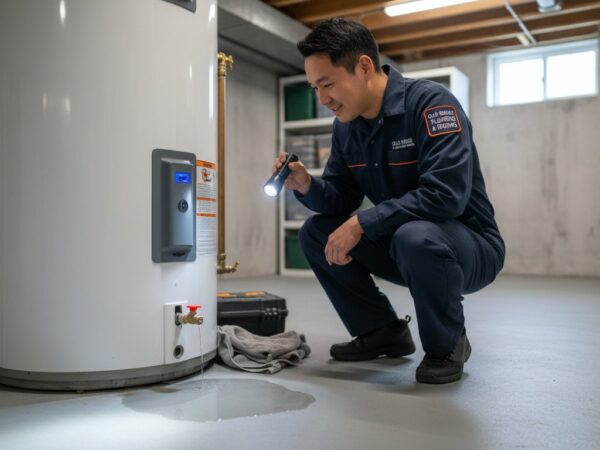
Diagnosis begins with a dry floor and a flashlight. If you discover a water heater leaking from bottom Old Bridge homes, you must first distinguish between a terminal tank failure and a component that just needs a quick adjustment. Many homeowners mistake condensation for a leak, especially during the humid New Jersey summers or after a period of heavy hot water usage. Wipe the area dry and wait thirty minutes. If the moisture returns immediately, you are dealing with an active failure that requires your attention.
Internal Tank Corrosion and Sediment Buildup
Old Bridge is known for having hard water, which contains high levels of minerals like calcium and magnesium. Over time, these minerals settle at the bottom of the tank, creating a thick layer of sediment. This buildup acts as an insulator, forcing the burner or heating element to run longer to reach the desired temperature. This extra heat eventually causes the glass lining of the tank to crack. Once the steel shell is exposed to water, corrosion begins, and a bottom leak is inevitable. You might hear a distinct “popping” or “rumbling” sound before the leak appears; this is the sound of steam bubbles trapped under the sediment layer. Proper water heater maintenance, including checking the sacrificial anode rod every few years, is the only way to prevent this internal decay. If your anode rod has completely dissolved, the water will attack the tank itself, leading to a structural failure that cannot be repaired.
Faulty Drain Valves and T&P Valves
Sometimes the issue is much simpler than a cracked tank. Every unit has a drain valve near the base, often made of plastic or brass. These valves can become brittle or loose, allowing a slow drip to pool at the bottom of the unit. If you see water specifically dripping from the threaded opening of the valve, it may just need a replacement cap or a new valve assembly. Another common culprit is the Temperature and Pressure (T&P) relief valve. This safety device has a discharge pipe that often runs down the side of the tank. If the valve is failing or the tank’s internal pressure is too high, water will exit this pipe and collect on the floor. It’s easy to assume the tank is leaking from the bottom when, in reality, the water is simply running down the exterior from a valve near the top. If you are unsure which component is failing, a quick inspection from a professional plumber in Old Bridge can save you from replacing a perfectly good unit.
Check these specific areas before making a final decision:
- The Overflow Pipe: Look for moisture inside the T&P discharge tube.
- The Drain Valve: Feel for dampness around the threads and the handle.
- The Base Pan: Check if water is seeping from the internal insulation or just sitting on the surface.
Identifying the source early prevents minor drips from turning into major household floods.
Repair or Replace: Evaluating Your Hot Water Tank in 2026
Deciding whether to invest in a repair or commit to a full installation is the most difficult part of dealing with a water heater leaking from bottom Old Bridge households. The decision usually rests on three critical factors: the age of the unit, the location of the leak, and the total cost of the fix. Conventional tank water heaters typically last between 8 and 12 years. If your unit has passed the decade mark, the internal metal has likely thinned significantly. In these cases, repairing one leak often leads to another failure just months later. Before making a choice, locate the manufacturer’s label on the side of the tank to check the build date and see if the tank shell is still under a limited warranty.
We recommend using the “50% Rule” commonly used by professional plumbers across New Jersey. If the cost of a professional repair exceeds 50% of the price of a brand-new unit, a replacement is almost always the more ethical and financially sound recommendation. This is especially true in 2026, as new Department of Energy (DOE) regulations have pushed manufacturers toward higher-efficiency condensing technology. Upgrading now doesn’t just stop the leak; it can significantly reduce your monthly utility bills. Additionally, New Jersey’s Clean Energy Whole Home program remains active in 2026, offering substantial rebates for homeowners who switch to high-efficiency models, which can offset a large portion of the initial investment.
Signs a Repair is Possible
You don’t always need a new system just because there is water on the floor. If the leak is originating from a component rather than the tank itself, a repair is highly effective. Common fixable issues include a brittle plastic drain valve that needs to be swapped for a durable brass version or a worn-out gasket around the heating element. Sometimes, the Temperature and Pressure (T&P) relief valve is simply doing its job by venting excess pressure. Performing regular maintenance, such as a professional system flush, can often clear the debris causing these valves to weep, extending the life of your current unit without a total overhaul.
When Replacement is the Only Safe Option
If the water is seeping directly through the steel jacket or from the internal glass liner, the unit is structurally compromised. There is no safe way to “patch” a pressurized tank that holds 40 to 50 gallons of scalding water. A breached liner means the metal is corroding from the inside out, and a catastrophic rupture could occur at any moment. When you face this situation, consult our water heater replacement guide to understand your options. We will help you navigate local requirements, including the mandatory $75 Old Bridge permit fee, to ensure your new installation is safe, legal, and built to last.
Professional Water Heater Services in Old Bridge, NJ
When you face a water heater leaking from bottom Old Bridge homes, you need a partner who knows the local infrastructure inside and out. Anton Plumbing Heating & Cooling has spent over 28 years serving Middlesex County families as a trusted guardian of household comfort. We don’t just swap out equipment; we provide a comprehensive diagnostic approach to ensure your home’s safety. Our team utilizes advanced diagnostic technology to pinpoint the exact origin of a leak. This precision prevents unnecessary costs by distinguishing between a terminal tank failure and a secondary component issue that we can resolve with a targeted repair.
Our commitment to transparency means you will never deal with hidden fees or vague estimates. For 2026 installations, we provide clear, flat-rate pricing that allows you to make an informed decision without financial anxiety. We understand that a utility failure is a high-stakes emergency. By blending technical excellence with a neighborly, service-oriented approach, we offer the immediate relief you need during a domestic crisis. If you suspect your unit is failing, contact Anton Plumbing Heating & Cooling for an authoritative assessment and reliable service.
Local Expertise and Response Times
Choosing a local Old Bridge expert is about more than just proximity; it is about understanding the specific challenges of our community’s water supply. Many neighborhoods in Old Bridge experience fluctuating water pressure that can put immense stress on tank seams and valves. Our seasoned veterans are familiar with these localized patterns, allowing us to recommend specific hardware, such as pressure-reducing valves, that extend the life of your appliance. We operate with the brisk efficiency required in the service industry, moving logically from the initial emergency call to a permanent, professional solution that restores your domestic well-being.
NJ Code Compliance and Safety Standards
New Jersey’s plumbing codes are designed to protect your family from fire, gas leaks, and water damage. In 2026, compliance with the New Jersey Uniform Construction Code is more critical than ever. Every professional water heater replacement we perform includes the installation of mandatory safety hardware, such as thermal expansion tanks for closed systems and updated sediment traps for gas lines. These components are not optional; they are essential for passing the required local inspections. Our team handles the entire permit process with the Old Bridge Township municipal offices, including the management of the mandatory $75 permit fee. We ensure your installation is fully legal, ethical, and built to the highest professional standards.
- Expert Permit Filing: We manage all paperwork with Old Bridge Township.
- Code-Required Upgrades: Installation of expansion tanks and gas shut-off valves.
- Licensed Technicians: All gas line connections are handled by seasoned professionals.
- Rigorous Testing: Every unit is pressure-tested before we leave the job site.
Preventing Future Leaks and Water Damage
Preventing a repeat of a water heater leaking from bottom Old Bridge homes requires a shift from reactive repairs to proactive guardianship. Once your immediate crisis is resolved, your focus must move toward extending the lifespan of your home’s infrastructure. Maintenance isn’t just about saving money; it’s about the domestic security of your household. Most tank failures are the result of cumulative neglect rather than sudden accidents. By implementing a consistent service schedule, you can keep your system running efficiently for its full expected lifespan.
The most effective way to protect your unit is through annual flushing. As we discussed earlier, Old Bridge’s hard water leads to heavy sediment buildup. This mineral layer creates hotspots that weaken the steel tank. Draining a few gallons of water every year removes these corrosive elements before they can settle. Additionally, you must follow the 3-year anode rod inspection rule. The anode rod is a sacrificial component designed to rust so your tank doesn’t. In New Jersey’s water conditions, these rods often deplete within three to four years. Replacing a rod is a simple, ethical way to add years to your unit’s life for a fraction of the cost of a new installation.
Routine Maintenance Checklist
Consistency is the backbone of home safety. Perform these simple checks every six months to catch minor issues before they escalate into emergencies:
- Visual Inspections: Look for rust, “weeping” joints, or salt-like mineral deposits around the base and pipe connections.
- T&P Valve Testing: Briefly lift the lever on the temperature and pressure relief valve to ensure water flows and stops correctly. A seized valve is a major safety risk.
- Temperature Calibration: Keep your thermostat set to 120 degrees Fahrenheit. Higher temperatures increase internal pressure and accelerate thermal expansion stress on the tank seams.
- Expansion Tank Check: Tap the side of your expansion tank; it should sound hollow on the top half. If it sounds “thuddy” or full of water, the internal bladder has likely failed.
Modern Leak Prevention Technology
In 2026, technology provides an extra layer of protection for Old Bridge basements. We recommend installing Wi-Fi enabled smart leak detectors near the base of your water heater. These small sensors connect to your home security system and send immediate alerts to your smartphone at the first sign of moisture. For the ultimate level of security, consider an automatic shut-off valve. These devices are installed on the cold water inlet and will physically cut off the water supply the moment a leak is detected. This technology can save you thousands of dollars in flood-related property damage, especially if a leak occurs while you are away from home. Being a proactive homeowner means using every tool available to ensure your family’s comfort and safety remain uninterrupted.
Secure Your Home’s Hot Water and Safety
Facing a water heater leaking from bottom Old Bridge homes is a challenge that requires swift, professional action to prevent property damage. You now have the knowledge to shut down your system safely, identify the source of the drip, and evaluate whether a repair or a full 2026-standard replacement is the most ethical choice for your family. Remember that consistent maintenance, like annual flushing and anode rod inspections, is the best way to protect your domestic well-being and security.
Don’t let a minor leak turn into a major household crisis. Our team stands ready to act as your seasoned guide through these technical complexities. We bring 28+ years of local experience and the precision of advanced diagnostic technology to every job site. As licensed and insured NJ professionals, we prioritize your safety and provide 24/7 emergency response when you need it most. Get Expert Water Heater Repair or Replacement in Old Bridge Today. You deserve the peace of mind that comes with a safe, reliable home infrastructure.
Frequently Asked Questions
Is a water heater leaking from the bottom dangerous?
Yes, a leaking unit presents immediate safety risks to your household. Scalding water under high pressure can cause severe burns, and pooling water near electrical components or gas lines creates a significant fire or shock hazard. If you notice a leak, you should shut down the power or gas supply immediately to secure the area and protect your family.
Can I still use my water if the heater is leaking from the bottom?
You can still use your cold water if you shut off the dedicated cold water inlet valve located on top of the heater. However, you should not attempt to use any hot water while the unit is failing. Keeping the system pressurized and active during a leak increases the risk of a catastrophic tank rupture and further property damage.
How much does it cost to fix a leaking water heater in Old Bridge?
Repair costs in New Jersey depend on whether the issue is a simple component like a drain valve or a more complex internal failure. Total expenses are influenced by the unit’s capacity and compliance with 2026 DOE efficiency standards. You must also consider the mandatory $75 Old Bridge permit fee required for all installations to ensure the work meets local safety codes.
What is the most common reason for a leak at the bottom of a water heater?
Internal corrosion due to sediment buildup is the primary cause of these failures. In areas with hard water, minerals settle at the base and trap heat, which eventually cracks the internal glass lining. Once the steel shell is exposed to water, a water heater leaking from bottom Old Bridge homes is usually a sign that the tank has reached the end of its functional life.
Can a leaking water heater explode?
While a total explosion is extremely rare due to modern safety devices like Temperature and Pressure (T&P) relief valves, a pressurized tank can still rupture violently. If the safety valves are corroded or blocked by mineral buildup, pressure can reach dangerous levels. Regular professional maintenance is the only way to ensure these safety features are in good working order.
How long do I have once my water heater starts leaking?
You generally have less than 24 to 48 hours before a slow drip turns into a significant flood. Most tank failures start as small seeps through the internal insulation. Once the structural integrity of the steel shell is compromised, the constant high pressure inside the tank will widen the breach rapidly, leading to a major leak.
Will my homeowners insurance cover a leaking water heater?
Homeowners insurance typically covers the damage caused by the leaking water, such as ruined flooring or drywall, but it rarely pays for the replacement of the appliance itself. Most policies view a leaking tank as a maintenance issue rather than a sudden, covered peril. You should check your specific policy for “water backup” or “sudden failure” clauses to understand your coverage.
Should I replace my water heater with a tankless unit if the old one leaks?
Upgrading to a tankless system is an excellent choice if you want to eliminate the risk of a tank rupture and save on energy bills. These systems heat water on demand, which removes the need for a large storage tank that can corrode over time. You may also qualify for significant rebates through New Jersey’s Clean Energy Whole Home program when you switch to high-efficiency technology.


