Imagine spending tens of thousands on custom cabinetry only to find a slow drip warping the wood three months later because a sub-floor pipe wasn’t properly updated. It’s a nightmare scenario that happens more often than Old Bridge homeowners realize, and it’s exactly what keeps most people up at night during a renovation. When you’re planning your Old Bridge plumbing for kitchen remodel, the fear of hidden leaks or the confusion surrounding NJ permit requirements can feel overwhelming.
You deserve a kitchen that functions as beautifully as it looks without the anxiety of future utility failures. This 2026 guide provides the technical clarity and peace of mind you need to navigate moving gas lines, relocating sinks, and staying compliant with Middlesex County building codes. We’ll explore the essential plumbing steps and expert tips required to ensure your modern layout is leak-free, safe, and built to last for your family. By the end of this article, you’ll have a clear roadmap to a successful renovation that protects your home and your investment.
Key Takeaways
- Master the critical “rough-in” phase to ensure your plumbing infrastructure is properly set before expensive cabinets and countertops are installed.
- Learn why upgrading to tankless water heaters and smart shutoff monitors is essential for a high-performance Old Bridge plumbing for kitchen remodel.
- Understand the complex venting and drainage logistics required to successfully move sinks or add a modern kitchen island.
- Avoid costly delays and code violations by following specific 2026 Middlesex County permit requirements and inspection protocols.
- Discover how 28+ years of local expertise helps protect your home from hidden leaks and long-term water damage.
Planning Your Kitchen Remodel Plumbing in Old Bridge (2026)
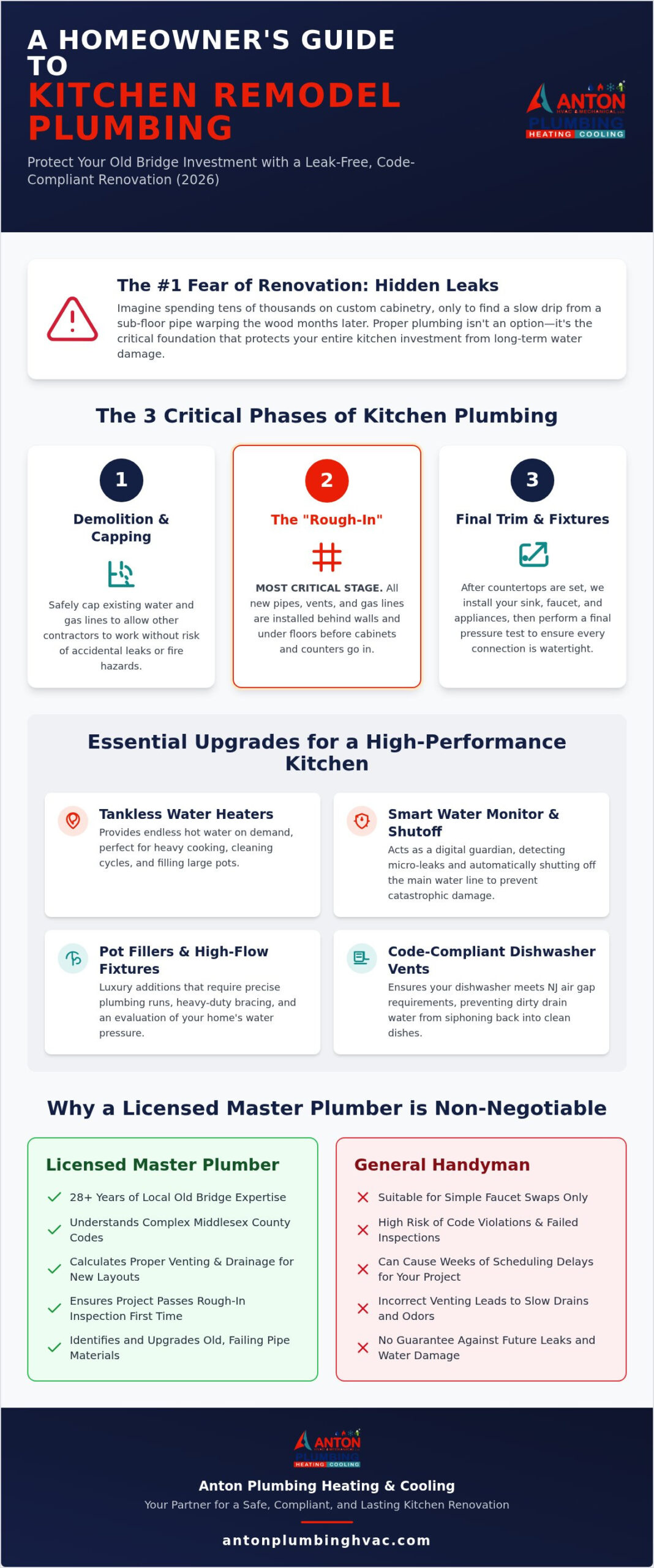
Success in a kitchen renovation starts long before your new appliances arrive. The “rough-in” phase is the most critical window in your project timeline. This is when all the pipes, vents, and gas lines are positioned behind the walls and under the floor. If these connections aren’t precise, you’ll face costly adjustments after your expensive cabinetry is already bolted down. For a successful Old Bridge plumbing for kitchen remodel, you must treat the infrastructure as the foundation of your investment. Don’t let the excitement of new granite countertops distract you from the pipes that make your kitchen work.
Choosing a licensed master plumber over a general handyman is a decision that protects your home’s long-term health. While a handyman might handle a simple faucet swap, a full remodel involves complex venting and drainage calculations required by Middlesex County building codes. Professional oversight ensures your project passes the rough-in inspection the first time. This prevents weeks of scheduling delays that can stall your entire renovation. Our team brings 28+ years of local experience to ensure your layout is both functional and fully compliant with 2026 standards.
Evaluating Your Existing Plumbing Infrastructure
Before you finalize your layout, you need to know what’s happening inside your walls. Many older homes in the Old Bridge area still contain galvanized steel or polybutylene pipes. These materials are prone to corrosion and sudden failure. Upgrading these to modern plumbing systems during the demolition phase is much cheaper than doing it after a flood. We recommend testing your current water pressure to see if your home can handle high-flow additions like pot fillers or professional-grade sprayers. Using professional leak detection services during the planning stage allows you to identify and fix hidden pinhole leaks before they are covered by new finishes. It’s the only way to guarantee your new cabinets stay dry and mold-free.
The Kitchen Plumbing Timeline
A structured timeline keeps your project on track and your home safe. We work closely with your general contractor to ensure the plumbing milestones align with the rest of the construction. This coordination is essential for avoiding project bottlenecks in Middlesex County.
- Phase 1: Demolition and Capping. We safely cap existing water and gas lines. This allows other contractors to work without the risk of accidental leaks or fire hazards.
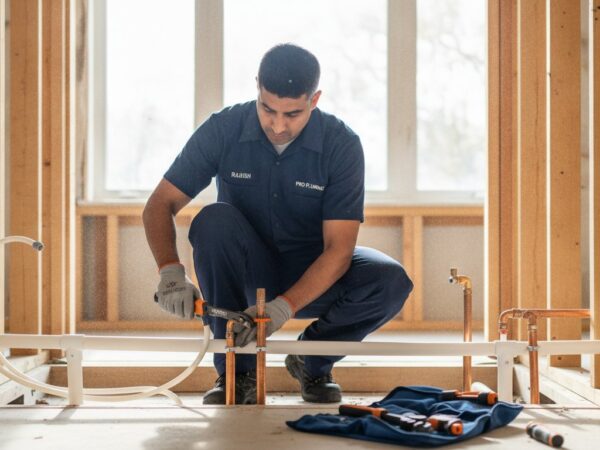
- Phase 2: Rough-in Plumbing. This is where the heavy lifting happens. We relocate the sink, install dishwasher lines, and run plumbing to new island locations. We also prepare the gas lines for your new range.
- Phase 3: Final Trim. After the countertops and backsplashes are set, we return to install the high-end fixtures. We perform a final pressure test to ensure every connection is watertight.
Essential Kitchen Plumbing Upgrades for Modern Homes
Modern kitchens function as high-performance hubs that require more than just standard piping. When you are planning an Old Bridge plumbing for kitchen remodel, you have a unique opportunity to integrate technology that enhances daily convenience while protecting your investment. High-end appliances and custom layouts demand specialized infrastructure to operate safely and efficiently. Moving beyond basic repairs allows you to build a kitchen that is truly prepared for the next decade of use.
Consider the impact of a tankless water heater installation. These units provide endless hot water directly to your kitchen tap, which is ideal for heavy cooking and cleaning cycles. Additionally, many homeowners now request pot fillers installed directly over the stove. While these fixtures add luxury, they require precise plumbing runs and heavy duty bracing behind the wall to prevent vibration and leaks. We also ensure your high-efficiency dishwasher meets NJ air gap requirements. This prevents dirty drain water from siphoning back into your clean dishes, a common code violation in DIY projects. If you want to explore these modern upgrades, our team can help you plan a high-performance layout that fits your specific needs.
Smart Water Protection and Monitoring
Protecting your new flooring and custom cabinetry is our top priority. We specialize in installing smart water monitor shutoffs that act as a digital guardian for your home. These devices detect micro-leaks in your new kitchen lines that are invisible to the naked eye. If a pipe fails while you are away, the system automatically shuts off the main water supply and sends an alert to your smartphone. Calibrating these high-tech sensors requires the precision that only comes from 28+ years of local experience. We ensure the system is sensitive enough to catch a drip but smart enough to ignore normal appliance usage.
Gas Line Installation for Professional Ranges
Upgrading to a professional-grade range often requires a larger gas line or a complete relocation of your existing hookup. Safe gas line installation is not a job for a generalist. It requires a technician with a New Jersey state HVACR license to ensure all connections are airtight and meet high-pressure demands. We don’t guess when it comes to your family’s safety. Our team uses advanced diagnostic technology to pressure test every new gas joint before you ever turn on a burner. This rigorous testing process provides immediate relief and long-term security, ensuring your new cooking station is as safe as it is beautiful.
Relocating Fixtures: The Logistics of Sink and Island Plumbing
Your kitchen’s efficiency depends on the distance between your sink, stove, and refrigerator. This “Golden Triangle” layout dictates the entire workflow of your home. When coordinating an Old Bridge plumbing for kitchen remodel, relocating the main sink is often the most complex task on the list. While moving a sink a few inches within the same wall bay is relatively simple, moving it across the room or into a central island requires significant structural planning. You must weigh the aesthetic benefits of a new layout against the technical requirements of rerouting supply and waste lines through floors or ceilings.
Gravity doesn’t negotiate. Every foot of horizontal drain line requires a specific downward pitch to ensure waste moves away from your home effectively. If the pitch is too shallow, you’ll face constant backups. If it’s too steep, the water may move faster than the solids, leading to dry clogs. We use precision leveling tools to guarantee that every new run is perfectly angled. This technical accuracy protects your new investment from the messy, expensive reality of a failed drainage system just months after the project ends.
Plumbing an Island Sink Properly
Adding a sink to a kitchen island is a popular design choice, but it presents unique venting challenges. Because there is no wall to hide a vertical vent pipe, we must install a specialized “loop vent” or “island fixture vent.” This configuration allows air to circulate so water drains freely without gurgling or siphoning traps dry. In many Old Bridge homes, this involves cutting into concrete slabs or carefully drilling through floor joists. Because these long-distance drain runs are more susceptible to buildup, we recommend professional drain cleaning services to clear the existing main lines before the new island connections are finalized. This ensures your new pipes start with a clean slate.
Second Sinks and Wet Bars
Modern floor plans often include secondary prep sinks, dedicated ice makers, or built-in coffee stations. Each of these additions increases the demand on your home’s main water line. We evaluate your current supply capacity to ensure that running the dishwasher doesn’t cause a pressure drop at your new wet bar. Proper drainage for ice makers is also vital, as these require indirect waste lines to prevent contamination. By managing these technical details with 28+ years of expertise, we ensure your high-end additions provide luxury without compromising the safety of your home’s infrastructure.
Permits, Codes, and Inspections in Middlesex County
Securing a plumbing permit is a non-negotiable step for any kitchen renovation in our community. While it might seem like a bureaucratic hurdle, the permit process exists to protect your family from fire hazards, gas leaks, and water damage. In New Jersey, a permit application for an Old Bridge plumbing for kitchen remodel must be signed by a licensed master plumber. This ensures that the professional responsible for your home’s infrastructure has the technical training to meet the state’s rigorous safety standards. Skipping this step can lead to massive fines and may even void your homeowner’s insurance policy if a leak or fire occurs in the future.
Inspectors look for specific technical details that general contractors often overlook. Common code violations include improper P-trap sizing and venting errors that allow sewer gases to enter your living space. For example, a modern deep-basin sink often requires a 2-inch drain line to handle the volume of water, yet many older homes still utilize 1.5-inch pipes. We ensure every connection is built to current standards so you don’t face the frustration of a failed inspection or a project shutdown. Our 28+ years of experience allows us to anticipate these requirements before the inspector even arrives on-site, providing you with immediate relief and confidence.
Navigating the Old Bridge Building Department
Filing a plumbing permit in Old Bridge, NJ, requires specific documentation, including a detailed fixture count and a plan for any gas line modifications. You must submit these plans to the building department before any demolition begins. We handle the technical paperwork for our clients, ensuring that every gas-fired appliance and water connection is documented correctly. This professional approach streamlines the approval process and keeps your renovation on schedule. If you need assistance with the legal requirements of your project, you can contact our licensed experts today for professional guidance and support.
Common Code Challenges in Older NJ Homes
Older homes in our area often present unique challenges that require immediate attention during a remodel. We frequently encounter old lead or galvanized water lines that must be upgraded to meet 2026 safety standards. Additionally, modern codes require specific clearance for gas shutoff valves, ensuring they are accessible but safely tucked behind cabinetry. If your renovation includes a water heater replacement, we ensure the new unit meets the latest energy efficiency mandates and venting protocols. These upgrades don’t just satisfy inspectors; they provide the long-term security and domestic well-being your family deserves.
Why Old Bridge Homeowners Trust Anton for Kitchen Plumbing
Choosing a partner for your Old Bridge plumbing for kitchen remodel is a decision that impacts your home’s safety for decades. With 28+ years of localized experience in Middlesex County, we understand the specific architectural challenges and soil conditions that affect your pipes. We don’t just view ourselves as mechanical contractors; we act as the protective experts of your household. Our team combines technical excellence with a deep commitment to the domestic well-being of our neighbors. This long-term perspective means we build every system to withstand the pressures of modern family life.
Financial clarity is just as important as technical precision. We eliminate the anxiety of hidden costs by providing transparent pricing from the very first consultation. To help you achieve the high-end kitchen you deserve, we offer a specialized rebate program with zero interest options for major upgrades. This makes it easier to invest in premium solutions like tankless water heaters or smart leak detection systems without straining your immediate budget. Because we hold both plumbing and HVACR licenses, we provide a unique synergy that ensures your kitchen’s temperature control and water systems work in perfect harmony.
Our commitment to your security doesn’t end when the project is finished. We provide 24/7 emergency support to all our clients, ensuring that if a utility failure ever occurs, you have a trusted partner ready to respond at a moment’s notice. This immediate availability creates an atmosphere of relief for homeowners who want to enjoy their new space without the fear of unexpected infrastructure crises.
A Family-Operated Approach to Your Home
Our family-operated values define every interaction we have with our clients. We maintain ethical, clean job sites because we respect your space as much as our own. You get direct access to licensed masters who prioritize your family’s safety above all else. From the initial design phase to the moment you wash your first dish in your new sink, our commitment to your satisfaction is absolute. We take pride in the heritage of our business and the trust we’ve built within the Old Bridge community over nearly three decades.
Ready to Start Your Remodel?
The best time to prevent a leak is before the first cabinet is installed. We recommend scheduling a pre-remodel consultation that includes a comprehensive leak detection scan of your existing lines. This proactive step identifies weaknesses that could jeopardize your new finishes. We coordinate seamlessly with your general contractor to ensure our phases align perfectly with their schedule, preventing the bottlenecks that often plague large renovations. Take the first step toward a functional, modern kitchen today. Contact Anton Plumbing Heating & Cooling for your kitchen remodel quote today!
Secure the Future of Your Kitchen Renovation
Your kitchen remodel is an investment in your family’s comfort and your home’s value. As we have explored, success depends on more than just high-end finishes. It requires a precise rough-in phase, strict adherence to Middlesex County codes, and the integration of modern safeguards like smart water monitors. By addressing these technical foundations early, you avoid the high-stakes stress of hidden leaks and failed inspections. When you plan your Old Bridge plumbing for kitchen remodel, prioritizing professional oversight ensures your new layout remains functional and dry for decades to come.
Anton Plumbing Heating & Cooling brings the steady professionalism of a Licensed NJ Master Plumber with 28+ years of local experience to every project. We provide the technical confidence you need to move gas lines or relocate sinks with total peace of mind. Our team remains your long-term partner, offering 24/7 emergency support to protect your household long after the final tile is set. Start your Old Bridge kitchen remodel with a professional plumbing consultation. We look forward to helping you build a beautiful, leak-free space that your family will enjoy for years to last.
Frequently Asked Questions
Do I need a permit for a kitchen remodel in Old Bridge, NJ?
Yes, you must obtain a plumbing permit for any kitchen renovation that involves moving fixtures or changing piping in Old Bridge. New Jersey state law requires a licensed master plumber to sign off on these applications to ensure the work meets safety standards. This process protects your home’s resale value and ensures your insurance remains valid if a failure occurs later.
How much does it cost to move a kitchen sink in a remodel?
The total investment depends on the distance from the main stack and whether we must cut through a concrete slab or floor joists. Moving a sink across the room requires new drainage slopes and specialized venting solutions to prevent frequent clogs. We provide clear financial expectations after an on-site evaluation so you can plan your budget without any hidden surprises.
Can I use my existing water heater for a new high-end kitchen?
Your current unit may work, but high-end kitchens often exceed the capacity of older water heaters. Adding a high-efficiency dishwasher or a second prep sink increases hot water demand significantly. We evaluate your current system’s age and recovery rate to determine if a tankless water heater installation is necessary to prevent cold showers while the dishes are running.
What is the best way to prevent leaks behind new kitchen cabinets?
Installing a smart water monitor shutoff is the most effective way to prevent catastrophic damage behind new cabinetry. These devices detect micro-leaks and automatically close the main valve before water can warp your wood or cause mold. We also perform rigorous pressure testing on all new lines using advanced diagnostic technology to ensure every joint is watertight before the walls are closed.
Should I replace my pipes during a kitchen renovation?
You should replace any galvanized steel or polybutylene pipes while the walls are open during your Old Bridge plumbing for kitchen remodel. It is far more affordable to update these aging materials during the demolition phase than to tear out new custom cabinets later due to a burst pipe. We look for signs of corrosion or low pressure to help you decide which lines need immediate attention.
Do I need a separate gas line for a dual-fuel range?
Yes, a dual-fuel range requires both a dedicated gas line for the cooktop and a high-voltage electrical circuit for the oven. Relocating or installing a new gas line requires a technician with a New Jersey state HVACR license to ensure the connection is leak-free and properly sized for the appliance’s BTU requirements. We use specialized equipment to test these lines for safety before your first use.
How long does the plumbing phase of a kitchen remodel take?
The plumbing phase typically occurs in two distinct stages over several days. The rough-in phase, where we move pipes and gas lines, usually takes two to four days depending on the complexity of your new layout. The final trim phase, where we install faucets and connect appliances, happens in a single day after your countertops and backsplash are fully installed.
Why should I hire a licensed plumber instead of a handyman for my remodel?
Licensed plumbers have the technical training to handle complex venting and gas line logistics that handymen are not legally permitted to perform. Hiring a professional with 28+ years of experience ensures your project passes Middlesex County inspections on the first attempt. This protects your investment and provides long-term peace of mind that your home’s infrastructure is safe and built to last.


