
What if your family’s morning routine didn’t involve a frantic countdown to the moment the shower turns ice cold? For many families in our community, the fear of running out of hot water is a daily reality that makes the household feel more like a racecourse than a home. When you start investigating the tankless water heater cost Old Bridge homeowners are facing in 2026, it’s natural to feel a bit of sticker shock. You want the security of endless hot water, but you also need to know that your investment makes financial sense for your specific property and budget.
We understand that navigating New Jersey’s specific installation hurdles, like gas line requirements in older Middlesex County homes, can be confusing. This guide offers a transparent look at current market price ranges, local rebate opportunities, and the long-term energy savings you can expect. You’ll gain a clear understanding of how these high-efficiency systems add property value while ensuring your family’s domestic well-being. We will explore the technical requirements of our local area and the 2026 financial incentives available to help you make an informed, confident decision for your home’s infrastructure.
Key Takeaways
- Get a transparent breakdown of the tankless water heater cost Old Bridge homeowners face in 2026, covering everything from unit selection to professional labor.
- Compare gas and electric fuel types to determine which system best suits your family’s hot water demands and current NJ utility rates.
- Discover how local factors like Middlesex County home age and New Jersey plumbing codes impact the complexity and safety of your installation.
- Calculate your long-term savings by analyzing the 20-year lifespan of tankless technology and its impact on your monthly energy bills.
- Learn how to leverage 2026 high-efficiency rebates and zero-interest programs to make your home infrastructure upgrade more affordable.
Understanding Tankless Water Heater Costs in Old Bridge (2026)
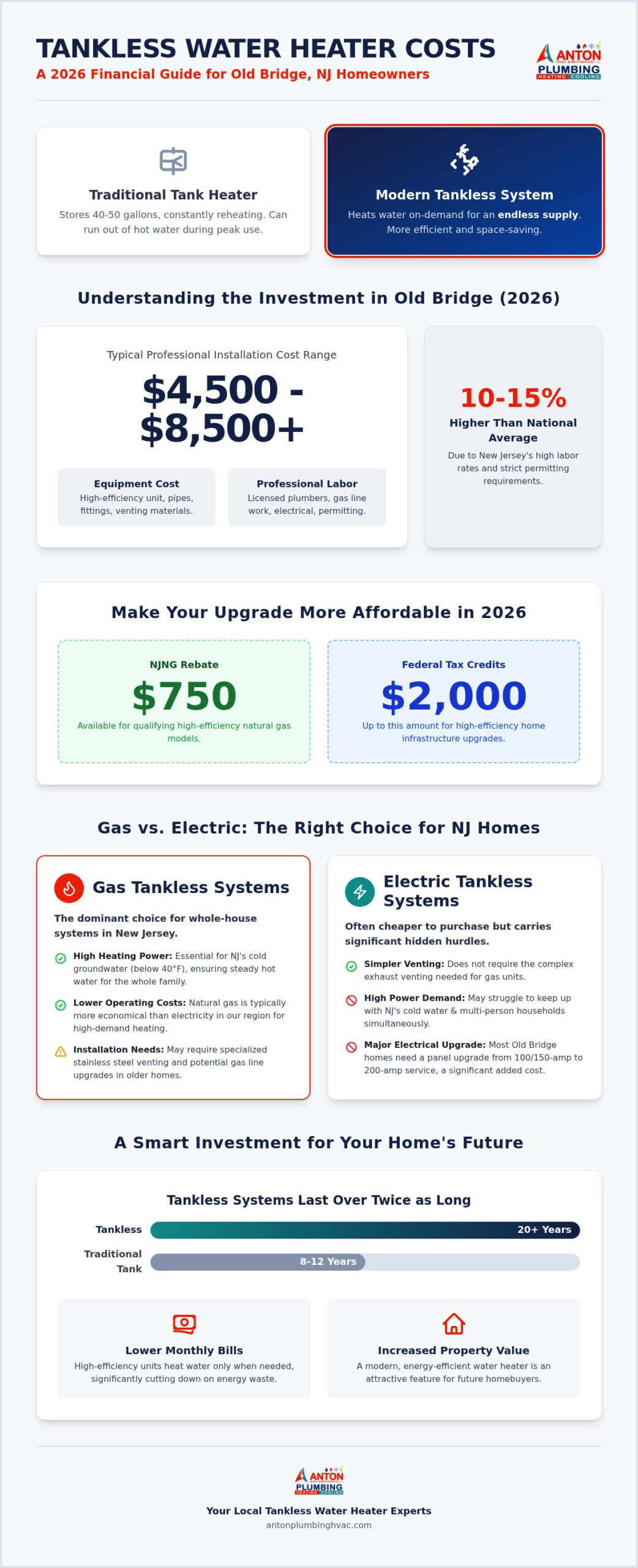
Transitioning from a traditional storage tank to an on-demand system is a significant upgrade for any household. While a standard tank keeps forty or fifty gallons of water hot all day, understanding how tankless water heaters work reveals why the initial investment is higher. These systems use high-powered burners or electric elements to flash-heat water only when you turn on a tap. This technology requires more sophisticated components and specialized venting, which contributes to the initial sticker shock many homeowners feel. When evaluating the tankless water heater cost Old Bridge families prioritize, it’s essential to look beyond the unit itself and consider the long-term domestic security of never running out of hot water.
Local market conditions in New Jersey also play a role in your final estimate. Because of our high labor rates and strict permitting requirements, installation costs in our area typically sit about 10% to 15% higher than the national average. High demand for energy-efficient upgrades in Middlesex County can also influence the availability of premium units during peak seasons. Despite the higher entry point, the combination of a $750 NJNG rebate and federal tax credits up to $2,000 helps offset the transition for qualifying high-efficiency models.
Equipment vs. Labor: Where Your Money Goes
Your budget is primarily split between the hardware and the professional expertise required to install it safely. High-efficiency units are sized by Gallons Per Minute (GPM). In Old Bridge, our groundwater gets very cold in the winter, so you’ll likely need a unit with a higher GPM capacity to maintain steady temperatures. The labor portion covers the work of licensed NJ plumbers who must often reroute gas lines or install specialized stainless steel venting to handle acidic condensate. Using high-quality materials like copper piping ensures the system remains reliable for its entire twenty-year lifespan.
Why 2026 Prices Differ from Previous Years
The pricing landscape has shifted due to recent energy efficiency regulations that have pushed manufacturers toward more complex, condensing technology. These rules ensure lower monthly bills but increase the complexity of the internal heat exchangers. Additionally, the local labor market in Old Bridge has seen a rise in demand for technicians certified by premium brands like Rinnai and Navien. While supply chains have stabilized since the early 2020s, the focus has shifted toward high-tech units that integrate with smart home systems, which carries a different price profile than the basic models of the past.
Gas vs. Electric: Which Fuel Type Fits Your Old Bridge Home?
Choosing between gas and electric is about more than just the initial purchase price. While electric units are often cheaper to buy at the store, gas models remain the dominant choice for whole-house systems in New Jersey. Our cold winters mean groundwater temperatures can drop below 40 degrees. Gas units have the heating power needed to raise that temperature instantly for multiple family members. If you are weighing the Builder Magazine pros and cons, you’ll see that operational costs also favor gas in our region. With current NJNG rates, gas is typically more economical than PSEG’s electric rates for high-demand heating. When calculating the total tankless water heater cost Old Bridge families must consider, the fuel source dictates almost every other installation requirement.
The True Cost of Gas Tankless Systems
Gas systems require specific infrastructure to operate safely and efficiently. One major factor in the tankless water heater cost Old Bridge residents see is the venting. Non-condensing units require specialized Category III or IV stainless steel to handle high-heat exhaust. Condensing models can use PVC, but they carry a higher upfront unit price. Additionally, older homes in neighborhoods like Sayrewoods South often need gas line upgrades. Your existing meter might require a high-pressure regulator to ensure the unit gets enough fuel during peak usage. If you are concerned about your current infrastructure, our team can provide a professional evaluation of your gas lines to ensure a safe, high-performance installation.
The True Cost of Electric Tankless Systems
Electric units might seem simpler, but they carry significant hidden hurdles. Most older Old Bridge homes were built with 100-amp or 150-amp electrical panels. A whole-house electric tankless heater often requires a 200-amp service upgrade, which adds substantial expense to the project. You also have to account for the cost of running multiple sets of heavy-gauge wire from your panel to the unit. Performance is the biggest concern in our climate. In the middle of a New Jersey February, an electric unit may only be able to provide one hot shower at a time because it struggles to raise the water temperature fast enough. These models are generally better suited as point-of-use units for a single remote sink or a small home addition.
Beyond the Unit: Installation Complexity in Middlesex County
Attempting a DIY tankless installation in New Jersey is a gamble that rarely pays off. While it’s tempting to try and save on labor, these systems involve complex gas pressure calibrations and high-voltage electrical connections that require a professional touch. In Old Bridge, improper venting isn’t just a minor code violation; it’s a serious safety risk that can lead to carbon monoxide buildup. Licensed professionals ensure your system is balanced correctly for our local climate. When you calculate the total tankless water heater cost Old Bridge homeowners encounter, remember that professional labor includes the peace of mind that comes with a system installed to strict NJ safety standards.
The age and layout of your home are the biggest variables in your final quote. Many homes in neighborhoods like Lakeridge or Madison Park were originally designed for traditional floor-standing tanks. Switching to a wall-mounted on-demand system often means rerouting water lines and modifying existing exhaust paths. If your utility room is in a cramped basement or a central closet, the labor hours required to navigate these tight spaces will increase. Our 28 years of experience in the local area helps us anticipate these hurdles before we even pick up a wrench, ensuring there are no surprises once the work begins.
Retrofitting vs. New Construction Costs
There is a distinct difference in price between installing a unit in a new home and retrofitting an existing one. In new construction, installers have easy access to open wall studs and can plan the gas and water lines for maximum efficiency. This typically makes new construction installations 20% to 30% cheaper than a retrofit. For a retrofit in an older Old Bridge home, we must often drill through foundation walls for venting or upgrade internal piping to support the higher GPM flow. These modifications are essential for the system to perform as promised during a cold New Jersey winter.
Local Compliance and Permit Logistics
Navigating the municipal requirements in Middlesex County is a critical part of the process. Old Bridge Township requires specific plumbing and gas permits for any water heater replacement. These permit and inspection fees typically range from $75 to $250 depending on the scope of the work. As licensed NJ Master Plumbers, we handle the entire application process and coordinate with the township inspector. This professional documentation is vital for your home’s future. When it comes time to sell your property, having a permitted, code-compliant installation protects your resale value and prevents delays during the closing process.
ROI Analysis: Is Tankless Worth the Upfront Price in NJ?
Investing in your home’s infrastructure requires looking past the initial installation day. While the tankless water heater cost Old Bridge residents pay today is higher than a traditional tank, the longevity of these systems changes the math entirely. A standard water tank typically fails after ten to twelve years, often ending its life with a messy basement flood. In contrast, a professionally maintained tankless unit has a lifespan of twenty to twenty-five years. This means you’re effectively buying two traditional heaters for the price of one tankless system, all while avoiding the “invisible” cost of potential water damage and emergency cleanup fees.
Energy efficiency isn’t just a buzzword; it’s a direct reduction in your monthly overhead. Traditional tanks waste money by heating and reheating the same water all day and night, even when you’re at work or sleeping. Tankless systems eliminate these standby energy losses. Because approximately 65% of water heater customers in Middlesex County are now choosing tankless technology, these systems have become a standard expectation for local home buyers. Upgrading your home with a high-efficiency system protects your property value and positions your house as a modern, move-in-ready residence in the competitive Old Bridge market.
NJ Rebates and Tax Incentives in 2026
The financial burden of upgrading is significantly lightened by current incentive programs. Through the NJ Clean Energy Program and New Jersey Natural Gas (NJNG), qualifying high-efficiency tankless water heaters are eligible for rebates up to $750. On top of these state-level savings, the federal government provides tax credits of up to $2,000 for Energy Star certified models. We take pride in acting as a guardian for your budget by helping you navigate the paperwork required to maximize these recoveries. If you want to see which incentives apply to your specific home, schedule a rebate consultation with our team today.
Space Savings and Lifestyle Value
Beyond the spreadsheets, there is a palpable lifestyle benefit to going tankless. For large families in Old Bridge, the luxury of back-to-back showers without a drop in temperature provides immediate relief from morning stress. You also reclaim valuable square footage in your basement or utility room, as these compact units mount directly to the wall. With federal tax credits and state rebates, the payback period for a tankless water heater in New Jersey can be as short as three to five years. This transition isn’t just a mechanical repair; it’s a commitment to your family’s long-term domestic well-being and security.
Choosing Your Old Bridge Tankless Partner: The Anton Advantage
When your water heater fails, you don’t just need a mechanic; you need a guardian for your home’s infrastructure. Navigating the tankless water heater cost Old Bridge families face requires a partner who values transparency as much as technical excellence. With over 28 years of experience serving New Jersey, our family-operated business understands the specific challenges of local plumbing systems. We don’t just install units; we ensure your entire gas and water delivery system is optimized for long-term security. Our Protective Expert approach means we treat your domestic well-being as our highest priority, providing steady professionalism through every step of the upgrade.
Integrity is the backbone of our service. We provide clear financial expectations from the start, ensuring you understand exactly where your investment goes. Whether you are in Sayrewoods South or near Old Bridge Waterfront Park, our team is ready to respond. We maintain 24/7 emergency availability because we know that utility failures don’t wait for business hours. By blending technical confidence with a neighborly approach, we offer immediate relief for stressed homeowners. We help you navigate the complex calculations of the tankless water heater cost Old Bridge properties require, ensuring your new system provides the endless hot water your family deserves.
Expert Installation and Long-Term Maintenance
Protecting your investment goes beyond the initial installation day. Because the water in Middlesex County is moderately hard, mineral buildup can eventually restrict flow and reduce efficiency in on-demand systems. Professional flushing and descaling are essential services that we provide to extend the life of your unit to that twenty-year mark. Our technicians undergo specialized training in leading brands and advanced smart water monitors to keep your home at the cutting edge of efficiency. For more details on choosing the right system for your property, read our guide on Water heater replacement in Old Bridge, NJ.
The Peace of Mind Guarantee
Choosing a licensed, insured, and bonded professional is the only way to safeguard your property. As NJ Master Plumbers, we uphold the highest ethical standards and local code requirements. This commitment to domestic security is why our neighbors in East Brunswick and Old Bridge have trusted us for nearly three decades. We don’t believe in high-pressure sales; we believe in providing the technical accuracy you need to make a smart decision. Our family values translate to a level of care that corporate competitors simply cannot match. Contact Anton Plumbing for a transparent tankless quote today!
Secure Endless Hot Water for Your Old Bridge Home
Choosing a high-efficiency system is about more than just numbers; it’s about the security and domestic well-being of your family. While the tankless water heater cost Old Bridge homeowners evaluate in 2026 includes specialized labor and advanced equipment, the long-term rewards are undeniable. You’re investing in a twenty-year lifespan, lower monthly utility bills, and the daily luxury of never running out of hot water. By leveraging current NJNG rebates and federal tax credits, you can offset your initial investment while significantly increasing your property’s value.
Our team of Licensed Master Plumbers brings over 28 years of trusted NJ service to every project. We understand that utility failures create high-stakes stress, which is why we offer 24/7 emergency support and a neighborly, community-focused approach. Let us act as the guardian of your household infrastructure by providing the transparent, ethical service you deserve. Take the first step toward a more efficient home today. Schedule your Old Bridge tankless water heater consultation with Anton Plumbing today! We look forward to helping you upgrade your home with confidence and ease.
Frequently Asked Questions
How much does it cost to install a tankless water heater in Old Bridge, NJ?
The average tankless water heater cost Old Bridge homeowners see for a professionally installed gas unit typically ranges between $4,000 and $5,200. This estimate includes the high-efficiency unit and the skilled labor required for a standard installation. Your final price depends on specific infrastructure needs, such as the complexity of the venting path or required plumbing modifications. We provide a transparent breakdown of these factors during our initial home evaluation to ensure clarity.
Is it cheaper to run a gas or electric tankless water heater in Middlesex County?
In Middlesex County, gas models are generally more cost-effective to operate than electric versions. While electric units have a lower initial purchase price, New Jersey’s cold groundwater requires significant energy to heat instantly. Current NJNG gas rates typically offer better long-term value compared to PSEG electric rates for high-demand heating. Additionally, gas units provide the higher flow rates necessary to support a full household during our freezing winter months.
Do I need to upgrade my gas line for a tankless water heater?
Many older homes in our area require a gas line upgrade to support the high BTU requirements of a tankless system. Your existing lines might be sized for a traditional tank, which uses a smaller, steady flame. A tankless unit needs a large burst of fuel to heat water on demand. We evaluate your current meter and piping to ensure your system operates safely and receives adequate pressure during peak usage.
What permits are required for water heater replacement in Old Bridge?
Old Bridge Township requires both plumbing and gas permits for any water heater replacement or conversion. These permits ensure that the installation meets strict New Jersey safety codes and passes a municipal inspection. Fees for these permits in Middlesex County generally range from $75 to $250. As licensed Master Plumbers, we handle the entire application and inspection process to ensure your home remains compliant and your property value is protected.
How long does a tankless water heater last compared to a standard tank?
A professionally installed tankless water heater typically lasts between 20 and 25 years. This is nearly double the lifespan of a traditional storage tank, which usually fails after 10 to 12 years. Because tankless units use durable components like copper heat exchangers and don’t store corrosive standing water, they offer superior longevity. This extended service life is a primary factor in the total tankless water heater cost Old Bridge families consider when upgrading.
Are there rebates available for high-efficiency water heaters in NJ for 2026?
Yes, there are significant incentives available for 2026. Homeowners can qualify for a New Jersey Natural Gas (NJNG) rebate of up to $750 for high-efficiency models. Additionally, federal tax credits through the Inflation Reduction Act offer up to $2,000 for qualifying Energy Star certified units. We help our customers identify every available program to ensure they receive the maximum financial recovery possible for their high-efficiency home infrastructure upgrades.
Can a tankless water heater provide enough hot water for a 4-bedroom home?
A properly sized tankless unit can easily support a four-bedroom home with multiple bathrooms. The key is selecting a unit with a high enough Gallons Per Minute (GPM) rating to handle simultaneous demands, like a shower and a dishwasher running at once. We calculate your family’s peak water usage and account for New Jersey’s cold groundwater temperatures to recommend a system that ensures you never run out of hot water again.
What maintenance is required for a tankless water heater to keep it running efficiently?
Annual maintenance is essential for keeping your system running at peak efficiency. Because Middlesex County has moderately hard water, calcium and magnesium can build up inside the heat exchanger over time. We recommend a professional descaling and flushing service once a year to remove these minerals. This simple routine prevents internal damage, maintains your energy savings, and ensures your unit reaches its full twenty-five-year life expectancy without unexpected failures.


