
Last Tuesday, an Old Bridge homeowner stepped into their shower only to find themselves standing in two inches of lukewarm, soapy water before they had even finished lathering up. This common frustration often leads residents to search for a reliable slow shower drain fix Old Bridge neighbors can trust to protect their property. Whether it’s the lingering odor of stagnant water or the nagging fear that your older pipes are finally failing, a sluggish drain is a signal that requires your immediate attention.
We know how much you value a safe, functional home for your family. It’s stressful to worry about hidden leaks or the potential for a major pipe replacement. In this guide, you’ll discover how to clear minor clogs safely and learn exactly when it’s time to call a professional to prevent a plumbing emergency. Take control of your plumbing today. We’ll walk you through effective DIY tips, the specific risks of aging pipe corrosion in our local area, and how the latest plumbing code updates impact your home’s maintenance.
Key Takeaways
- Identify how hair and soap scum combine to create the structural foundation of most residential shower clogs.
- Learn a safe slow shower drain fix Old Bridge residents can use to clear minor blockages without damaging delicate pipes.
- Discover why you should avoid harsh chemical cleaners that generate heat and corrode your home’s plumbing system.
- Spot the red flags that signal it’s time to call a professional before a simple clog turns into a sewer line emergency.
- Gain peace of mind by understanding how expert diagnostic tools can resolve recurring drainage issues for good.
Common Causes of a Slow Shower Drain in Old Bridge
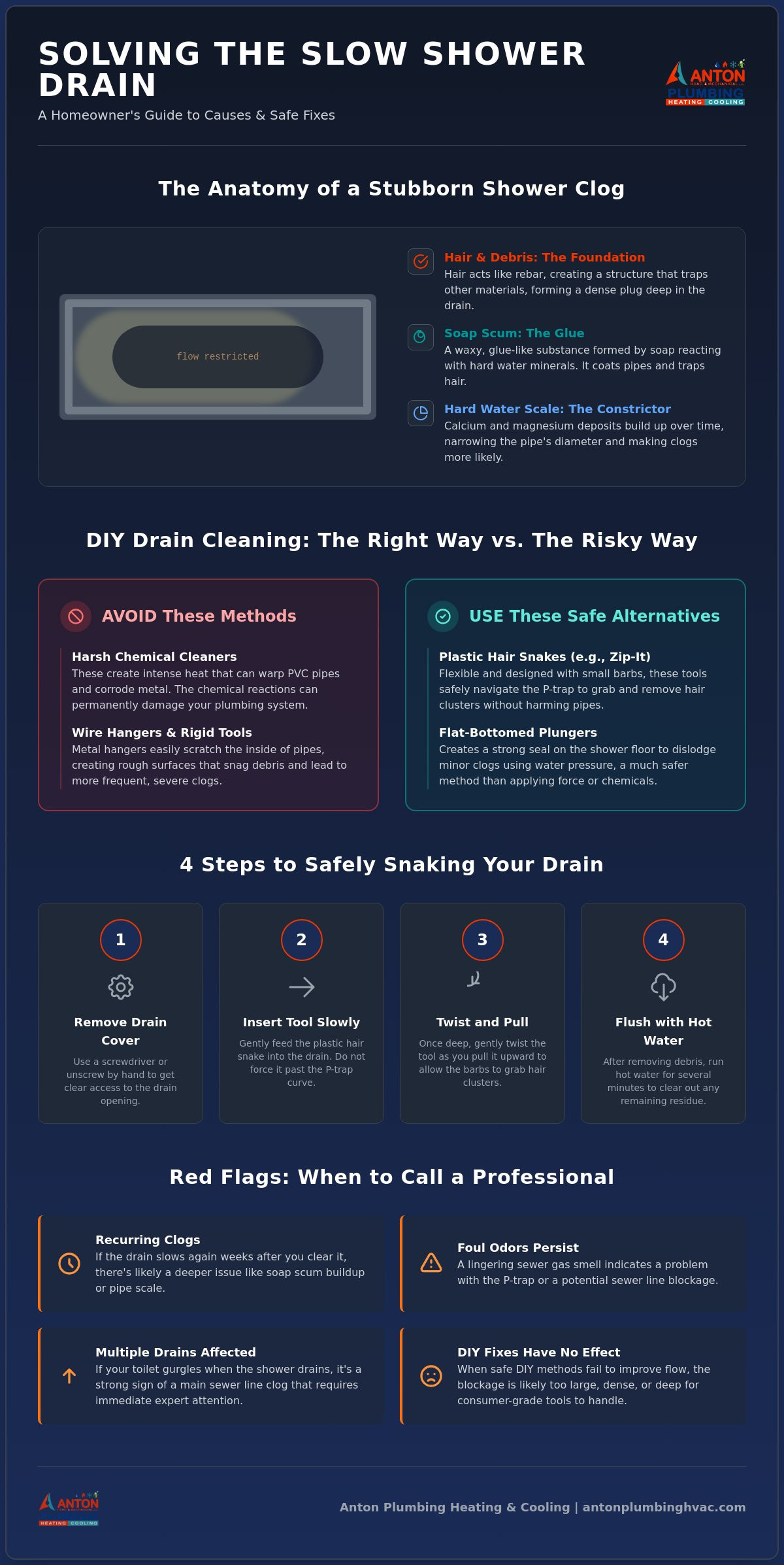
Finding a permanent slow shower drain fix Old Bridge homeowners can rely on begins with identifying the hidden culprits inside your plumbing. While most clogs start with hair, it’s rarely the only factor. Think of hair as the structural “rebar” in a construction project. It provides a framework that catches soap, skin cells, and minerals. Together, these elements form a dense, impenetrable plug. This is why a simple surface cleaning often fails; the real problem is usually several inches deep where multiple materials have bonded together to restrict flow.
Old Bridge’s unique geography and infrastructure also contribute to drainage issues. Homes located near the Shore or those with aging service lines often deal with sand and fine sediment. These heavy materials don’t wash away easily. Instead, they settle in the curve of the P-trap, creating a gritty base. Once a layer of sediment forms, it catches every strand of hair that passes by. For residents in older neighborhoods with original cast iron or galvanized steel pipes, this grit combines with internal rust flakes to create a persistent blockage that common DIY methods struggle to reach.
The Role of Local Hard Water
Middlesex County is known for having hard water. This means your water contains higher levels of dissolved calcium and magnesium. As water flows through your pipes, these minerals solidify into a hard, white crust called scale. This scale narrows the diameter of your pipes over time, leaving less room for water to exit. All plumbing work in our area must comply with the National Standard Plumbing Code (NSPC) 2021 edition. This is vital when dealing with mineral-heavy pipes in older homes, as improper cleaning can lead to leaks that require permit-backed repairs. You can tell you have mineral buildup if you see chalky deposits on your showerhead. This same “invisible” buildup is happening inside your drain, making it easier for debris to snag and build clogs.
Soap Scum: The Invisible Clog
Soap scum isn’t just leftover soap; it’s a chemical reaction between the fatty acids in your soap and the minerals in our local water. This creates a waxy, glue-like substance that coats the interior of your pipes. Even “natural” soaps with high oil content can accelerate this process. If you notice a gray or white film on your shower tiles, it’s a sign that soap scum is narrowing your drainage path. Using a professional Drain cleaner or mechanical tool might clear the hair, but the sticky biofilm often remains. This sticky residue acts like a magnet for new hair, which is why your shower often starts draining slowly again just weeks after a DIY fix. Identifying this buildup early is the best way to prevent a total backup.
Safe DIY Methods to Fix a Slow Shower Drain
When standing water begins to pool around your ankles, acting quickly can prevent a total blockage. Many homeowners reach for a wire hanger to fish out hair, but this can be a costly mistake. Metal hangers are rigid and often scratch the interior of older PVC or lead traps found in many Old Bridge homes. These scratches create new surfaces where hair and soap scum can snag, leading to even more frequent clogs. Instead, use a Zip-It tool. This flexible, plastic hair snake is a much safer slow shower drain fix Old Bridge residents can use to pull out deep-seated hair clusters without risking pipe damage.
If the clog is caused by light sediment or organic buildup rather than a massive hair ball, a flat-bottomed plunger might be your best ally. Unlike the beehive-shaped plungers used for toilets, a flat-bottomed version creates a better seal against the shower floor. Ensure there is enough standing water to cover the bell of the plunger. Use quick, forceful downward strokes to create pressure that can dislodge minor obstructions. For those comfortable with basic tools, manual P-trap cleaning is another option, though it often requires accessing the plumbing from a crawlspace or a lower-level ceiling in many local split-level homes. If you aren’t comfortable with disassembly, it’s best to consult a professional before proceeding.
Step-by-Step: Snaking Your Drain Safely
Success with a plastic hair snake depends on your technique. Follow these steps to ensure you don’t jam the tool or push the clog further down the line:
- Remove the drain cover: Use a screwdriver to remove the screws or unscrew the stopper by hand if your model allows.
- Insert the tool: Slide the plastic hair snake into the drain slowly. Don’t force it; if you feel resistance, wiggle it gently to navigate the P-trap curve.
- Twist and pull: Once the tool is deep in the drain, pull it upward with a slight twisting motion. This allows the small plastic barbs to grab onto hair clusters.
- Rinse the line: After removing the debris, flush the drain with hot tap water for several minutes to clear any remaining loose residue.
The Baking Soda and Vinegar Flush
For minor sluggishness caused by soap residue, a natural enzymatic reaction is often enough to restore flow. This method is safer for your household and the environment than harsh store-bought liquids. Research from the Penn State Extension DIY Cleaners guide suggests that these common pantry items can effectively manage organic buildup without damaging your plumbing infrastructure.
Start by pouring half a cup of baking soda directly down the drain, followed immediately by half a cup of white vinegar. The resulting fizzing action helps break the bond between soap scum and the pipe walls. Let the mixture sit for at least 15 to 30 minutes before rinsing with hot tap water. To keep your system running smoothly, follow our 5 DIY Tips to Prevent Clogged Drains in NJ Homes for long-term maintenance. This simple routine can significantly extend the time between professional cleanings.
Why You Should Avoid Chemical Drain Cleaners
When you’re searching for a fast slow shower drain fix Old Bridge retailers often point you toward heavy-duty chemical liquids. It’s a tempting solution. You pour it in, wait a few minutes, and hope the problem disappears. However, these products are often more dangerous to your home than the clog itself. Most commercial cleaners rely on sulfuric acid or sodium hydroxide (lye) to dissolve organic matter. While they might eat through a hair cluster, they don’t stop there. These caustic agents continue to react with everything they touch, including the very pipes meant to protect your household from water damage.
The biggest hidden danger is heat generation. Chemical cleaners work through an exothermic reaction, which means they create intense heat as they break down debris. In modern homes across Old Bridge that use PVC (plastic) piping, this heat can reach temperatures high enough to soften or warp the pipe walls. This distortion creates “bellies” or uneven surfaces where future debris will catch even faster. Beyond the hardware, these chemicals pose a significant safety risk to your family. A single splash can cause permanent skin scarring or eye damage. Once rinsed away, these toxins enter our local New Jersey water systems, contributing to environmental degradation that affects our entire community.
Damage to Older Plumbing Systems
For residents in established Old Bridge neighborhoods, the risks are even higher. Many older homes still feature original cast iron or lead plumbing. Chemical cleaners are particularly aggressive toward these materials. They eat through the protective oxidation layer inside the pipe, creating “soft spots” and accelerated corrosion. What starts as a simple clog can quickly turn into a structural failure. This chemical thinning is a leading reason homeowners eventually need a water leak repair near me in nj. Once the metal is compromised, pinhole leaks are inevitable.
The “Clog Trap” Effect
The most dangerous scenario occurs when a chemical cleaner fails to clear the blockage. When this happens, the caustic liquid sits in your P-trap, creating a pool of toxic acid. This “clog trap” makes the situation much more complex. If you eventually have to call a professional, you must inform them that chemicals were used. Plumbers face serious injury risks from chemical burns when they open a pipe that is backed up with these substances. Standing acid is a primary cause of trap failure in NJ. Instead of a simple cleaning, you may find yourself needing a full trap replacement because the chemicals ate through the seals while sitting in the standing water.
When to Call a Professional for Drain Cleaning
Knowing when to put down the plunger is just as important as knowing how to use it. If you’ve already attempted the DIY steps mentioned earlier and the water still pools around your feet, you’re likely facing a deeper obstruction. A permanent slow shower drain fix Old Bridge homeowners can rely on often requires tools that reach beyond the standard six-foot hand snake. Pushing a clog further down the line without fully removing it only delays an inevitable emergency.
Watch for specific red flags that signal a professional intervention is necessary. Just as The Orthopaedic & Sports Medicine Institute provides guidance on recognizing physical symptoms like shoulder pain that should not be ignored, homeowners must be proactive when they notice subtle changes in their plumbing. If you’re snaking your drain every two weeks, the hair you’re pulling out is likely just the “tip of the iceberg” catching on a larger, deeper blockage. Pay attention to multiple slow drains; if your kitchen sink and shower are both sluggish, the problem is in your main sewer line, not just the shower trap. Listen for gurgling sounds or air bubbles rising from the drain, as these indicate a venting issue or a significant restriction. Persistent sewage odors that smell like rotten eggs are another warning that sewer gases are bypassing your plumbing seals.
Advanced Professional Solutions
Modern diagnostics have transformed how we handle stubborn clogs. We utilize high-definition video camera inspections to travel deep into your plumbing. This technology allows us to see exactly what is blocking the pipe without the need for invasive digging or wall removal. For pipes narrowed by years of mineral scale and soap scum, our hydro jetting services offer the most effective solution. This process uses specialized nozzles to blast away buildup with high-pressure water, restoring your pipes to their original diameter and preventing future snags.
The Emergency Factor
A slow drain is often the final warning before a total backup occurs. If a backup begins while you’re showering, immediately turn off the water to prevent an overflow that could damage your flooring or the ceiling below. Every Old Bridge resident should know the location of their main water shutoff valve for these exact moments. While routine maintenance is the goal, having access to rapid-response support is vital when a minor inconvenience turns into a utility failure. If your drain is no longer responding to household tools, schedule a professional inspection to protect your home from accidental water damage.
Expert Drain Cleaning Services in Old Bridge, NJ
For over 28 years, our team has served as a dedicated guardian for households throughout Middlesex County. We understand that a plumbing failure is more than a mechanical issue; it’s a disruption to your family’s security and comfort. As a family-operated business, we treat every home with the same integrity and care we would our own. When you need a definitive slow shower drain fix Old Bridge professionals provide, we offer the technical excellence and ethical standards you deserve. Our history in the community is built on the belief that every complication has a straightforward, professional answer.
Our technicians are fully licensed and insured, holding both New Jersey state Plumbing and HVACR licenses. This high level of certification ensures that every repair meets the strict requirements of the National Standard Plumbing Code. We don’t believe in guesswork. By combining nearly three decades of experience with advanced diagnostic tools, we provide clear financial expectations and transparent solutions from your very first phone call. You won’t have to worry about hidden fees or unnecessary upsells. We focus on what is best for your pipes and your budget.
Why Old Bridge Trusts Anton Plumbing
Reliability is the cornerstone of our service. We prioritize your household’s well-being by offering 24/7 emergency response for those moments when a slow drain turns into a midnight crisis. Our approach means we use modern technology to fix the problem right the first time. Whether we’re utilizing high-definition sewer cameras to pinpoint a blockage or performing hydro jetting to scrub away years of mineral scale, our goal is immediate relief and long-term stability. This neighborly commitment has made us a trusted partner for generations of local families who value domestic security.
Schedule Your Drain Service Today
A sluggish drain is a warning you shouldn’t ignore. While we’ve discussed several DIY methods, some clogs require the heavy-duty equipment only a professional can provide. Don’t wait for a slow drain to escalate into a flooded bathroom or a costly sewer line replacement. We make scheduling easy, whether you need routine maintenance to prevent future clogs or an urgent repair to restore your home’s flow. Take the stress out of your home maintenance and rely on a team that values your safety as much as you do. Book your Old Bridge drain cleaning service today and experience the difference that professional integrity makes.
Restore Your Home’s Flow and Security
Maintaining a functional plumbing system is essential for your family’s daily comfort and domestic well-being. By choosing safe tools like the Zip-It over corrosive chemicals and recognizing the impact of local hard water, you protect your pipes from unnecessary damage. If DIY efforts haven’t cleared the standing water, remember that recurring clogs often signal deeper issues within your main service lines. Implementing a professional slow shower drain fix Old Bridge homeowners can trust is the surest way to prevent a minor inconvenience from escalating into a plumbing emergency.
Proactive maintenance is the cornerstone of property care; just as homeowners rely on Acute Roofing to maintain structural integrity from above, addressing drainage issues promptly ensures your home remains safe from the ground up.
Our team brings 28+ years of local experience and the technical confidence of licensed NJ plumbing and HVAC professionals to every job. We prioritize your household’s safety with 24/7 emergency availability and advanced diagnostic technology. Don’t let a sluggish drain compromise your home’s infrastructure or peace of mind. For immediate relief and long-term maintenance, Get Expert Drain Cleaning in Old Bridge Now. We are ready to respond at a moment’s notice to keep your home running smoothly and safely for years to come.
Frequently Asked Questions
Is it safe to pour boiling water down a shower drain?
No, you should avoid pouring boiling water down your shower drain if your home uses PVC piping. Boiling water can reach temperatures that soften or warp plastic joints and seals, leading to hidden leaks behind your walls. It’s much safer to use hot tap water combined with natural cleaners. If heat is necessary to break up grease, stick to temperatures below 140 degrees Fahrenheit to protect your plumbing infrastructure.
Why does my shower drain smell like rotten eggs?
A rotten egg smell usually indicates that sewer gases are escaping into your bathroom. This often happens when the water in your P-trap evaporates or when a blockage in the vent stack creates a vacuum. Biofilm and bacteria feeding on trapped hair and soap scum can also produce foul odors. If a thorough cleaning doesn’t resolve the scent, you may have a deeper venting issue that requires a professional inspection.
How often should I have my drains professionally cleaned in Old Bridge?
Most homeowners should schedule a professional drain cleaning every 18 to 24 months as part of a preventative maintenance plan. Because our local water has a higher mineral content, scale builds up faster than in other regions. Regular maintenance removes this sediment before it can snag hair and debris. Taking this proactive step is the most effective way to ensure your household stays safe from sudden utility failures and messy backups.
Can a slow shower drain cause a leak in the ceiling below?
Yes, a slow drain can eventually lead to water damage in the structure below your bathroom. When water pools in the shower basin, it puts constant pressure on the drain flange and floor seals. If these components have tiny cracks, the standing water will find a path through. Over time, this moisture saturates the subfloor and drywall, resulting in expensive repairs that go far beyond a simple pipe cleaning.
What is the best way to prevent hair from clogging my shower drain?
The most effective prevention tool is a high-quality mesh drain strainer or a “hair mushroom” insert. These inexpensive devices catch hair and large debris before they ever enter your pipes. You should clean the strainer after every shower to maintain proper flow. Combining this with a monthly hot water flush helps dissolve soap residue that would otherwise act as a glue for any stray strands that slip through the mesh.
Will a plunger work on a slow-running shower drain?
A plunger can be effective if the blockage is soft and located near the surface. You must use a flat-bottomed plunger rather than a toilet plunger to create an airtight seal against the shower floor. If the clog is caused by deep mineral scale or a solid mass further down the line, plunging won’t provide a permanent solution. In those cases, the pressure might actually stress older pipe joints without clearing the obstruction.
What happens if a slow drain is left unfixed for too long?
Ignoring a slow drain almost always leads to a total backup at the most inconvenient time. Beyond the immediate mess, persistent clogs trap moisture and bacteria against your pipe walls. This leads to accelerated corrosion in metal pipes and can cause sewage to push back into other low-lying fixtures like your toilet or bathtub. Addressing the issue early prevents these high-stakes emergencies and protects your home’s long-term value and security.
Does Old Bridge hard water really affect my plumbing drainage?
Yes, the calcium and magnesium in our local water supply create a hard crust called scale inside your pipes. This scale narrows the internal diameter of the plumbing and creates a rough surface that catches hair and soap scum. This mineral buildup is a primary reason residents eventually require a professional slow shower drain fix Old Bridge service. Regular flushing and professional hydro jetting are the only ways to fully remove this stubborn, rock-like accumulation.


