
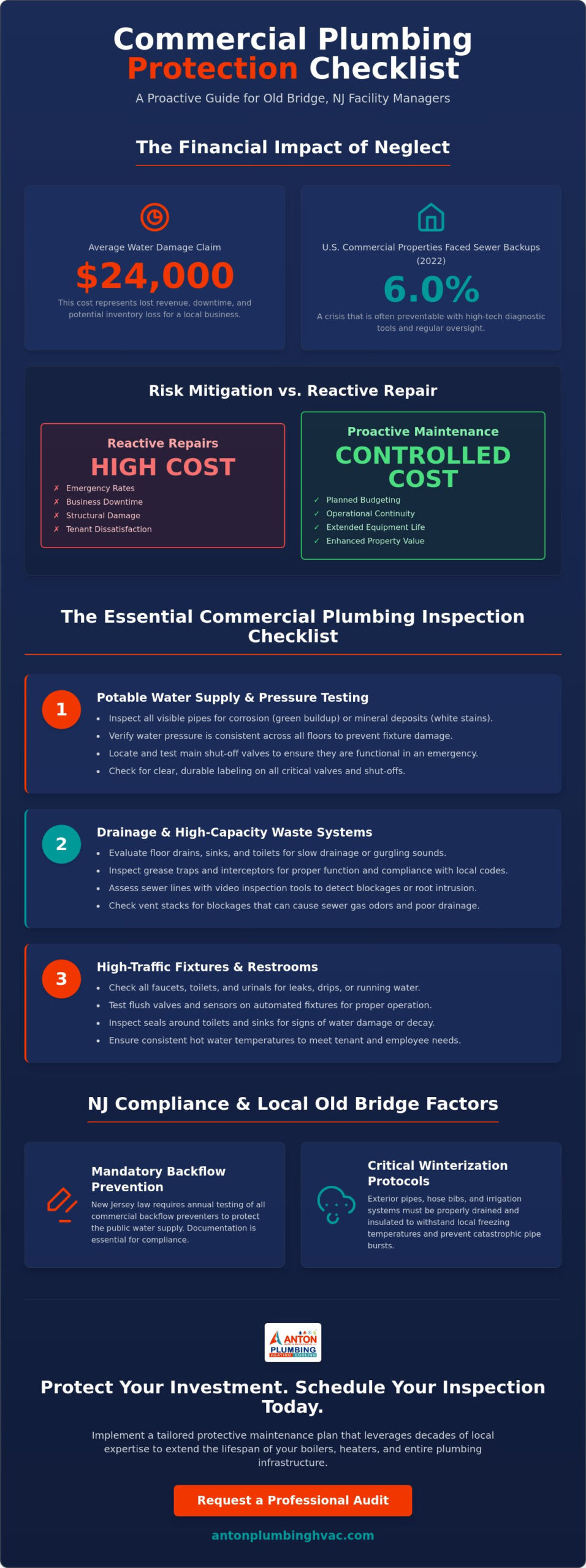
Did you know that the average water damage claim for a commercial property now reaches approximately $24,000? For a business here in town, that isn’t just a repair bill; it’s a direct hit to your operating budget and a week of lost revenue. You likely feel the stress of wondering if an aging boiler or a hidden sewer line is a ticking time bomb. Managing a facility is demanding enough without the fear of a sudden pipe burst or the uncertainty of NJ plumbing code compliance. To help you regain control, we’ve developed this comprehensive commercial plumbing inspection checklist Old Bridge owners can use to stay ahead of trouble.
This professional-grade framework is designed to protect your property and your bottom line by aligning with the 2021 National Standard Plumbing Code currently enforced across New Jersey. We’ll walk you through every critical system, from commercial backflow preventers to high-efficiency boilers. You’ll learn how to create a defensible record of maintenance that reduces emergency calls and extends the life of your most expensive equipment. Let’s ensure your infrastructure remains an asset rather than a liability.
Key Takeaways
- Discover how to identify minor leaks before they transform into the high-cost structural damage and forced downtime that impacts local New Jersey commercial buildings.
- Access a professional-grade commercial plumbing inspection checklist Old Bridge facility managers can use to audit high-traffic fixtures and mechanical rooms.
- Understand how your building’s specific water usage volume dictates a customized maintenance schedule to avoid system neglect.
- Master essential NJ-specific compliance steps, including mandatory backflow prevention testing and winterization protocols to withstand local freezing temperatures.
- Learn how to implement a tailored protective maintenance plan that leverages decades of local expertise to extend the lifespan of your boilers and heaters.
The Financial Impact of Plumbing Neglect in Old Bridge Commercial Properties
Neglect isn’t just a maintenance oversight; it’s a financial liability. Recent industry data shows that the average water damage claim for commercial properties has climbed to approximately $24,000. For a local Old Bridge retail shop or office complex, that figure represents more than just a repair bill. It accounts for lost foot traffic, employee downtime, and potential inventory loss. When you skip a professional commercial plumbing inspection checklist Old Bridge, you aren’t just saving a few dollars today. You’re gambling with your company’s operational continuity tomorrow.
Small leaks in New Jersey buildings often hide behind drywall or under concrete slabs. Over time, these minor drips escalate into major structural issues, compromising the integrity of your foundation or encouraging mold growth. We’ve spent 28 years as a local guardian for businesses in this community, and we’ve seen how early detection prevents these catastrophes. Professional documentation of your plumbing systems also provides a defensible record for insurance providers. Showing a history of proactive care can be a vital tool in maintaining premium stability and proving you’ve met your duty of care.
Risk Mitigation vs. Reactive Repair
Reactive repairs are almost always more expensive than planned maintenance. Commercial systems operate under significantly higher stress than residential setups, with higher water pressure and constant usage. A preventive plan helps you identify thinning pipes or failing valves before they fail. Consider the impact of a burst main on an Old Bridge business park. It doesn’t just stop the water; it can force a total building evacuation and trigger emergency municipal fees. Data from 2022 indicates that 6.0% of U.S. commercial properties faced sewer backups, a crisis that is often preventable with high-tech diagnostic tools and regular oversight.
Protecting Property Value and Tenant Retention
Reliability is a cornerstone of property management. If you manage an office building or a multi-unit retail space, your plumbing’s performance directly impacts your lease renewals. The number one complaint from commercial tenants usually involves restroom malfunctions or inconsistent water temperatures. Proactive odor control and leak management ensure a professional environment that keeps high-quality tenants happy. By using a structured commercial plumbing inspection checklist Old Bridge, you demonstrate to your occupants that their comfort and safety are your top priorities. This commitment to excellence protects your building’s reputation and its long-term market value.
Ensuring these facilities are also fully accessible is a key part of that commitment; for those in the New York area who believe they have faced barriers, ADA Help – NY disability discrimination claims offers a free three-minute case check to evaluate potential legal claims.
The Essential 2026 Commercial Plumbing Inspection Checklist
A systematic approach is the only way to ensure your facility doesn’t face a surprise shutdown. Visibility isn’t everything. While a leaking faucet in a breakroom is obvious, the most dangerous threats usually hide in the “invisible” infrastructure of your building. This commercial plumbing inspection checklist Old Bridge serves as your roadmap for 2026, guiding you through the high-traffic fixtures and the heavy-duty mechanical rooms that power your operations. By following a structured framework, you move from reactive panic to the calm, steady professionalism of an informed property owner.
Step 1: Potable Water Supply and Pressure Testing
Your building’s supply lines are under constant stress. Start by inspecting all visible branch piping for signs of “green” corrosion or white mineral deposits. These are early warning signs of pinhole leaks. You must verify that water pressure remains consistent across all floors. If the pressure is too high, it can damage your fixtures; if it’s too low, it can lead to tenant complaints and system inefficiency. Locate your main shut-off valves and test them to ensure they aren’t seized. If a pipe bursts, you don’t want to find out your main valve is stuck. Clear, durable labeling on these valves is a safety requirement that saves precious minutes during a crisis.
Step 2: Drainage and High-Capacity Waste Systems
Commercial drainage systems handle significantly more volume and debris than residential lines. Evaluate floor drains for slow drainage and inspect grease traps to ensure they’re functioning within local environmental standards. Sewer gas odors are a major red flag for venting malfunctions that require immediate attention. For high-traffic lines, integrating hydro jetting services into your annual routine can blast away the scale and buildup that standard snaking misses. This proactive clearing prevents the messy, expensive backups that can shutter a retail or office space for days.
Step 3: Hot Water Infrastructure and Boilers
The mechanical room is the heart of your facility. Inspect commercial water heater anode rods annually; if they’re depleted, your tank is the next thing to corrode. Test the temperature and pressure relief (T&P) valves to ensure they aren’t calcified or leaking. For those utilizing boilers, we look for signs of fatigue in seals and pumps. Heat exchangers must be checked for cracks that could lead to carbon monoxide risks. Modern diagnostic tools, such as thermal imaging, allow us to see heat loss or hidden moisture around these units without tearing into walls. Upgrading to WaterSense labeled models for your high-visibility fixtures can also reduce the overall strain on these hot water systems. If you’re unsure about the state of your mechanical room, scheduling a professional commercial maintenance audit is the most reliable way to secure your infrastructure.
Finally, never overlook your safety systems. Backflow preventers are critical for keeping your potable water safe from contamination. These units require regular testing to stay compliant with New Jersey regulations. By combining this commercial plumbing inspection checklist Old Bridge with advanced leak detection technology, you create a shield around your property that keeps your bottom line safe and your operations running smoothly.
Inspection vs. Maintenance: Establishing Your Service Frequency
Many facility managers confuse an inspection with a repair. An inspection is your diagnostic phase. It is the moment we document the current health of your infrastructure without necessarily turning a wrench. Maintenance is the corrective action that follows, such as cleaning a drain or replacing a worn seal. By utilizing a commercial plumbing inspection checklist Old Bridge businesses can trust, you create a clear blueprint for your facility budget. This distinction allows you to plan for “Deficiency Quotes,” which are formal estimates for larger repairs identified during the audit. It also gives our licensed NJ professionals the green light to perform “Authorized Minor Repairs” on the spot, saving you the cost of a second service call for simple fixes like a running toilet or a loose valve handle.
Recommended Inspection Frequencies by Building Type
Your building’s usage volume is the primary driver for how often you should run through your checklist. High-traffic environments, such as local restaurants and busy retail centers, demand monthly or quarterly reviews. In these spaces, grease traps and restroom fixtures endure constant stress that can lead to failure in weeks, not months. For moderate-traffic settings like professional offices or warehouses, a semi-annual baseline is usually sufficient to catch slow leaks before they damage inventory. Low-traffic sites, such as storage units or vacant commercial shells, require at least an annual safety check. These annual visits focus heavily on winterization and ensuring that sump pumps or main shut-off valves haven’t seized from lack of use.
- High-Traffic (Retail/Food Service): Monthly or Quarterly
- Moderate-Traffic (Office/Industrial): Semi-Annual
- Low-Traffic (Storage/Vacant): Annual
The Anatomy of a Professional Inspection Report
A professional report should be more than a simple “pass” or “fail” grade. Your facility manager needs a comprehensive document that includes high-resolution photos of aging components, precise water pressure readings, and clear flags for any NJ plumbing code violations. This data is vital when you need to justify capital expenditure (CapEx) for major system upgrades to a board of directors or a property owner. Beyond internal budgeting, these reports create a critical paper trail for local Old Bridge building inspectors and your insurance carrier. In the event of a claim, having a documented history of proactive care proves you’ve met your legal duty to maintain a safe environment. This transparency is a hallmark of our Protective Expert approach, ensuring you never face a utility failure without a clear, defensible record of your building’s health.
Local Old Bridge Factors: Winterization and NJ Regulatory Compliance
Old Bridge businesses face environmental and regulatory demands that differ significantly from other regions. You can’t rely on a generic maintenance guide when New Jersey’s freeze-thaw cycles and specific code amendments are in play. Your commercial plumbing inspection checklist Old Bridge must account for the 2021 National Standard Plumbing Code (NSPC), which remains the legally binding framework for our area in 2026. Beyond simple code adherence, local factors like the high-water table in certain Middlesex County zones mean your drainage and safety systems require a specialized eye. We don’t just look for leaks; we look for the specific vulnerabilities that NJ weather and local ordinances create for your property.
Winterization Protocols for NJ Commercial Pipes
Preparation is your best defense against a catastrophic winter burst. Best practices for our region dictate maintaining an interior temperature of at least 55°F, or 40°F in areas protected by wet sprinkler systems. During your inspection, identify every foot of piping located along exterior walls or in unheated crawl spaces. These high-risk areas require high-grade insulation and a functional heat tape system. Don’t wait for the first frost to test your pipe heating elements; verify they’re drawing power and generating heat during your autumn audit. If you manage vacant units, you’ll need to drain those lines entirely or maintain a steady heat source to prevent the pressure build-up that leads to structural flooding.
The local environment also demands a priority focus on basement drainage. Because of the high-water table in parts of Old Bridge, your sump pump is a critical piece of safety equipment rather than an optional backup. Test the float switch and clear any debris from the pit to ensure it’s ready for heavy seasonal rains. If your facility uses a commercial sewer pump, remember that local ordinances like Ordinance 26-10 set specific fees for these units, emphasizing their importance in the township’s infrastructure management.
NJ Master Plumber Standards and Compliance
New Jersey law is clear: all commercial plumbing work, other than minor repairs, must be performed by a professional with a licensed NJ state plumbing license. This isn’t just about technical skill; it’s about legal protection. When we conduct an inspection, we ensure your backflow preventers meet the annual testing requirements mandated by the state. Failure to document these tests can lead to township fines, such as the $100 commercial backflow preventer fee established in recent local regulations. These records are also essential for health and safety audits or when you’re applying for a new certificate of occupancy.
A professional inspection simplifies your relationship with local authorities. By keeping a detailed log of your maintenance, you provide a clear paper trail that satisfies both Middlesex County inspectors and your insurance carrier. This proactive stance shows you’re a responsible member of the Old Bridge business community. If you need to verify your building’s current compliance status, you should schedule a local code-compliance audit to identify any hidden issues before they become legal or financial liabilities.
Implementing a Protective Maintenance Plan with Anton Plumbing Heating & Cooling
A generic document is a starting point, but your facility deserves a specialized strategy. Implementing a commercial plumbing inspection checklist Old Bridge businesses can rely on requires more than just checking boxes. It requires a partner who understands the unique stresses of New Jersey’s infrastructure. With over 28 years of local commercial expertise, Anton Plumbing Heating & Cooling doesn’t just identify problems; we act as the long-term guardians of your building’s health. We bridge the gap between simple observations and comprehensive commercial plumbing maintenance, ensuring that every finding in your report leads to a decisive, professional resolution. We understand that your business can’t afford to close. That’s why we provide 24/7 emergency support for critical failures, ensuring that a burst pipe or a boiler breakdown doesn’t turn into a multi-day shutdown.
Your Next Steps: The Professional Assessment
The first step toward total facility security is a system-wide audit. When you schedule an assessment, our licensed master plumbers perform a meticulous walkthrough of your entire property. We examine everything from the rooftop HVAC units to the main water line entry points. You’ll receive a detailed report that categorizes findings by urgency, allowing you to address safety hazards immediately while planning for non-critical upgrades. For property managers who also oversee sites in the Virginia area and need that same level of professional scrutiny, check out A Premier Home Inspection for veteran-owned property assessments. We don’t believe in one-size-fits-all solutions. Anton Plumbing Heating & Cooling customizes your recurring inspection schedule to fit your specific business rhythm, ensuring we stay out of your way during your peak operating hours.
The Value of a Long-Term Plumbing Partnership
Reliability is built through consistency. By establishing a maintenance contract, you gain more than just a service provider; you gain priority response times. When a crisis hits the Old Bridge area, our partners are at the front of the line. This relationship also allows for transparent financial planning. Instead of facing a surprise boiler replacement, you’ll have years of advanced notice and clear data to help you budget for the transition. We value clarity and ethical standards, providing you with fixed expectations rather than hidden fees. If you’re ready to secure your property with a commercial plumbing inspection checklist Old Bridge expert, contact Anton Plumbing Heating & Cooling today for a Commercial Plumbing Quote. Let’s ensure your business remains a safe, productive environment for years to come.
Secure Your Facility with Proactive Oversight
Maintaining a commercial property in Old Bridge requires more than just reactive fixes; it demands a strategic approach to infrastructure health. By implementing a professional commercial plumbing inspection checklist Old Bridge owners can rely on, you’re doing more than just preventing leaks. You’re protecting your bottom line from the staggering costs of emergency downtime and ensuring your building remains fully compliant with the latest New Jersey plumbing codes. Whether you manage a high-traffic retail space or a quiet professional office, proactive oversight is the key to long-term property stability.
Don’t wait for a utility failure to disrupt your operations. With over 28 years of New Jersey experience, our team is NJ state plumbing and HVACR licensed to handle your most complex facility needs. We provide the technical accuracy you need and the 24/7 emergency availability your business deserves. Take the first step toward a more secure, efficient facility by partnering with a protective expert who knows this community inside and out.
Schedule Your Old Bridge Commercial Plumbing Inspection Today and gain the peace of mind that comes with professional guardianship.
Frequently Asked Questions
How often should a commercial plumbing inspection be performed in Old Bridge?
Commercial plumbing inspections should be performed at least once a year, though high-traffic facilities like restaurants or retail centers require quarterly or even monthly reviews. Your specific usage volume determines the ideal frequency for your commercial plumbing inspection checklist Old Bridge. By aligning your audit schedule with your building’s demand, you catch minor issues before they escalate into the expensive water damage claims typical for commercial properties.
Does my business need a separate backflow preventer inspection?
Yes, New Jersey state regulations mandate that commercial backflow preventers undergo professional testing every year. This specialized audit ensures that contaminated water doesn’t flow back into the public potable water supply, protecting both your staff and the local community. We include this critical safety check as a standard part of our comprehensive maintenance plans to ensure you stay compliant with township ordinances and health department requirements.
What are the most common commercial plumbing issues found in New Jersey offices?
Running toilets and slow-draining sinks are the most frequent issues, often caused by high-volume usage and aging internal components. Beyond these visible nuisances, we often discover hidden pinhole leaks in supply lines and sediment buildup in commercial water heaters. These “silent” problems are primary targets for our commercial plumbing inspection checklist Old Bridge, as they can lead to structural damage or sudden system failures if left unaddressed.
Can a general maintenance worker perform these inspections legally in NJ?
No, New Jersey law requires that a licensed Master Plumber perform most commercial plumbing work and formal inspections to ensure code compliance. While a general maintenance worker can check for visible leaks, a licensed professional must certify that your systems meet the 2021 National Standard Plumbing Code. Hiring a veteran expert with a valid NJ state plumbing license protects your property value and ensures your insurance coverage remains valid in the event of a claim.
How long does a full commercial plumbing inspection typically take?
A standard commercial plumbing inspection typically takes between two and four hours, depending on the size and complexity of your facility. Larger office complexes or industrial sites with extensive mechanical rooms may require a full day to audit every supply line, waste system, and boiler. We work efficiently to minimize disruption to your daily operations while providing the high-tech diagnostic accuracy your business requires to stay safe.
What happens if the inspection reveals a major code violation?
If our team identifies a major code violation, we immediately document the issue in your report and provide a clear remediation plan. We offer a formal estimate that outlines the necessary repairs to bring your building back into compliance with local Old Bridge regulations. Addressing these violations during a private inspection is much more cost-effective than waiting for a township official to issue a fine or a “stop-work” order.
Will a plumbing inspection help lower my commercial water bill?
Yes, a thorough inspection can significantly reduce your monthly utility costs by identifying hidden leaks and inefficient fixtures. Even a small, undetected leak in a high-pressure commercial system can waste thousands of gallons of water over a single quarter. We also look for opportunities to upgrade to high-efficiency components, which can lower your consumption without sacrificing the performance your tenants and customers expect.
How do I prepare my building for a professional plumbing inspection?
You should ensure our team has clear, unobstructed access to all mechanical rooms, main shut-off valves, and floor drains throughout the property. It’s also helpful to have your previous maintenance records and any current building blueprints available for review. Clearing storage away from water heaters and boilers allows us to perform a more accurate diagnostic check using thermal imaging and leak detection technology without unnecessary delays.


