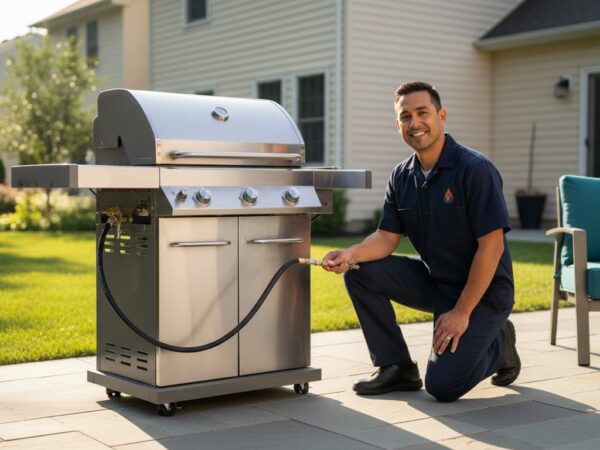
Did you know that New Jersey homeowners are currently paying $3.82 per gallon for propane, which is 43% higher than the national average? Every time your tank runs out in the middle of a family barbecue, you’re not just losing time; you’re dealing with an expensive and avoidable hassle. Investing in a professional gas line installation for outdoor grill Old Bridge projects eliminates the need for heavy tanks and provides a steady, cost-effective fuel source. It’s about more than just convenience. It’s about the security of knowing your home’s infrastructure is handled by a licensed expert who understands local safety standards.
You likely want a backyard setup that’s ready to perform whenever you are, without the nagging fear of gas leaks or code violations. We agree that your outdoor kitchen should be a place of relaxation, not a source of technical stress. This 2026 guide will teach you how to transition from portable tanks to a permanent natural gas connection while staying fully compliant with the New Jersey Uniform Construction Code. We’ll walk through the Old Bridge Township permit process, current material requirements, and how this upgrade boosts your property value for the long term.
Key Takeaways
- End the “propane run” forever by transitioning to a permanent utility connection that increases your home’s resale value and outdoor cooking convenience.
- Understand the technical requirements for a safe gas line installation for outdoor grill Old Bridge projects, including BTU load calculations and proper material selection.
- Compare the long-term savings of natural gas against New Jersey’s high propane prices to see how a permanent line pays for itself.
- Navigate the Old Bridge Township permit process and municipal inspection requirements to ensure your new gas piping is fully code-compliant.
- Learn why hiring a licensed NJ plumber with specialized gas infrastructure experience is the only way to guarantee a leak-free, secure backyard environment.
Why Upgrade to a Permanent Gas Line for Your Old Bridge Outdoor Kitchen?
You’ve likely been there before. The steak is seasoned, the guests are hungry, and suddenly the flame flickers out because your propane tank is empty. A permanent gas line installation for outdoor grill Old Bridge projects eliminates this frustration entirely. By connecting your grill directly to your home’s natural gas supply, you gain an endless fuel source that never quits mid-sear. This upgrade isn’t just about convenience; it’s about creating a professional-grade cooking environment that’s ready whenever you are.
Beyond the convenience of never swapping tanks, natural gas provides a more consistent fuel flow. Portable tanks often experience pressure drops as they run low or when temperatures dip, leading to uneven heat and poor searing performance. A dedicated utility line ensures a stable, high-BTU output for precision temperature control. When we design these piping systems for local backyards, we prioritize both performance and the long-term integrity of your home’s infrastructure.
The Limitations of Propane Tanks
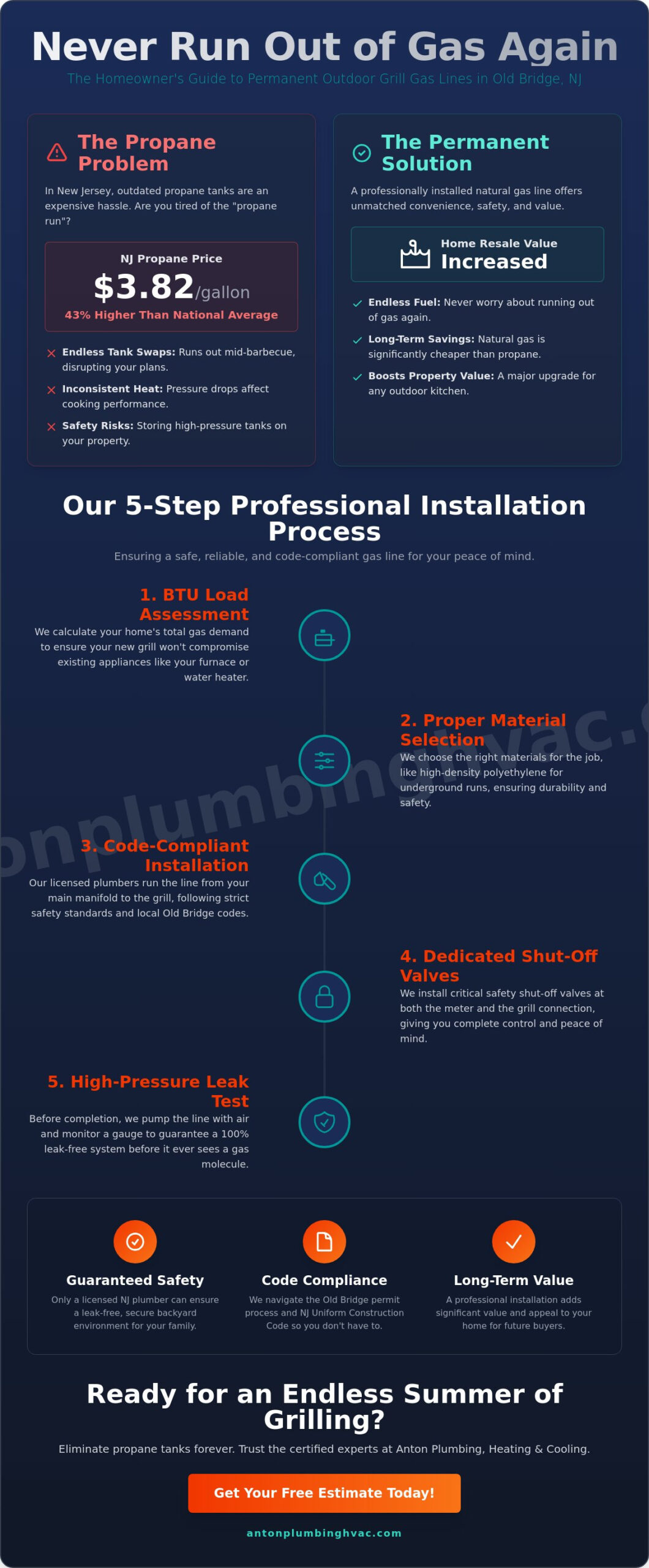
Propane is an expensive way to cook in New Jersey. With local residential prices sitting at $3.82 per gallon, you’re paying roughly 43% more than the national average. These costs add up quickly when you factor in exchange fees and the hidden “leftover” gas you lose when swapping a tank that isn’t quite empty. There’s also the safety factor to consider. Storing high-pressure tanks near your home carries inherent risks. A professionally installed, low-pressure natural gas line is a much safer alternative that removes the need for volatile fuel storage on your patio.
Natural Gas as a Value-Add for NJ Properties
In Middlesex County, outdoor living spaces are a major driver of property value. Homebuyers in Old Bridge look for “plug-and-play” backyards where they can entertain without technical hurdles. A permanent gas connection makes your outdoor kitchen a true extension of the home rather than a temporary setup. It also provides the foundation for future upgrades. Once the main line is in place, it’s much easier to integrate other high-end features like built-in fire pits, patio heaters, or even a secondary side burner. This infrastructure investment signals to future buyers that the home has been maintained to a high standard by professionals who value quality and safety.
The Technical Side: How Professionals Run Gas Lines to Your Backyard
Professional installation begins long before a shovel hits the dirt. To ensure a safe gas line installation for outdoor grill Old Bridge homeowners can rely on, we follow a rigorous five-step technical process. First, we assess your existing gas meter capacity. Every appliance in your home, from the furnace to the water heater, pulls from the same total BTU load. Adding a high-performance grill requires calculating the combined demand to ensure your indoor systems don’t lose fuel when you ignite the burners outside. We then select the proper piping material, typically using high-density polyethylene for underground runs or CSST for flexible indoor-to-outdoor transitions.
Execution follows a strict protocol to meet modern pipeline safety standards. Once the route is planned, we run the line from your main manifold to the outdoor station. This includes installing dedicated shut-off valves at both the meter and the grill connection. These valves act as a critical safety barrier, allowing you to isolate the outdoor line instantly if needed. Before any soil is moved back into place, we perform a high-pressure test. We pump the line with air and monitor a gauge for a specific duration; any drop in pressure indicates a microscopic leak that must be corrected before the system goes live.
Calculating BTU Load for High-End Grills
Your new 60,000 BTU grill might require a larger pipe diameter than a standard portable model. If the pipe is too narrow, the grill will starve for fuel, resulting in weak flames and poor searing. As pipe length increases, the friction inside the line naturally causes a drop in gas pressure delivery. We ensure your main meter has the “headroom” to support your outdoor kitchen without compromising the performance of your home’s heating system. If you’re concerned about your current capacity, reaching out for professional gas line installation and leak repair is the best way to verify your system’s limits.
Trenching and Protection: Protecting Your Landscaping
According to the NJ Fuel Gas Code, gas lines must be buried at a specific depth to protect them from accidental damage during gardening or landscaping projects. We use specialized equipment to create narrow trenches that minimize disruption to your lawn. Every underground line we install includes a tracer wire. This allows future utility locators to find the buried pipe using electromagnetic sensors, preventing dangerous “strikes” years down the road. Our goal is to leave your yard looking as if we were never there, with only a secure, code-compliant gas connection to show for the work.
Natural Gas vs. Propane: Comparing Cost, Convenience, and Performance
Choosing between natural gas and propane isn’t just about how you fuel your grill; it’s about the long-term efficiency of your outdoor living space. While propane is portable, it’s also the most expensive way to cook in Middlesex County. Natural gas is significantly cheaper per BTU than propane in New Jersey, often costing 55% to 65% less for the same energy output. Beyond the price tag, natural gas burns cleaner with fewer emissions, making it the preferred choice for eco-conscious homeowners who want to reduce their carbon footprint while enjoying a weekend cookout. A professional gas line installation for outdoor grill Old Bridge projects transforms a high-maintenance chore into a seamless utility.
Maintenance requirements also differ sharply between the two sources. Propane users must constantly monitor tank levels, check for expiration dates on cylinders, and transport heavy high-pressure tanks to exchange stations. A permanent natural gas line, when installed according to the National Fuel Gas Code, requires very little ongoing effort from the homeowner. Periodic professional inspections ensure the system remains sealed and safe, providing a level of security that portable tanks simply can’t match. If you already own a propane grill, don’t worry. Most high-end models are compatible with conversion kits that swap out orifices and regulators to accommodate the lower pressure of natural gas.
Fuel Cost Breakdown for Old Bridge Homeowners
The math is clear. While propane prices in our region remain volatile, natural gas offers a stable alternative that pays for itself over time. You’re currently paying for the transport time and the gas left at the bottom of the tank when you swap it out early to avoid running dry mid-meal. A permanent gas line installation for outdoor grill Old Bridge residents offers a rapid return on investment. By tapping into your home’s existing supply, you lock in lower utility rates and eliminate exchange fees forever. This transition effectively turns a variable monthly expense into a fixed, manageable part of your home’s utility profile.
Performance and Reliability
Reliability is where natural gas truly shines during the fluctuating New Jersey seasons. Propane tanks can “freeze up” or lose pressure on chilly spring or autumn nights because the liquid fuel struggles to vaporize in the cold. Natural gas remains stable regardless of the temperature, ensuring your grill hits searing heat every time. This continuous supply is a game-changer for enthusiasts who enjoy long, slow smoking sessions that last eight hours or more. You’ll never have to worry about the flame dying at 3:00 AM. For safety, we install dedicated house-side shut-offs that are far more robust and accessible than the small valves found on portable cylinders.
Navigating Old Bridge Permits and Safety Standards for Gas Piping
Safety is the primary focus of every gas line installation for outdoor grill Old Bridge project. While skipping the paperwork might seem like a way to save time, a plumbing permit is a legal requirement under the Old Bridge Township Code. The minimum fee for a plumbing subcode permit is $75, with an additional $35 fee per gas piping unit. These regulations protect your home and your investment. If unpermitted gas work leads to a failure, your homeowner’s insurance provider can deny the resulting claim. A professional installation ensures that every connection meets the strict New Jersey Uniform Construction Code standards.
The municipal inspector provides a vital second look at your project to verify that the system is completely airtight. They check trench depth and ensure all materials are approved for outdoor use. This inspection serves as your final guarantee of safety. By following established gas line installation and leak repair protocols, Anton Plumbing Heating & Cooling ensures your system passes these checks without delay. We treat your home with the same care we would our own, prioritizing domestic well-being through rigid code adherence.
The Permit Process in Middlesex County
Filing paperwork with the Old Bridge Township Building Department is often a complex task for homeowners. A clean permit application typically takes two to three weeks to process from the initial submission to the final review. This timeline includes the technical drawing assessment and the scheduling of the final inspection once the work is complete. To provide immediate relief for our clients, Anton Plumbing Heating & Cooling handles all the permit logistics. We prepare the necessary documentation and coordinate with town officials so you don’t have to navigate the bureaucracy alone.
Mandatory Safety Features for Outdoor Lines
Modern safety standards require specific technical safeguards to ensure your outdoor kitchen is code-compliant. These features are designed to prevent common failures and environmental hazards:
- Sediment Traps: These are installed to prevent debris and moisture from entering the sensitive valves of your grill.
- Weather-Proof Shut-Offs: A dedicated, accessible valve must be located near the appliance for instant emergency isolation.
- Clearance Distances: The NJ Fuel Gas Code dictates strict distances between gas connections and home openings like windows or doors to prevent fumes from entering your living space.
Once the installation is finished, we provide a final pressure test certificate for your records. Keep this document safe; it serves as proof of professional, code-compliant work for future property appraisals or insurance renewals.
Trust Anton Plumbing Heating & Cooling for Certified Gas Line Installation in Old Bridge
For over 28 years, Anton Plumbing Heating & Cooling has served as a reliable home maintenance partner for families across the Old Bridge and East Brunswick communities. A gas line installation for outdoor grill Old Bridge project requires a level of technical precision that only a seasoned veteran can provide. We position ourselves as Protective Experts, meaning we don’t just connect pipes; we act as guardians of your household’s safety. Our team manages every detail of the process, from the initial meter load evaluation to the final, high-pressure test at the grill station. We focus on creating a secure environment so you can focus on enjoying your backyard.
Our service model is built on technical confidence and neighborly professionalism. We understand that utility projects can feel stressful, so we provide clear financial expectations and transparent project timelines to eliminate friction. By using advanced diagnostic technology, we verify the integrity of every seal before the system goes live. This commitment to accuracy distinguishes Anton Plumbing Heating & Cooling from traditional providers. We prioritize your family’s domestic well-being, ensuring that your new outdoor utility connection is a source of long-term value rather than a technical complication.
Why a Licensed Plumber is Essential for Gas Work
There’s a significant legal and safety gap between a general contractor and a licensed NJ Master Plumber. Anton Plumbing Heating & Cooling strictly adheres to New Jersey state plumbing and HVACR licensing standards, ensuring that every technician on your property possesses the necessary professional credentials. While a handyman might offer a quick fix, they often lack the specialized equipment required to meet modern safety codes. For added security, our clients also benefit from our specialized Emergency Plumber Old Bridge NJ services, providing a 24/7 safety net for your home’s critical infrastructure.
Ready to Upgrade Your Backyard?
Scheduling a site assessment is the first step toward a more convenient and valuable outdoor living space. We’ll evaluate your current gas infrastructure and provide a straightforward roadmap for your extension. Our process is brisk and efficient, designed to get your outdoor kitchen operational without unnecessary delays. We value clarity in every interaction, ensuring you understand the technical requirements and the timeline for completion. When you’re ready to secure a professional gas line installation for outdoor grill Old Bridge homeowners can depend on, Contact Anton Plumbing Heating & Cooling for your gas line installation estimate. Let us provide the expert guidance and ethical service your home deserves.
Elevate Your Outdoor Hosting Experience
Transitioning to a permanent utility connection is a one-time investment that pays dividends in both convenience and home value. By opting for a professional gas line installation for outdoor grill Old Bridge project, you eliminate the high costs and safety risks associated with portable propane tanks. You’ve seen how critical proper BTU calculations and municipal permits are for a secure, code-compliant setup. It’s time to stop worrying about empty tanks and start enjoying a seamless, high-performance outdoor kitchen that’s ready whenever you are.
Anton Plumbing Heating & Cooling brings over 28 years of local experience to every backyard. As a licensed NJ Master Plumber, we prioritize your family’s safety with rigorous testing and ethical standards. We also provide 24/7 emergency support to ensure your home remains protected long after the installation is complete. Schedule Your Old Bridge Gas Line Consultation Today and take the first step toward a safer, more efficient home. We’re ready to help you build the backyard of your dreams with the technical excellence and integrity your property deserves.
Frequently Asked Questions
Do I need a permit for a gas line installation for a grill in Old Bridge?
Yes, you must obtain a plumbing subcode permit from the Old Bridge Township Building Department for any new gas line project. This requirement ensures that the installation complies with the New Jersey Uniform Construction Code. Once the work is complete, a municipal inspector must visit your property to verify that the connection is airtight and safe for regular use.
Can I run a gas line to my grill myself?
No, you should never attempt to install a gas line yourself because it requires a licensed NJ plumber to meet legal and safety standards. DIY gas work is a violation of local codes and can lead to dangerous leaks or house fires. A professional gas line installation for outdoor grill Old Bridge project ensures that the work is bonded, insured, and performed with the correct technical precision.
How much does it cost to run a gas line for an outdoor grill?
The total investment depends on the distance from your gas meter to the grill, the complexity of the trenching required, and the BTU load of your appliance. Local permit fees and the choice of piping materials also influence the final amount. We provide transparent, detailed estimates after a site assessment so you understand the technical requirements of your specific backyard layout.
Can any grill be converted from propane to natural gas?
Most high-quality grills are capable of being converted, but you must use a manufacturer-approved conversion kit. This process involves swapping out the burner orifices and the pressure regulator to accommodate the lower pressure of natural gas. Always check your grill’s rating plate to confirm it’s compatible with a natural gas transition before scheduling your installation.
How deep does a gas line need to be buried in NJ?
According to the NJ Fuel Gas Code, underground gas lines must typically be buried at a depth of 12 to 18 inches depending on the specific installation environment. This depth protects the piping from accidental strikes during future landscaping or gardening projects. We always install a tracer wire alongside the pipe to help utility locators find the line in the future.
Will a new gas line for my grill affect my indoor gas appliances?
A new line won’t affect your indoor furnace or water heater if the system is designed with a proper BTU load calculation. We evaluate your home’s total gas demand before the gas line installation for outdoor grill Old Bridge begins to ensure the meter provides enough volume for every appliance. If your current meter is undersized for the new demand, we’ll coordinate the necessary steps for a utility upgrade.
How long does the installation process typically take?
The physical work of trenching and piping usually takes one to two days to complete. However, the total project timeline is often dictated by the Old Bridge Township permit process, which generally takes two to three weeks for approval. We handle the logistics of the application and the final inspection to make the transition as smooth as possible for you.
What should I do if I smell gas near my outdoor grill?
If you detect a sulfur-like odor, immediately shut off the main gas supply and move a safe distance away from the area. Don’t use your phone, light matches, or operate any electrical switches near the smell. Once you’re safe, contact a professional for emergency leak repair to use advanced diagnostic tools and secure the connection before you use the system again.


