
Imagine it is 2:00 AM on a freezing night and your sleep is suddenly interrupted by a sound like a bubbling cauldron coming from your walls. You immediately worry that a total breakdown is imminent, potentially leaving your family in the cold during the peak of winter. It is incredibly stressful to deal with uneven heating or a boiler making gurgling noise when you simply want a safe, quiet home.
We understand that your boiler is the guardian of your household’s comfort. We will help you identify the exact cause of these distractions so you can restore efficient heating and domestic security. You deserve to feel confident that your system is running safely and effectively without the fear of a sudden utility failure.
This guide provides clear, actionable steps to move from a noisy crisis to a silent, high-performing heating system. You will learn how to troubleshoot common issues like trapped air or frozen condensate pipes and understand exactly when it is time to call in a seasoned expert for a professional diagnostic. Let’s get your home back to the peaceful, warm environment your family deserves.
Key Takeaways
- Identify whether a boiler making gurgling noise stems from trapped air, a frozen condensate pipe, or low system pressure.
- Master the simple steps to safely bleed your radiators and adjust system pressure to restore immediate quiet to your home.
- Learn to distinguish between normal operational hums and “distress” noises that signal a need for professional intervention.
- Understand how annual maintenance and system flushing prevent the sludge buildup that leads to inefficient heating and “kettling.”
- Gain the confidence to decide when a DIY fix is appropriate and when advanced diagnostic technology is required to protect your household.
Understanding Why Your Boiler Is Making Gurgling Noises
A quiet home is a comfortable home. When you hear your boiler making gurgling noise, it’s natural to feel a sense of unease. These sounds are essentially a physical symptom of air bubbles or restricted water flow moving through your heating infrastructure. To understand why this happens, you should first have a basic grasp of What is a Boiler? and how it functions as the heart of your household’s warmth. While a steady, low-level hum indicates a healthy system, rhythmic bubbling or splashing sounds are “distress” signals that require your attention.
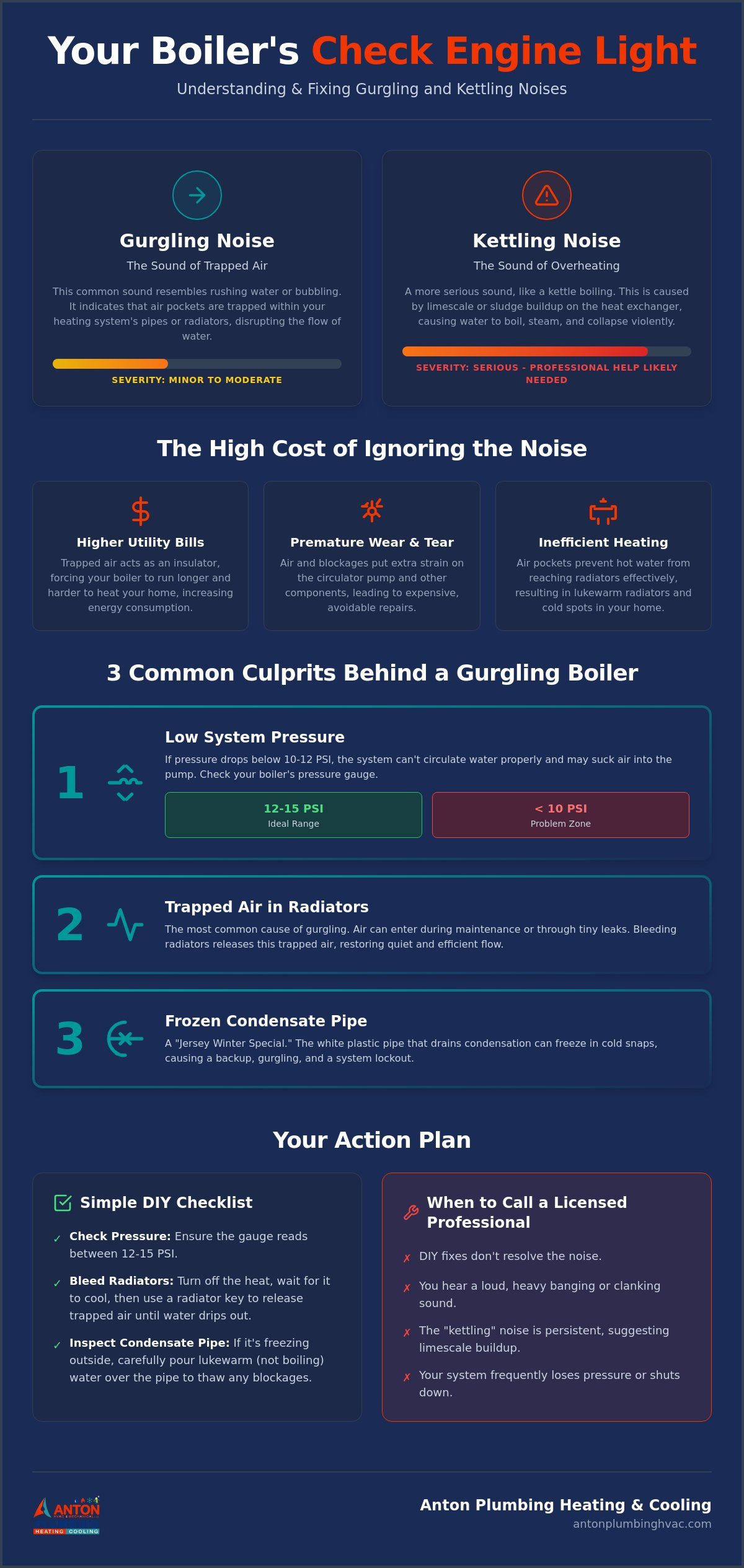
Most gurgling issues stem from three primary culprits: trapped air, frozen condensate pipes, or a drop in system pressure. We want to reassure you that hearing these noises doesn’t automatically mean you’re facing a total system replacement. In many cases, the noise is a request for a simple adjustment. By identifying the specific sound and its location, you can often resolve the issue before it turns into a mid-winter emergency. Think of these sounds as your boiler’s way of communicating that its internal balance is slightly off.
Is a Gurgling Boiler Dangerous?
Strange noises in the middle of the night can be frightening, but a gurgling boiler is rarely an immediate safety hazard or explosion risk. It is, however, a clear warning of inefficiency. If you ignore these air pockets, your circulator pump may eventually run dry, which leads to expensive mechanical failure. A more pressing concern is a phenomenon called “kettling.” This occurs when trapped air or mineral deposits cause water to overheat and turn into steam within the unit. This localized pressure can eventually crack your heat exchanger, turning a simple nuisance into a significant repair. For those considering an upgrade, WellPlumbed and their expertise in boiler installation bognor regis offer an example of the precision required for a safe, silent heating system. Addressing the noise early protects your domestic well-being and your wallet.
The Anatomy of a Hydronic Heating System
Most NJ homes rely on hydronic heating, where a closed loop of water carries thermal energy from the boiler to your radiators. A circulator pump acts as the heart, pushing water through the pipes, while an expansion tank manages the pressure changes as the water temperature rises. Even in a sealed system, air can find its way in through tiny leaks or during routine service. Once air enters the loop, it hitches a ride with the water. This creates that distinct boiler making gurgling noise as the air pockets move through narrow valves or the heat exchanger. Understanding this flow is the first step toward restoring a quiet, efficient home for your family.
The 3 Main Causes of Boiler Gurgling Sounds
Identifying the source of a boiler making gurgling noise is the first step toward a quiet home. While these sounds can be alarming, they usually point to one of three mechanical imbalances. Whether it is air trapped in the lines or a weather-related blockage, understanding the “why” allows you to take swift action. For a deeper dive into diagnostic sounds, you can find boiler noises explained in professional detail. Most gurgling stems from simple physics, but ignoring these signs can lead to unnecessary wear on your system.
Trapped Air: The Most Common Culprit
Air is the natural enemy of a silent hydronic system. When air pockets form in your radiators or the heat exchanger, they create a distinct rushing or bubbling sound as water tries to push past them. You will often notice that the top of your radiator remains cold while the bottom is hot. This issue is particularly frequent in the autumn. After your system has sat idle all summer, air often settles in the high points of the loop. This creates the classic boiler making gurgling noise that many homeowners hear during the first cold night of the year.
Frozen Condensate Pipes in NJ Winters
New Jersey winters present a unique challenge for high-efficiency boilers. A condensate pipe is a plastic tube that carries acidic wastewater from a high-efficiency boiler to a drain outside the home. During a deep freeze, this external pipe can ice over quickly. When the exit is blocked, water backs up into the unit. This creates a loud gurgling sound as the boiler struggles to drain its internal reservoir. If your system stops during a cold snap, check the white PVC pipe exiting your house for ice. If you suspect a blockage, reaching out for professional boiler repair and installation can prevent a total system lockout.
Low System Pressure and Pump Cavitation
Your boiler relies on specific pressure levels to keep water moving smoothly. If the pressure drops too low, the circulator pump may begin to suck in air, a process known as cavitation. This creates a grinding or gurgling noise that sounds like gravel in a blender. Low pressure often happens because of a slow leak or a failing expansion tank. The expansion tank is responsible for absorbing the pressure changes that occur as water heats up. Without it, the system cannot maintain the steady environment required for silent operation. Maintaining the correct PSI is vital for your pump’s longevity.
Finally, limescale buildup on the heat exchanger can cause a phenomenon called “kettling.” This sounds like a tea kettle whistling or bubbling aggressively. Mineral deposits trap water against the hot metal, causing it to boil instantly and create steam bubbles. While this is more common in areas with hard water, it remains a significant cause of distress noises in aging systems. Addressing these deposits early ensures your heat exchanger remains intact and efficient throughout the season.
DIY Troubleshooting: How to Stop the Gurgling
Facing a boiler making gurgling noise can feel like a high-stakes puzzle, but many causes have straightforward solutions. You don’t always need a tool belt to restore peace to your home. Before you begin, take a deep breath and remember that safety is your absolute priority. By following a systematic approach, you can eliminate common air pockets and minor blockages that disrupt your system’s efficiency. These steps empower you to manage your home’s infrastructure while recognizing exactly when professional expertise is required.
Step-by-Step: Bleeding Your Radiators
If your radiators are cold at the top and making bubbling sounds, they likely contain trapped air. Follow these steps to clear the lines:
- Turn off your heating: Switch off the system and wait for the radiators to cool completely. This prevents the pump from introducing more air and protects you from hot water.
- Locate the valve: Find the small valve at the top end of the radiator. Insert your radiator key or a flat-head screwdriver.
- Listen for the hiss: Slowly turn the key counter-clockwise. You will hear a distinct hissing sound as air escapes.
- Close the valve: Once water begins to trickle out, tighten the valve immediately.
Check your boiler’s pressure gauge immediately after bleeding every radiator. Releasing air often causes the system pressure to drop. If the needle falls below the recommended level (usually 1.0 to 1.5 bar), you must top it up using the filling loop to prevent further noise or a system lockout.
Thawing Your Condensate Pipe Safely
During New Jersey cold snaps, a frozen condensate pipe is a frequent culprit behind a boiler making gurgling noise. You can often resolve this without a service call. Locate the white PVC pipe exiting your home and look for ice at the outlet. Use a warm compress or a hot water bottle wrapped in a towel to gently thaw the pipe. Never use boiling water, as the extreme temperature shift can crack the plastic. Avoid using open flames or heat guns. Once the ice melts and the water drains, perform a system reset to see if the gurgling subsides.
When to Stop and Call a Licensed Plumber
While DIY fixes are helpful, some symptoms indicate deeper mechanical or safety issues. Stop immediately if you notice water leaking from the boiler casing, smell gas, or see an “ignition failure” error code. These signs point to internal failures that require specialized diagnostic equipment. Attempting to repair gas lines or internal heat exchangers yourself can void your manufacturer’s warranty and compromise your family’s safety. For sudden failures that leave you without heat, contacting an emergency plumber in Old Bridge NJ is the most reliable way to secure your home. A seasoned expert can find the root cause quickly, ensuring your system remains a dependable guardian of your household comfort.
Preventing Boiler Noises with Regular Maintenance
Proactive care is the most effective way to silence a boiler making gurgling noise before the temperature drops. Waiting for a breakdown during a New Jersey freeze is a recipe for stress and high repair costs. Regular maintenance ensures that every component functions in harmony, preventing the imbalances that lead to air pockets and vibrations. By scheduling a professional assessment, you protect your domestic well-being and ensure your system remains a reliable source of heat for your family. For those interested in the rigorous standards of high-quality maintenance, nbsplumbingheating.co.uk provides an excellent overview of what a professional service entails. A well-maintained system doesn’t just run quieter; it operates with peak efficiency, saving you money on monthly utility bills.
The Value of a Professional Boiler Tune-Up
A comprehensive inspection goes far beyond a simple surface cleaning. During a tune-up, a technician examines burner health, inspects the heat exchanger for signs of fatigue, and tests all safety valves. These components are critical for preventing the “distress” noises we discussed earlier. Many industry veterans report that consistent annual maintenance can extend the operational life of your boiler by 5 to 10 years. If you are looking for a reliable partner to safeguard your home, consider booking HVAC repair in East Brunswick to get your system winter-ready.
Upgrading Your System Protection
Modern technology offers several layers of defense against internal corrosion and debris. Over time, water reacts with the metal in your radiators to create “sludge,” a black iron oxide that settles in the system. This sludge often causes kettling noises by restricting flow. Performing a system flush removes this buildup, but installing a magnetic sludge filter provides a permanent solution. These filters catch metallic debris before it can reach the boiler’s delicate internal parts. This is a must-have upgrade for older radiator systems common throughout New Jersey. Additionally, adding chemical inhibitors to the water prevents new corrosion and limits the formation of gas bubbles that lead to a boiler making gurgling noise.
Don’t overlook the expansion tank during your seasonal checks. This tank manages the pressure swings that occur as water heats and cools. If the internal pre-charge is incorrect, the pressure gauge will fluctuate wildly, often leading to air being sucked into the system. A technician can quickly verify the tank’s health and recharge it if necessary. If you want to ensure your home stays warm and quiet all season long, schedule your boiler repair and installation service today to address these preventative measures before they become emergencies.
Expert Boiler Repair and Diagnostics in Old Bridge
When a boiler making gurgling noise persists despite your best DIY efforts, you need a partner who understands the high stakes of home heating. Anton Plumbing brings over 28 years of industry tenure to every doorstep in Old Bridge. We don’t rely on guesswork. Our team utilizes advanced diagnostic technology to locate hidden leaks and internal blockages with surgical precision. This commitment to high-tech accuracy ensures that we identify the root cause of your system’s distress quickly, preventing further damage to your home’s infrastructure.
We believe in transparent, ethical service for all local families. You deserve clear financial expectations before any work begins, which is why we offer straightforward communication regarding all repair needs. Whether you are facing a minor air pocket or a complex mechanical failure, our goal is to provide immediate relief and long-term security. Our seasoned professionals are available for 24/7 emergency heating repairs because we know that utility failures don’t wait for business hours. We act as a guardian for your household, ensuring your family stays warm when the temperature drops.
Why Local NJ Expertise Matters
Old Bridge and the surrounding Middlesex County areas have unique home heating challenges. Local water conditions often contribute to specific mineral scaling issues that can lead to a boiler making gurgling noise in older systems. We have spent nearly three decades mastering the specific boiler brands and piping configurations found in our community’s historic and modern homes alike. This deep-rooted heritage allows us to provide fast response times for boiler repair and installation. We aren’t just a mechanical service provider; we are your neighbors, committed to the safety and comfort of the local families we serve.
Schedule Your Boiler Inspection Today
Don’t let a small gurgle turn into a total system failure during the peak of winter. Addressing these sounds now is the most effective way to protect your domestic well-being and avoid the high costs of emergency replacements. Our licensed and insured experts are ready to restore quiet and efficiency to your home with no-nonsense, professional service. Secure your household’s warmth and gain the confidence that your heating system is in expert hands. Contact Anton Plumbing Heating & Cooling today for the immediate relief and dependable expertise your family deserves.
Secure Your Home’s Warmth and Silence
Your home should be a sanctuary of comfort and quiet. A boiler making gurgling noise is more than just a nuisance; it’s a message from the heart of your home’s infrastructure that something is out of balance. Whether the culprit is trapped air, a frozen condensate pipe, or low system pressure, taking action now prevents a small sound from turning into a mid-winter crisis. By mastering simple DIY checks and prioritizing annual maintenance, you ensure your heating system remains a reliable guardian of your family’s well-being.
When troubleshooting isn’t enough, rely on the seasoned veterans who have served the Old Bridge community for over 28 years. Our licensed and insured professionals utilize advanced diagnostic tools to restore your peace of mind quickly and efficiently. With 24/7 emergency service available, you’re never alone when facing a utility failure. Take the first step toward a silent, high-performing heating system today.
Stop the noise and restore your heat—Schedule your expert boiler repair today!
You now have the knowledge to address these sounds with confidence. Let’s get your home back to the warm, peaceful environment your family deserves.
Frequently Asked Questions
Is it normal for a boiler to make a gurgling sound?
No, a gurgling sound is not part of normal operation and usually indicates an imbalance within your heating system. While a steady, low-level hum is expected, gurgling suggests air bubbles or restricted water flow are present. You should investigate these sounds promptly to prevent minor issues from escalating into mechanical failures or inefficient heating during the winter months.
How do I know if my boiler has air in it?
You can tell air is present if your radiators are cold at the top while remaining warm at the bottom. This temperature difference occurs because air pockets block hot water from filling the entire radiator unit. If you hear a rushing or splashing sound similar to a boiler making gurgling noise, it is a clear sign that air has entered your closed-loop system.
Can low water pressure cause my boiler to gurgle?
Yes, low water pressure frequently leads to gurgling sounds because it allows air to enter the pump or pipes. When pressure drops below the recommended level, usually 1.0 to 1.5 bar, the circulator pump may struggle to move water efficiently. This struggle creates cavitation, which sounds like a mix of grinding and bubbling as the pump pulls in air instead of water.
What should I do if my condensate pipe is frozen?
You should gently thaw the pipe using a warm compress or a hot water bottle wrapped in a towel. Locate the white PVC pipe exiting your house and check for ice blockages at the outlet. Never use boiling water or open flames, as these can damage the plastic. Once the ice melts and the water drains, reset your boiler to restore normal operation.
Will bleeding my radiators stop the boiler from gurgling?
Bleeding your radiators is often the most effective way to stop a boiler making gurgling noise caused by trapped air. This process releases the air pockets that disrupt water flow and create bubbling sounds throughout your home. Remember to check your pressure gauge after bleeding all radiators, as you may need to top up the system to maintain the correct PSI.
How much does it cost to fix a gurgling boiler in NJ?
The cost to resolve a gurgling noise depends on the root cause, but hourly labor rates for boiler repair in New Jersey typically range from $85 to $125. Simple fixes like bleeding radiators or thawing a pipe are often covered within a standard service call fee. More complex issues involving pump replacement or system flushing will involve additional costs for specialized parts and extended labor.
Is a gurgling boiler a sign that I need a new one?
A gurgling sound rarely means you need a total system replacement, especially if the issue is caught early. Most causes are related to air, pressure, or minor blockages that a professional can resolve during a routine service visit. However, if the noise is caused by a cracked heat exchanger or severe internal corrosion, a technician may recommend a new high-efficiency installation to ensure your home’s safety.
Can I fix a gurgling boiler myself or do I need a plumber?
You can often handle simple tasks like bleeding radiators or thawing an external condensate pipe yourself. These DIY steps are safe for homeowners and frequently resolve the noise without professional help. If the gurgling persists after these attempts, or if you notice water leaks and error codes, you must call a licensed professional to protect your system’s warranty and your family’s safety.


