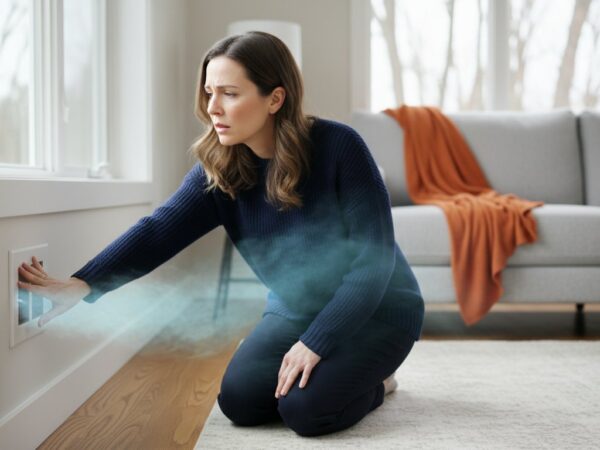
That sudden blast of icy wind isn’t coming from a drafty window; it’s coming directly from your vents. When you’re facing a furnace blowing cold air in Old Bridge, your home’s comfort and safety are immediately at stake. We understand the sinking feeling that comes with a failing heater, especially when you’re worried about expensive parts or potential safety risks. You deserve a warm home and the peace of mind that your system is operating correctly. It’s stressful to deal with utility failures, but most issues have a straightforward, professional answer.
This guide will help you troubleshoot the issue, showing you how to distinguish between a simple thermostat setting and a mechanical failure. You’ll learn which DIY steps are safe to take and when it’s critical to call a local expert to save your heat exchanger from permanent damage. We’ll also explain how the 2026 New Jersey Whole Home Energy Efficiency Program can provide up to $7,500 in incentives if your system needs a modern upgrade. By the end of this article, you’ll have a clear path to restoring your heat and protecting your family’s well-being.
Key Takeaways
- Identify if the cool air is a normal part of the furnace warm-up cycle or a sign of a mechanical blower motor delay.
- Discover why a restricted air filter is the leading cause for a furnace blowing cold air in Old Bridge and how to resolve it safely.
- Understand the critical role of ignitors and flame sensors in maintaining a steady, reliable flow of heat.
- Learn to recognize when cold air signals a safety crisis, such as a cracked heat exchanger, and requires immediate intervention.
- Find out how professional diagnostics and local expertise can restore your home’s comfort and protect your household’s well-being.
Why Your Furnace Is Blowing Cold Air in Old Bridge
When the winter wind whips off the Raritan Bay, your home’s furnace is the only thing standing between your family and the freezing Middlesex County air. Discovering your furnace blowing cold air in Old Bridge can feel like a domestic emergency. We know the stress that comes with a potential utility failure, but don’t panic just yet. Often, what feels like a broken heater is actually a protective delay or a simple setting adjustment. To keep your household secure, you first need to understand how a furnace works during its initial ignition sequence. There is a distinct difference between “cool” air, which is simply unheated air moving through the system, and “cold” air, which indicates a complete failure of the burner assembly.
The Initial Warm-Up Phase and Duct Residuals
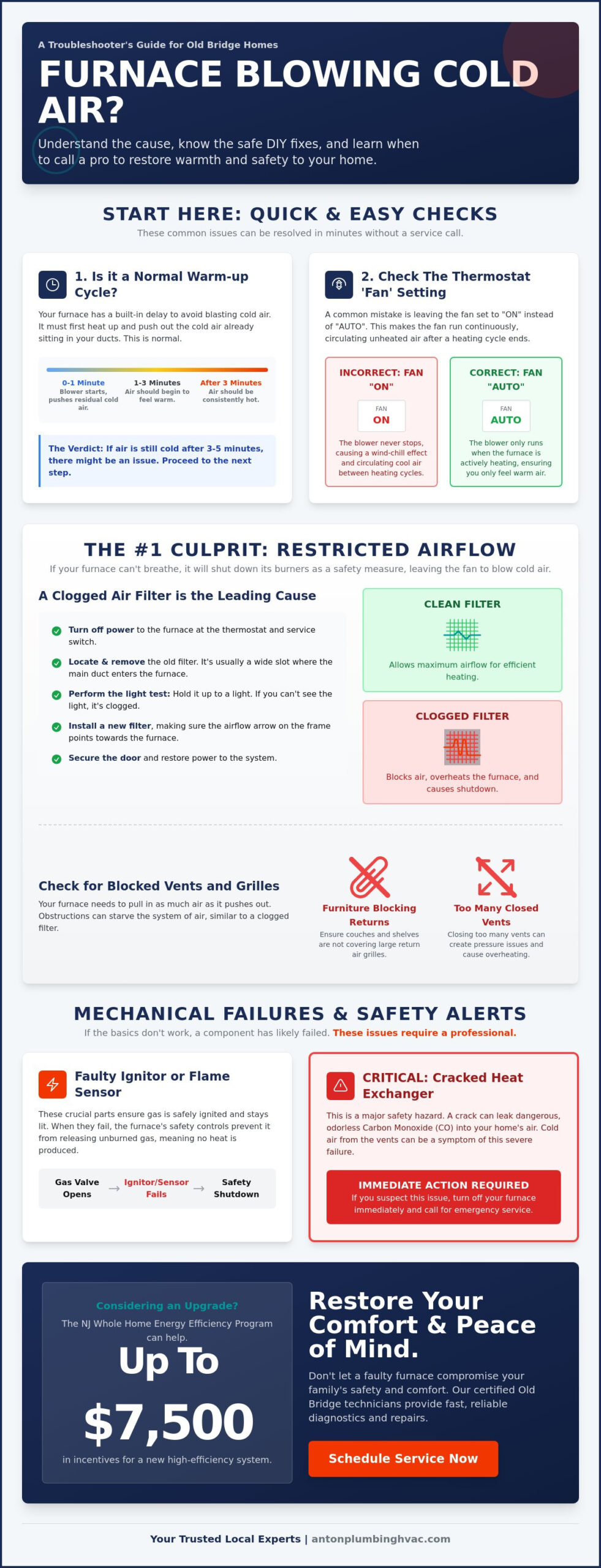
Gas furnaces utilize a specific blower motor delay to protect the heat exchanger and prevent a blast of cold air from circulating through the house. However, this delay isn’t always perfect. If your ductwork runs through an uninsulated New Jersey basement, the air trapped inside those pipes is significantly colder than the air in your living room. When the furnace starts, it must push out all that residual cold air before the heated air can reach your vents. This transition usually takes between one and three minutes. If the air remains cold beyond this window, the system’s internal safety switches may have tripped to prevent a more serious malfunction. During Middlesex County winter peaks, this three-minute wait can feel like an eternity, but it is often just the system finding its rhythm.
Thermostat Settings: The “Fan On” vs. “Auto” Trap
Always verify your thermostat settings as your first troubleshooting step. Many homeowners accidentally toggle the fan switch from “Auto” to “On” while cleaning or adjusting the temperature. When set to “On,” the fan blows constantly. This means that once the heating cycle ends, the blower continues to push room-temperature air through your home. Because moving air creates a wind-chill effect on your skin, it feels like the furnace is failing. Switching back to “Auto” ensures the blower only operates when the heat exchanger is actually hot. This simple check can save you the stress of an unnecessary service call and immediately restore your sense of security. If your furnace blowing cold air in Old Bridge persists after you’ve confirmed the “Auto” setting, it’s time to look at the mechanical components like the air filter or the ignition system.
Troubleshooting Common Airflow and Filter Issues
Airflow is the lifeblood of your heating system. If your furnace blowing cold air in Old Bridge persists, the most likely culprit is a simple lack of air. When a furnace can’t breathe, it enters a protective state called short cycling. The burners ignite, the system overheats rapidly because of restricted flow, and the safety controls shut down the fire while the blower continues to run. This results in cold air circulating through your home as the unit tries to cool itself down. It’s a frustrating cycle, but it’s often preventable with basic maintenance.
A dirty air filter is the number one cause of preventable service calls in Middlesex County. In Old Bridge, our homes face a double threat: heavy pet dander from indoor winter months and high seasonal allergen counts that settle in the ductwork. Over time, these particles form a thick mat on your filter, choking the heat exchanger. Beyond the discomfort of a cold house, a clogged filter forces your system to work harder, which can lead to a trip of the high-limit switch. Think of the high-limit switch as a safety thermostat. It’s designed to kill the gas valve if internal temperatures exceed safe operating limits. Proper furnace maintenance and safety starts with keeping this path clear.
The Consequences of a Clogged Air Filter
If you suspect your filter is the issue, follow this 5-step checklist to restore airflow:
- Turn off the power to your furnace at the thermostat or the service switch.
- Locate the filter cabinet, typically found where the return duct meets the main unit.
- Slide out the old filter and hold it up to a light. If you can’t see light through the fibers, it’s blocked.
- Install a new filter, ensuring the arrow on the frame points toward the furnace.
- Secure the cabinet door tightly and restore power to the system.
Blocked Vents and Return Grilles
Your furnace needs to pull as much air in as it pushes out. Check your living spaces to ensure heavy curtains or large furniture aren’t blocking return grilles. Homeowners often close registers in unused rooms to save energy, but closing too many vents can actually cause the system to overheat and shut down. For residents with high-efficiency units, check the external intake and exhaust pipes on the side of your house. Snow, ice, or even local debris can block these pipes, causing the system to blow cold air as a safety precaution. If you’ve cleared these basics and still feel a chill, a professional furnace repair and installation expert can diagnose the deeper mechanical cause.
Mechanical Culprits: Ignitors and Flame Sensors
If your filters are clean but you still have a furnace blowing cold air in Old Bridge, the problem likely lies within the internal ignition sequence. Modern high-efficiency furnaces follow a strict, automated protocol before they allow heat to enter your home. The process begins with the inducer motor clearing the exhaust. Next, you should hear a faint clicking sound followed by a warm orange glow from the Hot Surface Ignitor (HSI). If this sequence fails to complete, the system will circulate unheated air as a safety measure. In many New Jersey households, HSIs have a life expectancy of three to five years. These components are incredibly fragile; even the microscopic oils from a person’s skin can cause them to crack and fail prematurely.
Understanding these sounds is vital for your home’s domestic well-being. A healthy furnace has a rhythmic, predictable startup. If you hear the blower motor running but never hear the “whoosh” of the burners igniting, your ignitor has likely reached the end of its service life. This is a common mechanical failure that requires a precise, professional answer to ensure the unit remains safe to operate throughout the winter.
Dirty Flame Sensors and Ignition Failure
A dirty flame sensor is a frequent cause of a furnace that starts for five to ten seconds and then quits. This small metal rod acts as a guardian, detecting the presence of fire. Over time, carbon buildup from the combustion process coats the sensor rod, blocking the electrical signal to the control board. When the board doesn’t receive “flame confirmation,” it immediately closes the gas valve to prevent a dangerous buildup of unburned fuel. While some sources suggest using abrasive materials like steel wool to clean the sensor, we advise against this. Modern sensors are precise instruments. Improper cleaning can lead to permanent damage or recurring failures that leave you back in the cold.
Pilot Light Issues in Older Middlesex County Homes
Many established neighborhoods in Old Bridge still rely on older furnaces or boilers with standing pilot lights. These systems use a thermocouple to detect the constant flame. If a draft from a poorly sealed basement window blows out the pilot, or if the thermocouple itself wears out, your system will circulate cold air without ever igniting. If you attempt to relight the pilot and it won’t stay lit, the thermocouple likely needs replacement. Most importantly, if you ever smell a “rotten egg” odor near the unit, do not attempt any repairs. Evacuate the area and call for professional assistance to check for a leak. Protecting your family is the highest priority when dealing with gas-fired equipment.
When Cold Air Signals a Safety or Capacity Crisis
When you encounter a furnace blowing cold air in Old Bridge, your first thought is likely about the cost of repairs. However, the most critical question you should ask is whether your system is safe to operate. Cold air is often a protective symptom. While a simple thermostat error or a dirty filter can cause a chill, certain mechanical failures represent a genuine safety crisis for your household. New Jersey weather extremes, ranging from humid summers to sub-zero winter snaps, place immense stress on aging heating systems. Over time, this constant expansion and contraction of metal components can lead to structural failures that compromise your domestic well-being.
Cracked Heat Exchangers and Carbon Monoxide
A cracked heat exchanger is one of the most serious reasons for unheated air. This component is responsible for keeping the toxic byproducts of combustion, such as carbon monoxide (CO), separate from the air circulating through your vents. When a crack develops, the pressure balance within the unit shifts. This often allows cold air to bypass the combustion chamber entirely, or worse, it allows flame rollout to occur. Because carbon monoxide is odorless and colorless, a functioning CO detector is a non-negotiable safety tool for every Middlesex County home. If you notice a strange chemical smell or see soot inside the furnace cabinet, shut the unit down immediately. A cracked exchanger cannot be “patched” safely. It requires a professional solution to ensure your family is protected from the silent threat of gas leaks.
Frozen Condensate Lines and Drainage Issues
High-efficiency furnaces, specifically those with an AFUE rating of 90% or higher, produce water as a byproduct of the heating process. This water must drain out of the system through a PVC condensate line. During severe New Jersey freezes, these external drain lines can become blocked by ice. When the water has nowhere to go, it backs up into the furnace. Modern systems utilize a sensitive pressure switch that detects this blockage and kills the burners to prevent electrical shorts or water damage. You might notice water pooling around the base of your unit or hear a gurgling sound before the air turns cold. Check your external PVC pipes for ice buildup, but do not attempt to dismantle internal drainage traps yourself. If your system has locked out due to a drainage failure, contact us for an emergency furnace repair and installation to restore your heat and protect your home’s infrastructure.
Professional Furnace Repair Services in Old Bridge, NJ
When you’re dealing with a furnace blowing cold air in Old Bridge, you don’t just need a technician; you need a guardian for your household. Anton Plumbing Heating & Cooling has served as that trusted partner for over 28 years. We specialize in the specific heating brands and infrastructure common across Middlesex County. Our team brings the calm, steady professionalism required to handle high-stakes utility failures during the peak of a New Jersey winter. We utilize advanced diagnostic technology to identify the root cause of your heating issues with pinpoint accuracy. This modern approach ensures we find the right answer the first time, preventing unnecessary parts replacement and saving you from prolonged discomfort. We prioritize emergency availability for those freezing nights when your family’s safety is the highest priority.
NJ winters are unforgiving. We provide the reassurance of responsive emergency care because we know that furnace failures don’t follow a schedule. Whether it’s a holiday or the middle of a blizzard, our priority remains your domestic well-being. We move logically from immediate relief to long-term infrastructure health, ensuring your unit is both functional and safe to operate. Our seasoned veterans are deeply committed to the local families they serve, acting as knowledgeable guides through the complexities of home infrastructure.
The Anton Advantage: Neighborly Service, Expert Results
As a family-operated business, we ground our brand in community-centric values and ethical pricing standards. We understand the complexities of local utility grids, including the specific requirements for NJNG and PSEG systems. Our licensed professionals bring the same level of care to every job, whether we are performing a simple tune-up or a full furnace repair and installation. For those living nearby, we also provide comprehensive HVAC repair in East Brunswick, bringing our regional expertise to homeowners across the area. We value clarity and transparency, providing clear financial expectations so you never face a surprise on your bill.
Schedule Your Old Bridge Heating Diagnostic Today
Don’t wait for a total system lockout to address a furnace blowing cold air in Old Bridge. Small issues like a dirty flame sensor or a failing ignitor can quickly escalate into a safety crisis if left unaddressed. Schedule a certified safety inspection today to gain total peace of mind. We treat your home like our own, ensuring every component meets our high standards for performance and reliability. Restore your heat and secure your household’s comfort by reaching out to a team that values your safety as much as you do. We are ready to respond at a moment’s notice to keep your family warm and secure.
Restore Your Home’s Warmth and Security
Navigating a furnace blowing cold air in Old Bridge doesn’t have to be a source of constant anxiety. We’ve explored how simple issues like thermostat settings or clogged filters often mimic serious mechanical failures. However, when your system’s ignition sequence fails or a safety switch trips, you need a professional answer to protect your household. Your family’s safety depends on a system that operates with pinpoint accuracy, especially during the peak of a Middlesex County winter.
Our licensed and insured protective experts bring over 28 years of NJ experience to every service call. We offer 24/7 emergency heating support to ensure you’re never left in the cold. By choosing a neighborly, community-focused partner, you gain the peace of mind that comes with ethical standards and technical excellence. Restore your heat today with Old Bridge’s trusted HVAC experts at Anton Plumbing Heating & Cooling. We’re ready to respond at a moment’s notice to keep your home warm and your family secure.
Frequently Asked Questions
Is it dangerous if my furnace is blowing cold air?
Cold air itself isn’t dangerous, but the underlying cause might be. A cracked heat exchanger can leak carbon monoxide into your home, which is a life-threatening hazard. If you notice strange odors or your CO detector alerts you, shut the unit down immediately. Always prioritize professional diagnostics when safety is in question to protect your household.
How do I reset my furnace if it is blowing cold air?
You can attempt a basic reset by toggling the power. Turn your thermostat to the “Off” position and flip the furnace service switch to “Off” for 30 seconds. Flip the switch back on and set the thermostat to “Heat.” If the system doesn’t restore warm air after this cycle, a safety lockout has likely occurred that requires a professional inspection.
Why does my furnace blow cold air for a few minutes before getting warm?
This is often a normal function of the blower motor delay. Your system waits for the heat exchanger to reach a specific temperature before pushing air through the vents. In Old Bridge homes with uninsulated ductwork, you’re also feeling the residual cold air being pushed out of the pipes. If the air stays cold for more than three minutes, there’s likely a mechanical problem.
Can a dirty air filter really cause my furnace to blow cold air?
Restricted airflow is a leading cause for a furnace blowing cold air in Old Bridge. When a filter is clogged, the heat exchanger can’t transfer heat to the air effectively. The unit overheats, triggering the high-limit switch to shut off the burners. The fan continues to run to cool the system down, resulting in cold air at your vents.
What does it mean if my furnace is blowing cold air and won’t turn off?
Check your thermostat settings first. If the fan is set to “ON” instead of “AUTO,” the blower will run continuously even when the burners are off. If the setting is correct and the fan won’t stop, you may have a faulty limit switch or a control board issue. This constant operation puts unnecessary strain on your blower motor and wastes energy.
Should I turn off my furnace if it is blowing cold air?
Switch the unit off if it fails to produce heat after a standard warm-up cycle. Running a malfunctioning furnace can lead to more expensive repairs, such as a burnt-out blower motor or a damaged heat exchanger. Shutting it down protects the internal components until a technician can perform a proper safety diagnostic and restore your home’s comfort.
How much does it typically cost to fix a furnace blowing cold air in NJ?
Repair costs in New Jersey vary significantly based on the specific component that has failed. While simple fixes like a filter replacement are affordable, replacing a blower motor or control board involves higher part costs. You should check with a local professional to get a specific estimate for your furnace model and the required repairs.
How can I tell if my flame sensor is the reason for the cold air?
Observe the furnace during its startup sequence. If you see the burners ignite and then shut off after only five to ten seconds, the flame sensor is the likely culprit. It’s failing to send a confirmation signal to the control board, which then cuts the gas supply as a safety precaution. This results in the blower pushing unheated air through the house.


