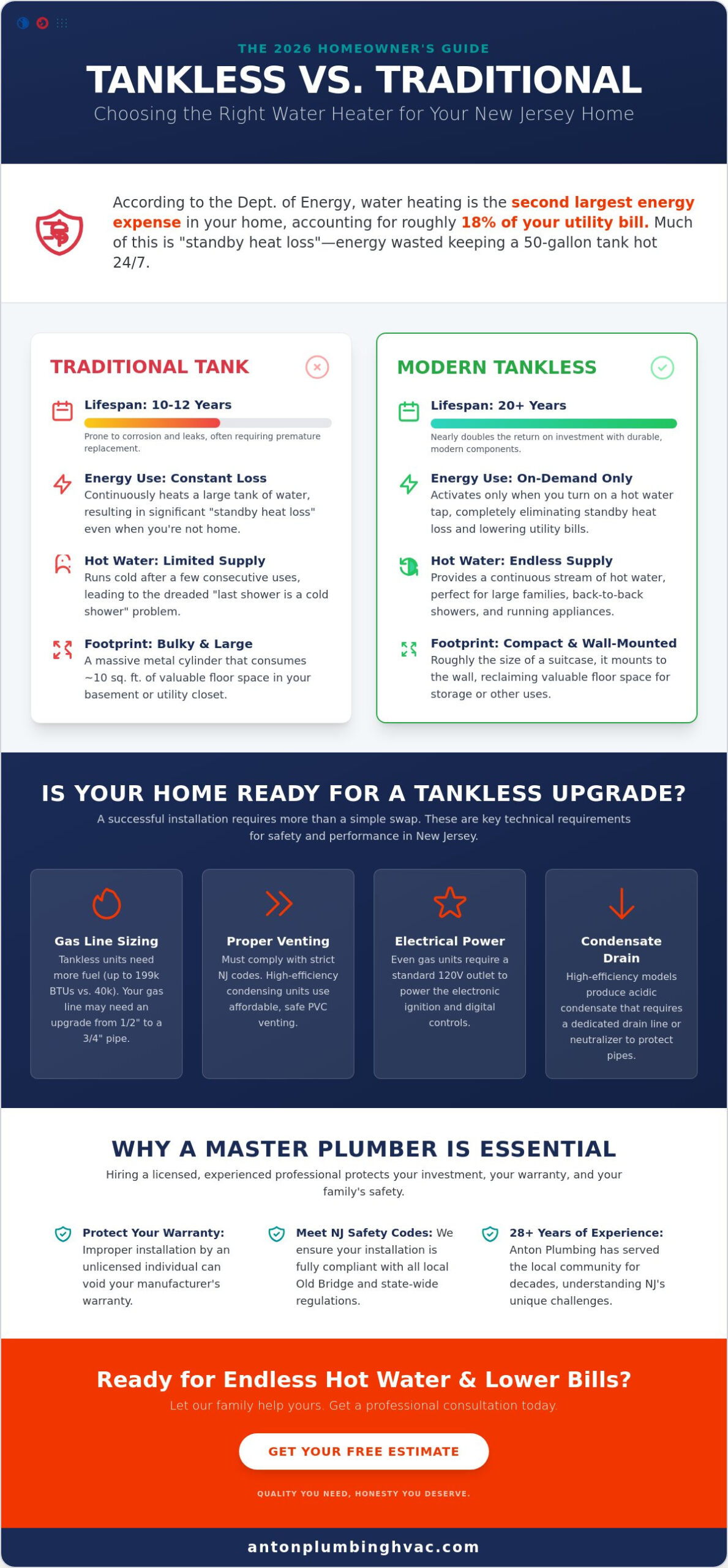
According to the Department of Energy, water heating is the second largest energy expense in your home, accounting for approximately 18% of your total utility costs. Most of that money is wasted heating a 50 gallon tank while your family sleeps or works. You shouldn’t have to choose between a warm shower and a reasonable monthly bill. Many Old Bridge neighbors feel the frustration of a bulky tank that takes up precious basement space and still runs cold during the third morning shower of the day.
At Anton Plumbing Heating & Cooling, we believe you deserve better. This 2026 guide will help you determine if a tankless water heater installation is the right investment for your specific home layout and hot water demands. With over 28 years of experience serving our local community, we understand that a precision upgrade requires balancing local water chemistry with NJ-specific venting codes. We will walk you through the entire process, from selecting the right unit to the final professional inspection. You’ll learn exactly how to reclaim your floor space and secure endless hot water for your family. Quality you need, Honesty you deserve.
Key Takeaways
- Learn how “on-demand” heating eliminates standby energy loss to provide endless hot water for your entire household.
- Understand the critical technical requirements, such as gas line sizing and venting codes, that ensure a safe and efficient tankless water heater installation.
- Compare the long-term financial benefits of tankless systems, including a 20-year potential lifespan and significantly lower monthly utility bills.
- Discover why hiring a licensed Master Plumber is essential for protecting your manufacturer warranty and ensuring your home meets New Jersey safety standards.
- Find out how 28 years of local, family-operated expertise helps Old Bridge residents reclaim valuable floor space while maximizing home comfort.
What is Tankless Water Heater Installation and How Does it Work?
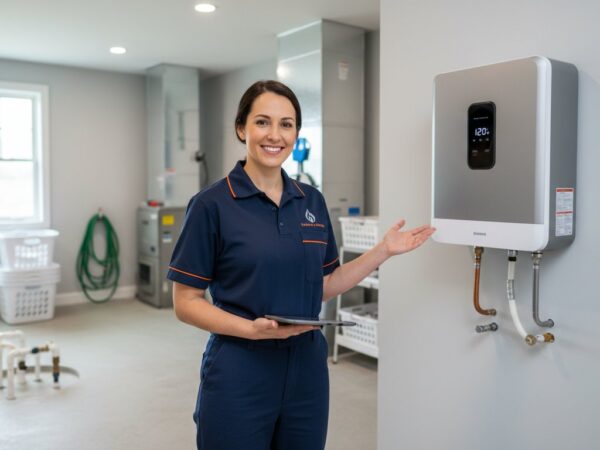
Tankless systems are often called “on-demand” units because they do not store hot water. Instead of keeping a 50 gallon tank hot 24 hours a day, which leads to significant standby heat loss, these units only activate when you turn on a faucet. For homeowners in Old Bridge, a professional tankless water heater installation means replacing a massive, floor-consuming metal cylinder with a compact unit roughly the size of a suitcase. This shift from storage to active heating represents a major leap in home efficiency.
The internal process is a feat of modern engineering. When you open a hot water tap, internal sensors detect the movement. Cold water enters the unit and travels through a heat exchanger where a high-powered gas burner or electric element rapidly raises the water temperature to your desired setting. You can see how tankless water heaters work as a continuous loop rather than a finite reservoir. Once you close the tap, the system shuts down immediately, ensuring you don’t pay for energy you aren’t using.
Space is a premium in many Middlesex County homes, especially in older utility closets or crowded basements. Mounting a tankless unit on the wall reclaims approximately 10 square feet of floor space. Beyond the physical footprint, you gain incredible longevity. A traditional tank typically lasts between 10 and 12 years before the lining fails or the bottom corrodes. In contrast, a properly maintained tankless system carries a life expectancy of 20 years or more, nearly doubling the return on your investment.
The “Endless Hot Water” Promise
Large families in Old Bridge often struggle with the “morning rush” where the last person in the shower inevitably gets stuck with cold water. Tankless systems solve this by providing a continuous stream that never runs dry. It’s vital to remember that “endless” is not the same as “instant.” Hot water still needs to travel from the unit through your home’s pipes to reach the showerhead. We always look at the flow rate, which is the specific number of gallons per minute (GPM) the unit can heat at once, to ensure you can run the dishwasher and the shower at the same time without a drop in temperature.
Condensing vs. Non-Condensing Systems
Choosing the right technology impacts your long-term savings and the complexity of your tankless water heater installation. Non-condensing units are the traditional option; they vent exhaust at high temperatures through specialized stainless steel pipes. Condensing units are the preferred standard for New Jersey homes because they use a second heat exchanger to capture extra heat from exhaust gases. This results in a much higher Energy Factor (EF) and allows for venting through more affordable PVC pipes. While the internal components are more complex, the increased efficiency often pays for itself through lower utility bills over the unit’s 20 year lifespan.
Technical Requirements for Tankless Systems in New Jersey
Switching to a tankless system isn’t a simple “plug and play” swap. A successful tankless water heater installation requires a deep understanding of New Jersey building codes and your home’s existing infrastructure. We often find that Old Bridge homes built in the 1980s or 1990s need specific modifications to handle the high-performance demands of modern units. These technical details aren’t just about efficiency; they’re about the safety of your family and the longevity of your investment.
Beyond the plumbing, you must consider electrical needs. Even gas-powered units require a standard 120V electrical outlet to power the digital control boards and electronic ignition. Additionally, high-efficiency condensing models produce an acidic liquid called condensate during the heating process. We install a dedicated drain line or a neutralizing kit to protect your home’s plumbing from corrosion. This attention to detail is why many homeowners prioritize professional tankless water heater services from a licensed Master Plumber.
Gas Line Upgrades: The Hidden Factor
A standard storage tank typically uses about 40,000 BTUs. In contrast, a high-efficiency tankless unit can pull up to 199,000 BTUs to heat water instantly. If your gas line is only 1/2-inch, it won’t deliver enough fuel to meet this demand. We often have to upsize the line to 3/4-inch or even 1-inch from the meter to the appliance. This ensures your heater doesn’t starve your furnace or stove of fuel during a cold New Jersey winter. Our team always checks gas pressure at the meter to confirm your entire system operates at peak safety.
Venting and Air Intake Standards
New Jersey has strict codes regarding where you can vent exhaust. Because these units burn fuel so efficiently, the exhaust is cooler and often vented through the side wall using PVC or specialized polypropylene pipes. NJ building code requires specific clearances, often at least 12 inches from windows or doors, to prevent carbon monoxide from re-entering the home. We prefer using concentric venting, which combines the air intake and exhaust into a single pipe. This reduces the number of holes we drill into your home’s exterior while maintaining a tight seal. While these requirements add complexity to a tankless water heater installation, the long-term energy savings with tankless heaters make the transition worthwhile for most families.
Tankless vs. Traditional Heaters: An Old Bridge Comparison
Traditional storage tanks have served New Jersey families for decades, but the math behind home comfort is shifting. When choosing the right water heater, you’re weighing a lower initial purchase price against much higher long term operating costs. A tankless water heater installation represents a higher upfront investment, but the unit typically lasts 20 years. That is double the 10 to 12 year lifespan of a standard tank. You aren’t just buying a heater; you’re ending the cycle of frequent, expensive replacements.
One common concern with older on-demand units was the “cold water sandwich” effect, which is a brief burst of cold water during back to back usage. Modern manufacturers like AO Smith have engineered a solution using small internal buffer tanks that maintain a steady temperature. This ensures your shower remains consistent even if someone else starts a load of laundry. To help manage the transition, the NJ Clean Energy Program provides rebates for high efficiency upgrades, which significantly offsets the initial installation cost for Old Bridge residents.
Water Hardness and Maintenance in Central Jersey
Old Bridge residents often deal with mineral-heavy water that can impact plumbing longevity. Calcium and magnesium minerals are harmless to drink, but they can be brutal on a tankless heat exchanger. Because these units heat water so rapidly, scale can build up faster than it would in a traditional tank. We recommend installing a scale inhibitor or a whole house water softener to protect your investment. Even with these safeguards, professional AO Smith water heater repair and annual descaling are essential to maintain peak efficiency and keep your manufacturer warranty valid.
Calculating Your Return on Investment (ROI)
The Department of Energy reports that for homes using 41 gallons or less of hot water daily, tankless units are 24% to 34% more energy efficient than storage tanks. For a typical 4 person household in Middlesex County, this efficiency translates to lower monthly gas or electric bills. Beyond the immediate utility savings, a professional tankless water heater installation increases your home’s resale value. Homebuyers in 2026 specifically look for “green” upgrades and modernized infrastructure. We offer 0% financing options to make these long term benefits affordable today, ensuring your home remains a sanctuary of comfort and value.
The Professional Installation Process: Step-by-Step
A successful tankless water heater installation is a complex engineering project that requires more than just basic plumbing skills. It begins with a rigorous assessment of your home’s structural and utility capacity. We don’t just swap units; we evaluate the entire system to ensure your gas pressure and venting paths are sufficient. In Old Bridge, local building codes require specific permits to verify that high-BTU gas work meets safety standards. Hiring a licensed Master Plumber ensures these legal requirements are met, which protects your family and keeps your manufacturer’s warranty fully intact.
The final phase of the process involves precision testing that goes far beyond a simple leak check. We use advanced diagnostic tools to perform high-sensitivity gas leak detection and verify the integrity of every seal. Our technicians also calibrate the output temperature to exactly 120 degrees Fahrenheit. This setting prevents accidental scalding while maximizing your energy savings. If you are ready to modernize your home, you can schedule your tankless water heater installation with our veteran team today.
Preparation and Old Unit Removal
Removing a 150 pound water tank is the first major hurdle. We drain the old unit safely using professional-grade pumps to prevent any water damage to your basement floor. While the pipes are exposed, we inspect the interior of your plumbing for mineral buildup. If we see significant scale from years of hard water use, we may suggest expert drain cleaning services to ensure your new system doesn’t push old debris into your faucets. Once the area is clear, we mount the new unit on a sturdy, fire-rated backer board to comply with New Jersey fire safety regulations.
Hookups and Safety Calibrations
We use high-quality copper or PEX-B for all water connections to ensure maximum durability and leak prevention. A critical component of our process is the installation of a “service valve kit.” This specialized set of three-way valves allows for easy annual descaling in the future without the need to cut into your pipes. During the “first firing,” the technician verifies the gas-to-air ratio using a digital analyzer. This step is vital because an improper mixture can lead to inefficient heating or premature wear on the heat exchanger. We don’t leave until the system is operating at the exact specifications defined by the manufacturer. If your existing unit fails unexpectedly before your upgrade is scheduled, our emergency water heater repair team is available around the clock to restore your hot water fast.
Why Old Bridge Trusts Anton for Tankless Upgrades
Old Bridge residents choose Anton Plumbing Heating & Cooling because we’ve spent over 28 years building a reputation for technical excellence and unwavering integrity. As a family-operated business, we don’t treat your home like a simple job site; we treat it like our own. Our brand signature, “Quality you need, Honesty you deserve,” isn’t just a slogan. It’s a commitment to transparent, upfront pricing that eliminates the stress of hidden fees or surprise costs. We know that plumbing emergencies don’t wait for convenient business hours. That is why we provide 24/7 availability for urgent repairs, including comprehensive HVAC repair in East Brunswick and the surrounding Middlesex County areas.
When you trust us with your tankless water heater installation, you’re hiring a team that values your home’s safety as much as its comfort. We maintain a meticulous workspace, using drop cloths and protective gear to ensure your basement or utility closet remains spotless throughout the process. Our technicians are trained to handle every complication with a calm, steady professionalism that provides immediate relief to stressed homeowners facing utility failures. We guide you through the complexities of NJ infrastructure with the honesty and clarity you expect from a long-term maintenance partner.
Certified Experts in Modern Technology
Our team stays at the forefront of the industry through continuous training and certifications with leading manufacturers like AO Smith and Navien. This specialized knowledge is critical for a high-performance tankless water heater installation. We don’t guess when it comes to your safety. Every technician arrives equipped with advanced diagnostic tools, such as airflow analyzers and high-precision leak detection sensors, to ensure your system is perfectly tuned. Whether we are handling complex commercial plumbing maintenance or a residential upgrade, we apply the same standard of honesty and technical precision to every project.
Ready for Endless Hot Water?
Upgrading your home infrastructure is a significant decision. We are here to act as your knowledgeable guide through the entire process. From the initial load calculation to the final safety inspection, we ensure your transition to on-demand heating is seamless and stress-free. Don’t spend another morning waiting for a storage tank to refill or worrying about rising utility costs. Reach out to our team today to schedule a free in-home consultation and see the difference that nearly three decades of local experience makes. Need a Plumber? Call Anton! Let us help you secure the safety, comfort, and long-term energy savings your family deserves.
Secure Endless Hot Water for Your Old Bridge Home
Transitioning to an on-demand system is more than a simple upgrade; it’s a long-term investment in your family’s daily comfort and safety. You now understand how a professional tankless water heater installation eliminates energy waste and provides a continuous stream of hot water even during the busiest mornings. By prioritizing proper gas line sizing and NJ-specific venting codes, you ensure your home remains efficient for the next 20 years. This transition reclaims your floor space while significantly reducing your monthly utility expenses.
Anton Plumbing Heating & Cooling has been family-owned and operated since 1996. Our Master Plumber Licensed and HVACR-certified technicians bring the precision and integrity your home deserves. We offer 0% financing for new installations to make this modern technology accessible for every local household. Schedule Your Free Tankless Consultation in Old Bridge Today! Don’t settle for lukewarm showers when endless comfort is just a phone call away. Need a Plumber? Call Anton!
Frequently Asked Questions
Is a tankless water heater worth it for a home in Old Bridge?
Yes, a tankless system is a high-value investment for Old Bridge homes where families consume more than 41 gallons of hot water daily. According to the U.S. Department of Energy, these units are up to 34% more energy efficient than traditional storage tanks. You reclaim approximately 10 square feet of floor space and gain a unit designed to last 20 years. This long-term durability makes it a superior choice for homeowners planning to stay in their property for at least 5 years.
How much does it cost to install a tankless water heater in NJ?
Total costs depend heavily on the complexity of gas line upgrades and specific venting requirements for your home’s layout. While we don’t provide flat estimates without a physical inspection, the NJ Clean Energy Program currently offers significant rebates for units with high Energy Factor ratings. These incentives, combined with our 0% financing options, help bridge the gap between the initial purchase and your long-term utility savings. A professional assessment is the only way to determine the exact technical requirements for your home.
Will I need to upgrade my electrical panel for a tankless heater?
Most gas-powered units only require a standard 120V outlet to power the digital control board and electronic ignition. You likely won’t need a full electrical panel upgrade for a gas installation. However, electric tankless models have massive power draws that often require 100 to 150 amps of dedicated capacity. We always inspect your current electrical load during our pre-installation assessment to ensure your home safely handles the new appliance without tripping breakers.
How long does a tankless water heater installation take?
A standard tankless water heater installation typically takes between 4 and 8 hours to complete. If your home requires significant gas line upsizing or new venting through exterior walls, the process may extend into a second day. Our team works efficiently to ensure your water service is restored as quickly as possible. We prioritize a clean workspace and perform all safety calibrations before conducting the final walkthrough with you.
What maintenance is required for a tankless system in Middlesex County?
Annual descaling is the most critical maintenance task for Middlesex County residents due to local water hardness levels. Mineral deposits can coat the heat exchanger, which reduces efficiency and potentially voids your manufacturer warranty. We recommend a professional flush once every 12 months using a biodegradable descaling solution. This simple service ensures your unit reaches its full 20-year life expectancy while maintaining peak flow rates for your showers and appliances.
Can I install a tankless water heater myself?
We strongly advise against DIY installation for these systems. A tankless unit involves complex gas pressure adjustments, high-voltage electrical work, and strict NJ venting codes to prevent carbon monoxide poisoning. Improper installation can lead to serious safety hazards or fire risks. Additionally, most major brands like AO Smith and Navien only honor warranties if a licensed professional performs the work. Our Master Plumbers handle all permitting and inspections to ensure your system is 100% code compliant.
What happens if the power goes out? Will I still have hot water?
Since tankless units rely on electronic control boards and igniters, they won’t produce hot water during a power outage. Unlike a traditional tank that holds a reservoir of pre-heated water, a tankless unit cannot activate its burners without electricity. Some homeowners choose to install a small battery backup or connect the unit to a home generator. This ensures you still have hot water during the frequent summer storms or winter outages we experience in Central Jersey.
Does NJ offer any rebates for tankless water heater installation in 2026?
Yes, the NJ Clean Energy Program continues to offer financial incentives for high-efficiency home upgrades throughout 2026. To qualify for these rebates, your unit must meet specific Uniform Energy Factor (UEF) standards. We help you navigate the application process and provide all the necessary documentation to secure your savings. These state incentives, paired with federal tax credits, make the transition to modern tankless water heater installation more affordable for Old Bridge families.


