What if the $75 permit fee for your Old Bridge water heater replacement is actually the smallest investment you make toward securing $700 in immediate rebates this year? It’s a common fear for local homeowners that a sudden basement flood or a freezing morning shower will lead to a mountain of unexpected debt. You want a reliable system that works without a second thought, but the confusion between tankless and heat pump models often leads to a headache while your utility bills continue to climb. Since water heating accounts for roughly 18% of your home’s energy use, making the wrong choice is expensive.
At Anton Plumbing Heating & Cooling, we agree that your family deserves the peace of mind that comes with consistent home comfort and safety. This guide will help you choose the most efficient unit for your specific needs while maximizing the $750 NJ SAVEGREEN incentives available in 2026. We’ll preview the latest October 2026 Department of Energy standards, compare installation costs for New Jersey Natural Gas customers, and show you how to secure expert installation that keeps your home dry and your showers hot.
Key Takeaways
- Identify the subtle signs of internal tank corrosion and learn why the standard “10-year rule” might not apply to your specific Old Bridge plumbing setup.
- Evaluate the long-term ROI and space-saving advantages of tankless technology to determine the most cost-effective water heater replacement for your home.
- Calculate your household’s “First Hour Rating” to guarantee a consistent supply of hot water during your family’s busiest peak usage times.
- Navigate the local installation process with confidence by understanding the timeline and the critical role of Middlesex County safety permits.
- Benefit from 28 years of local expertise to ensure your new high-efficiency system is installed with the technical precision and honesty your home deserves.
Recognising the Need for Water Heater Replacement in Old Bridge, NJ
Most homeowners ignore their water heater until a cold shower or a flooded basement demands attention. In 2026, the financial cost of waiting for a total breakdown is higher than ever. An aging, inefficient unit doesn’t just risk a leak; it actively drains your bank account. According to the U.S. Department of Energy, water heating accounts for roughly 18% of your home’s energy consumption. When components begin to fail, that percentage climbs, leaving you with spiked utility bills and a unit that struggles to keep up with your family’s morning routine.
While industry standards often cite a 10-year lifespan for traditional tanks, this is merely a baseline. In Middlesex County, factors like high demand and specific water chemistry can shorten that window significantly. Internal corrosion is a silent process that begins long before a puddle appears on your floor. By understanding how water heaters work, you can better appreciate the role of the sacrificial anode rod. Once this rod dissolves, the corrosive elements in the water begin attacking the steel tank itself. If your system is over a decade old, scheduling a professional assessment for a water heater replacement is the most proactive way to protect your home from water damage.
Safety remains our primary concern at Anton Plumbing Heating & Cooling. A failing unit isn’t just an inconvenience; it can be a hazard. Rusted heating elements in electric models can short out, while malfunctioning gas valves on older units may lead to improper combustion or dangerous pressure buildup. We’ve spent over 28 years helping Old Bridge families identify these risks before they become emergencies. Our team uses advanced diagnostic tools to check for gas leaks and structural integrity, ensuring your household’s safety isn’t left to chance.
Critical Warning Signs of Unit Failure
You don’t always need a flood to know your unit is dying. Pay close attention to the clarity of your water. If you notice a “rusty” or tea-colored tint appearing only when the hot tap is running, the interior of your tank is likely corroding. Listen for unusual popping, rumbling, or banging noises coming from the utility room. These sounds occur when sediment buildup traps pockets of water against the heating element, causing them to “boil” and steam. This process creates physical stress that eventually cracks the tank’s internal glass lining. Finally, check for any moisture or dampness around the base. Even a small “weeping” leak is a sign that a water heater replacement is imminent. If you’re unsure whether your system has reached the end of its useful life, our detailed resource on when should you replace a water heater can help you make a confident, informed decision before a crisis strikes.
Why Old Bridge Water Quality Matters
Old Bridge homeowners face unique challenges due to local mineral content. Hard water is common in our area, leading to rapid “scaling” in traditional tank systems. Calcium and magnesium deposits settle at the bottom of the tank, forming a thick crust that acts as an insulator. This forces your burner to run longer and hotter to reach the desired temperature, which fatigues the metal and wastes fuel. Professional diagnostics surpass simple visual inspections because we can measure the actual efficiency loss caused by this buildup. We provide the technical clarity you need to decide if a repair is a viable temporary fix or if a high-efficiency replacement is the smarter long-term investment for your home comfort.
Comparing Your Options: Tank vs. Tankless Water Heaters
Choosing between a traditional tank and a modern tankless unit is the most significant decision you’ll face during a water heater replacement. While a standard tank requires a lower initial investment, the long-term operational costs often favor high-efficiency alternatives. NJ families frequently struggle to balance these upfront expenses with the promise of lower utility bills. In the Old Bridge market, an average installation for a traditional unit ranges from $1,200 to $4,500, whereas tankless systems typically fall between $3,850 and $6,495. The right choice depends on your household’s peak water demand and how long you plan to stay in your current home.
Performance remains the top priority for our customers. If your family frequently runs the dishwasher while someone is in the shower, a traditional tank might struggle once its 40 or 50 gallon reserve is depleted. Tankless systems eliminate this “waiting game” by heating water on demand. However, converting to this technology in an older Old Bridge home often requires upgrading gas lines or installing specialized venting to meet strict NJ safety codes. Selecting an energy-efficient water heater requires looking beyond the sticker price to see how the unit handles your specific daily routine.
Traditional Storage Tank Systems
Storage tanks remain the standard for many Middlesex County homes due to their simplicity and lower upfront cost. Modern tanks manufactured in 2026 feature significantly better insulation than models from a decade ago, reducing standby heat loss. They are an excellent choice for budget-conscious homeowners who need a reliable, straightforward solution. These units are familiar to most service technicians and require relatively simple maintenance, primarily consisting of checking the sacrificial anode rod every three years to prevent tank corrosion.
The Rise of Tankless Technology in NJ
Tankless units are surging in popularity because they provide “endless” hot water and free up valuable floor space in cramped utility rooms. These wall-mounted systems are particularly effective for smaller Old Bridge homes where every square foot counts. As of April 2026, high-efficiency tankless models can be up to 34% more energy-efficient than conventional storage tanks in homes that use 41 gallons of hot water or less daily. This efficiency is a major draw for those looking to maximize the $750 NJ SAVEGREEN rebates. If you’re considering making the switch, our comprehensive guide to tankless water heater installation in Old Bridge covers everything you need to know about local venting codes, water chemistry considerations, and maximizing your investment. If you’re unsure which technology fits your home’s footprint, you can schedule a professional consultation with our master plumbers to explore your options.
Maintenance requirements differ sharply between the two styles. While tanks are relatively “set it and forget it” until the anode rod fails, tankless systems require an annual professional flush. This process removes the calcium and magnesium scale mentioned in the previous section. Without this yearly service, the sensitive heat exchangers in tankless units can overheat and fail prematurely, especially given the mineral content found in local NJ water sources.

Key Factors for Choosing Your New Water Heater in 2026
Selecting the right unit for a water heater replacement involves more than just picking a tank size from a shelf. You must consider the fuel source, the reliability of the manufacturer, and how the unit integrates into your home’s safety ecosystem. We recommend industry leaders like AO Smith, Rheem, and Bradford White because these brands offer the durability required to withstand New Jersey’s specific water conditions. In 2026, smart technology is a standard requirement for many homeowners. Integrating smart leak detection sensors can prevent a minor drip from becoming a catastrophic basement flood. These sensors provide immediate alerts to your smartphone, allowing you to shut off the water before structural damage occurs.
Your choice of fuel—gas, electric, or heat pump—will dictate your long-term energy costs. While gas remains popular in Old Bridge, the shift toward electrification is accelerating. For a deeper dive into the technical specifications of each fuel type, you can review the Department of Energy’s guide to selecting a new water heater. This resource helps clarify how different energy sources impact your home’s carbon footprint and monthly utility expenses.
Sizing Your System for Your Family
Most big-box retailers use generic charts that suggest a 40-gallon tank for a family of four. This is often inadequate for modern households. You need to calculate your First Hour Rating (FHR), which measures how much hot water the heater can provide during a peak hour of usage. If your home features a large soaking tub or high-flow rain showerheads, you’ll likely need to upsize your capacity to avoid cold mid-shower surprises. Our team uses precise diagnostic tools to evaluate your peak hour demand, ensuring your new system matches your family’s actual routines rather than a generic average.
Energy Efficiency and Local NJ Rebates
The Uniform Energy Factor (UEF) is the primary metric for efficiency in 2026. A higher UEF directly translates to lower monthly bills. For those considering heat pump hybrids, the financial incentives in New Jersey are currently at an all-time high. As of April 2026, the NJ Clean Energy Program (NJCEP) offers a $500 base rebate for qualifying ENERGY STAR models with a UEF of 2.0 or higher. If you’re a PSE&G customer, you can stack an additional $200 rebate, bringing your total immediate savings to $700.
If you’re also evaluating your home’s overall efficiency, such as seeking HVAC Repair in East Brunswick, heat pump technology provides a cohesive way to manage your entire energy footprint. Additionally, New Jersey Natural Gas customers can access up to $750 through the SAVEGREEN program for high-efficiency tankless installations. These incentives make 2026 an ideal year to upgrade to a system that pays for itself over time through energy savings.
What to Expect During Professional Installation in New Jersey
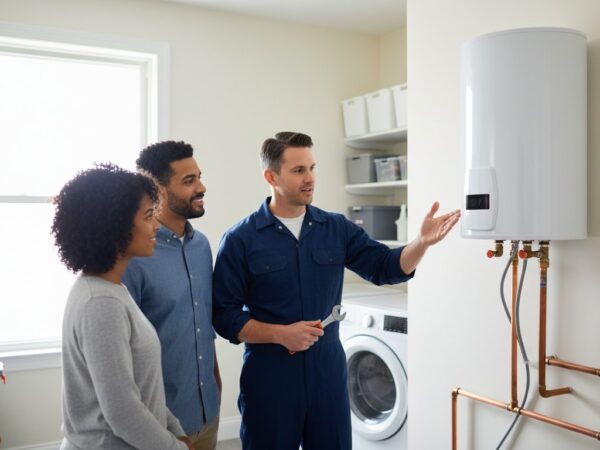
Professional water heater replacement is a precise technical operation that involves high-pressure water, combustible gas, and complex venting systems. It’s not a simple weekend DIY project. When you hire a licensed expert, the process moves from a diagnostic call to full hot water restoration in a single afternoon. Our team prioritizes your home’s safety by performing rigorous gas leak testing and verifying that carbon monoxide venting meets the most recent 2026 safety standards. We also include the environmentally responsible disposal of your old, rusted unit, ensuring it’s recycled according to Middlesex County regulations.
Modern NJ codes often require the addition of a thermal expansion tank. This small tank sits above your water heater and absorbs the extra pressure created when water expands as it heats up. Without it, the constant pressure fluctuations can cause premature tank failure or even pipe bursts. We treat your home as if it were our own, ensuring every connection is secure and every safety valve is tested before we consider the job finished. If you’re ready for a stress-free upgrade, schedule your water heater installation with our team today.
The Step-by-Step Replacement Process
The installation begins with a complete system shutdown and a controlled drainage of your old tank. We take great care to protect your flooring during the removal process. Once the area is clear, we position the new unit to meet NJ seismic and safety codes, ensuring it’s perfectly level and stable. Our technicians then reconnect the water, gas, and venting lines using high-grade materials. The final phase involves a multi-point inspection where we test the temperature, verify the water pressure, and check for any microscopic leaks in the gas line using advanced electronic sensors. This thorough approach is why Old Bridge families have trusted us for over 28 years.
Navigating Permits and Local Codes in Old Bridge
Permit acquisition is a non-negotiable step for any legal water heater replacement in New Jersey. In the Township of Old Bridge, a permit for a water heater replacement costs exactly $75. While some unlicensed contractors might suggest skipping this step to save time, doing so puts your household at risk. An unpermitted installation can void your home insurance policy if a leak or fire occurs later. More importantly, it means a local plumbing inspector hasn’t verified that the work meets the state’s stringent safety requirements. We handle all the paperwork and coordination with the Middlesex County inspection office, providing you with a “no-friction” experience and the peace of mind that your system is fully compliant with the law.
Why Old Bridge Trusts Anton for Water Heater Replacement
Since 1998, Anton Plumbing Heating & Cooling has served as a guardian of home comfort throughout Old Bridge. We understand that a water heater replacement is often an unexpected burden that disrupts your daily routine and your budget. Our team brings over 28 years of field experience to every job, ensuring that your installation isn’t just a mechanical swap but a long-term upgrade to your household’s well-being. We stand by our signature promise: Quality you need, Honesty you deserve. This means you receive transparent, flat-rate pricing before any work begins. We never include hidden “emergency” surcharges, even if your unit fails in the middle of a freezing January night.
Our status as a family-operated business means we treat your home with the same care we would our own. We don’t just drop off a box and leave. Every installation includes a comprehensive post-installation support plan and our local warranty guarantee. If you have questions about your new high-efficiency system a month after the job is done, we’re just a phone call away. This commitment to long-term partnership is why generations of Middlesex County families rely on us to keep their water hot and their basements dry.
A Master Plumber’s Approach to Safety
Our Master Plumbers take a meticulous approach to your family’s safety. Because we are HVACR-certified, we possess the specific technical credentials required to handle complex gas-fired units and high-voltage electrical connections with absolute precision. We utilize advanced diagnostic tools, such as thermal imaging, to check for hidden system stress or microscopic leaks that standard visual inspections miss. While we’re securing your hot water, we can also evaluate your overall plumbing health with our Expert Drain Cleaning Services. This holistic view ensures that your new heater won’t be compromised by drainage backups or pressure issues elsewhere in the line.
Financing and Immediate Relief
We know that a sudden utility failure can strain any family’s finances. That’s why we offer 0% financing options to make a high-efficiency water heater replacement accessible when you need it most. You shouldn’t have to choose between your monthly savings and a warm home for your children. Our team is available 24/7 to respond to hot water crises across Old Bridge, providing the immediate relief and technical excellence you deserve. If a complete tank failure leaves you without hot water, our emergency plumber Old Bridge NJ service is ready to respond around the clock with no predatory pricing. Need a Plumber? Call Anton! Reach out to us today for a free replacement quote and let our seasoned experts guide you toward the perfect hot water solution for your home.
Secure Your Home’s Comfort and Efficiency Today
You now have the knowledge to identify early signs of tank failure and navigate the 2026 NJ Clean Energy rebates that offer up to $700 in immediate savings. A successful water heater replacement is about more than just hot water; it’s about protecting your property and optimizing your monthly utility budget. By choosing the right capacity and technology for your family’s specific needs, you ensure years of reliable performance without the fear of unexpected leaks or cold showers.
Trust the expertise of our Licensed Master Plumbers to guide you through the selection and installation process. With over 28 years of service as a family-owned and operated business in Old Bridge, we provide the technical precision and transparent communication your home deserves. We manage the $75 permit logistics and all safety testing to ensure your new system is fully compliant with local NJ codes. Schedule Your Water Heater Replacement Quote with Anton Plumbing today and take the first step toward a more efficient, worry-free home. We are ready to restore your comfort with the quality and honesty you expect from a local leader.
Frequently Asked Questions
How much does water heater replacement cost in Old Bridge, NJ?
A standard water heater replacement in New Jersey typically ranges from $1,200 to $4,500 including professional installation. High-efficiency tankless models usually cost between $3,850 and $6,495, while heat pump units range from $3,500 to $9,000. These figures vary based on the unit’s capacity and the complexity of your home’s existing plumbing and gas lines. We provide flat-rate pricing to ensure you know the total cost before any work begins.
Can I switch from a tank to a tankless water heater in an older home?
Yes, you can switch to a tankless system, but older homes often require specific infrastructure upgrades to handle the higher energy demand. Our master plumbers frequently need to install larger gas lines or specialized concentric venting to meet current NJ safety codes. We’ll evaluate your utility room’s layout and gas pressure to ensure a tankless water heater installation is a safe and efficient choice for your specific property.
How long does it take for a professional to replace a water heater?
A professional water heater replacement generally takes between two and four hours to complete for a standard tank-to-tank swap. This timeline includes draining the old tank, disconnecting utilities, positioning the new unit, and performing final safety tests. If you are converting from a tank to a tankless system, the process may extend to a full day due to the necessary gas and venting modifications required by local inspectors.
Is a permit required for water heater replacement in Middlesex County?
Yes, a plumbing permit is a legal requirement for all water heater installations in the state of New Jersey. In the Township of Old Bridge, the specific permit fee is $75 as of April 2026. We handle all the necessary paperwork and coordination with Middlesex County inspectors to ensure your installation is fully documented and compliant with local safety regulations. Skipping this step can void your home insurance policy.
What are the signs that my water heater is about to explode or leak?
Critical warning signs include a leaking temperature and pressure relief valve, unusual popping sounds, or a “rotten egg” smell near gas units. If you see water pooling or notice the tank’s exterior is hot to the touch, the internal lining has likely failed. While modern safety valves make explosions rare, these symptoms indicate a high risk of property damage and require immediate professional attention to protect your home.
Are there any 2026 NJ state rebates for energy-efficient water heaters?
Several lucrative incentives are available in 2026, including a $500 NJ Clean Energy Program rebate for qualifying heat pump models. PSE&G customers can add an extra $200 for a total of $700 in savings. Additionally, New Jersey Natural Gas customers may be eligible for up to $750 through the SAVEGREEN program when installing high-efficiency tankless systems. These rebates significantly lower the upfront cost of upgrading to a modern, energy-saving unit.
How often should I flush my new water heater to maintain the warranty?
You should flush your water heater at least once every twelve months to prevent sediment buildup and maintain your manufacturer’s warranty. For tankless units in areas with high mineral content like Old Bridge, this annual service is vital for protecting the heat exchanger. Regular maintenance ensures your system operates at peak efficiency while preventing the “scaling” that leads to premature component failure and higher monthly utility bills.
What is the life expectancy of a new water heater installed today?
Traditional tank water heaters typically last between 8 and 12 years, while modern tankless units can reach a lifespan of 20 years or more. These estimates depend heavily on local water quality and how consistently you perform annual maintenance. Investing in a high-quality unit from a trusted brand like Bradford White or Rheem helps maximize the years of service you’ll receive from your new installation in New Jersey.


